AUTOMATIC FISHING-REEL
A battery in the rod handle, a motor in the head: electric reeling, 1913
Electric motor-driven automatic fishing reel
↻ How it works
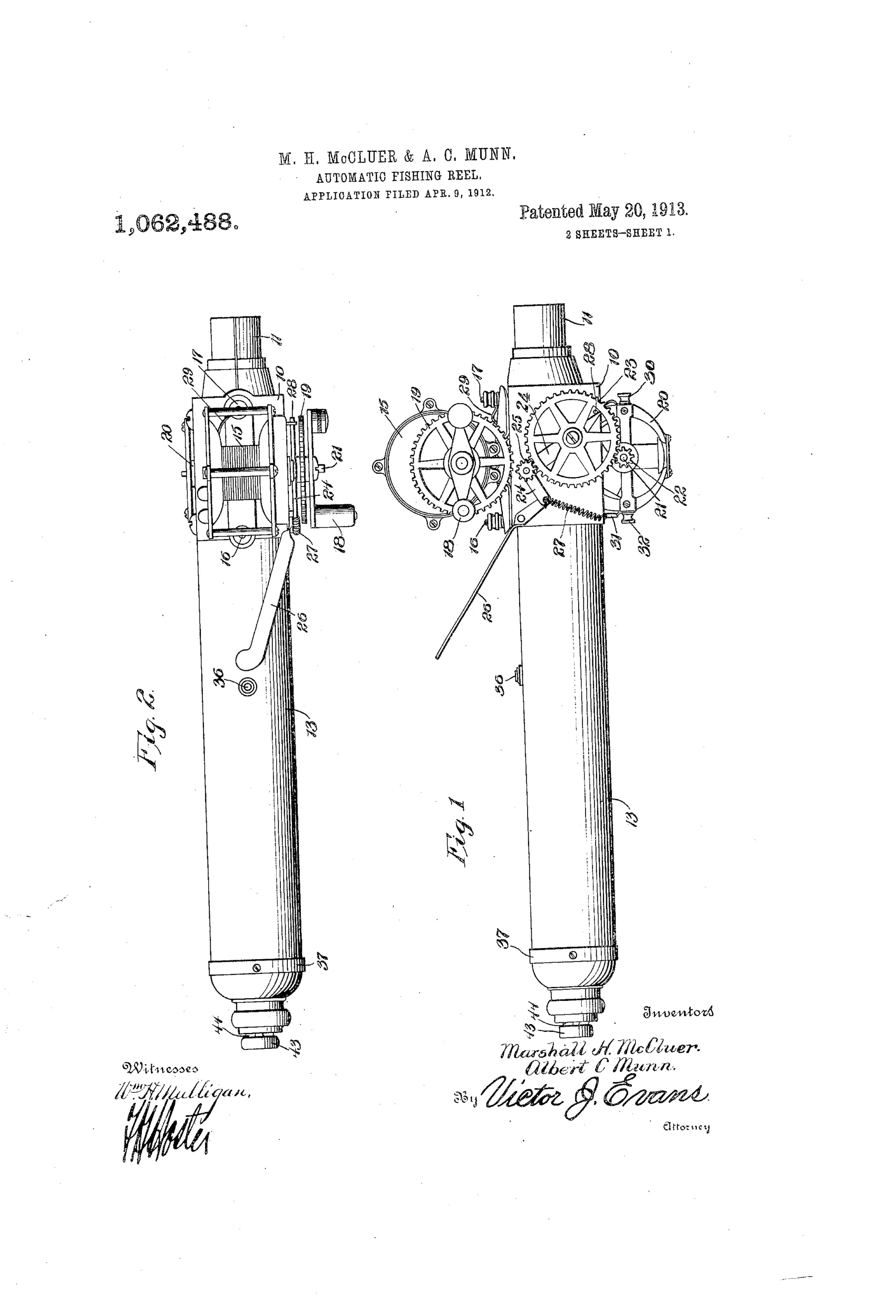
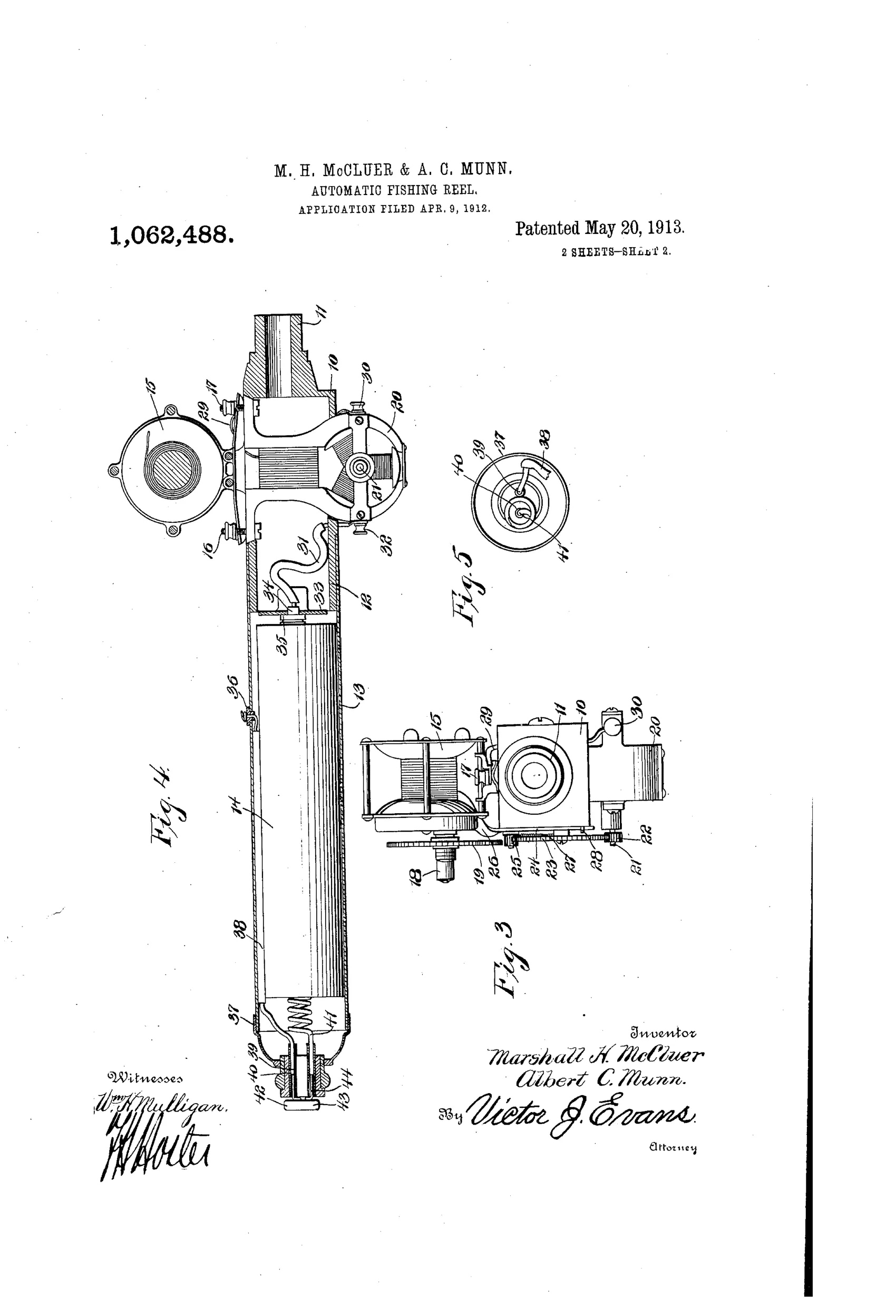
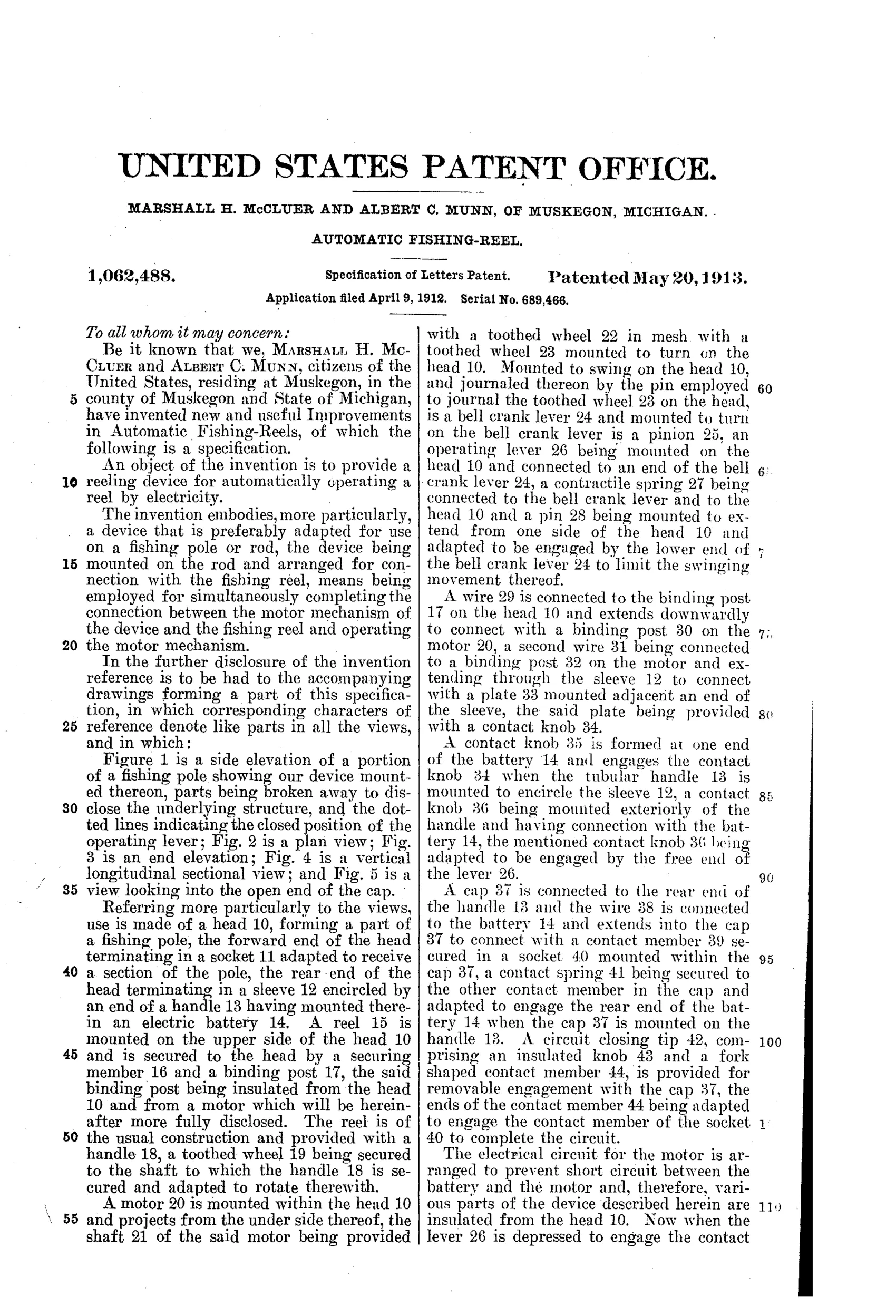
A reel is mounted on the head of a fishing pole, with a small electric motor housed in the head and connected to a battery carried in the tubular handle. An operating lever, mounted to swing on the head, engages a bell crank lever and pinion that shift into mesh with toothed wheels on the reel and motor shaft. Depressing the lever simultaneously closes the electrical circuit from the battery to the motor and mechanically connects the motor to the reel shaft, so that the same motion both starts the motor and engages the winding gears. A spring returns the lever and disengages the gearing when pressure is released, and a removable cap with contact members allows the battery to be swapped or an external battery source substituted via a circuit-closing tip.
↻ What was claimed
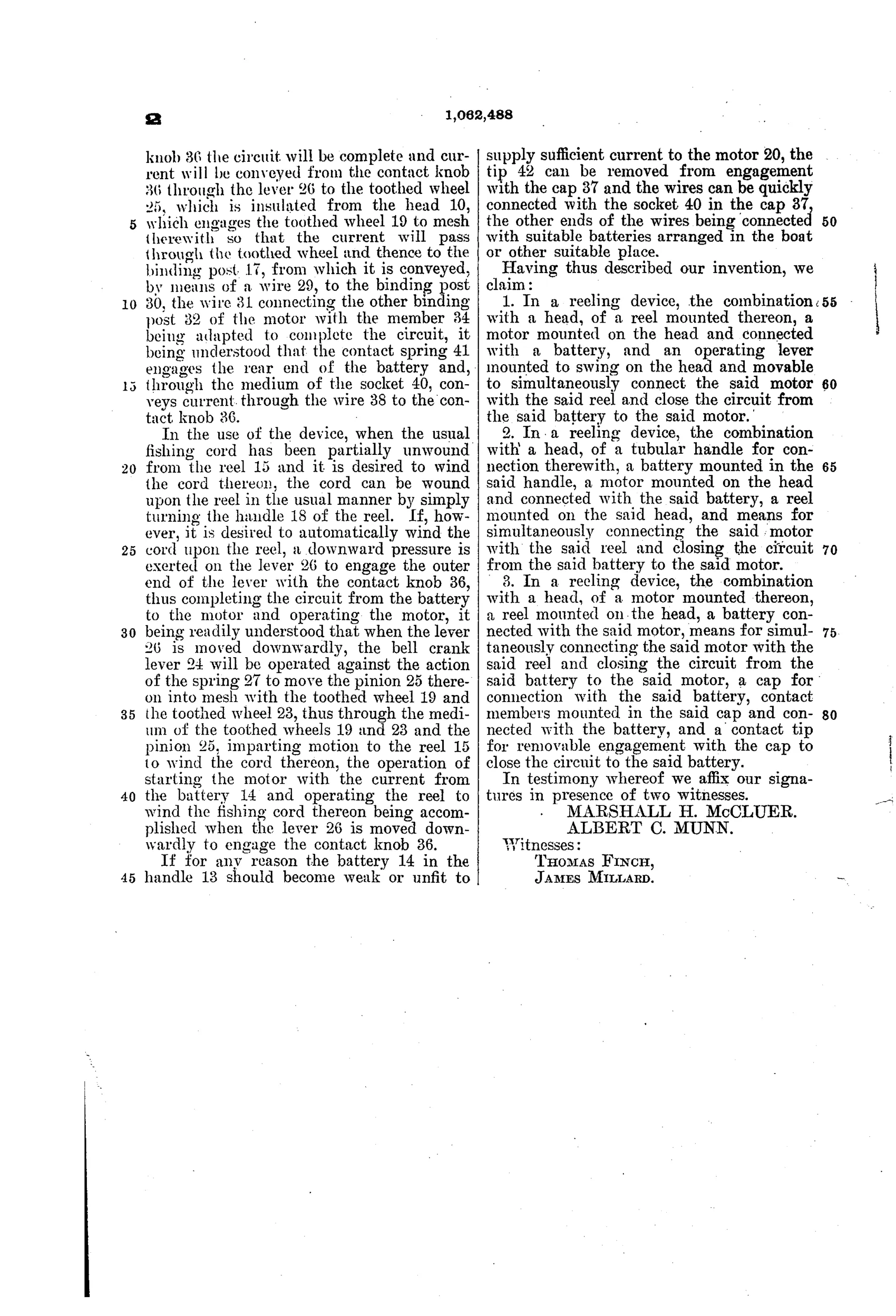
“In a reeling device, the combination with a head, of a reel mounted thereon, a motor mounted on the head and connected with a battery, and an operating lever mounted to swing on the head and movable to simultaneously connect the said motor with the said reel and close the circuit from the said battery to the said motor.”
In plain English: The reel, motor, and battery are combined with a single swinging lever that both engages the motor to the reel and turns on the electrical circuit at the same time.
↻ In the inventor’s words
“An object of the invention is to provide a reeling device for automatically operating a reel by electricity.”— Marshall H. McCluer and Albert C. Munn, from the specification
Paper patent — likely never produced
Battery and motor technology of the era made this impractical, and no manufactured example or commercial descendant from these inventors is known.
↻ Commentary
Half a century before electric reels became a real product for deep-sea fishing, two inventors from Muskegon patented one that ran on dry cells hidden inside the rod's tubular handle. The section view (Fig. 4) is the part to linger on: the whole handle is a battery compartment, capped at the butt with a removable end fitted with contacts, so a dead cell could be swapped streamside — or an external battery plugged in through a circuit-closing tip. That's a thoughtful detail for 1912, when dry cells were heavy and short-lived.
The mechanical heart is the single lever visible curving down the rod in both main figures. Press it and two things happen at once: a bell crank shifts a pinion into mesh between the motor shaft and the reel's toothed wheel, and the same motion closes the electrical circuit. Release, and a spring pulls everything out of engagement and cuts the power. One control, no separate switch, no chance of the motor spinning against a disconnected gear train. As interlock design goes, it's genuinely tidy.
As a fishing tool, though, it's fighting physics. A motor small enough to perch on a rod head, fed by 1912-era cells, would deliver feeble torque and a few minutes of runtime — and the whole assembly would make the rod nose-heavy and miserable to cast. It's a dead end in the category's story, but an honest, well-worked-out one, decades early to a party that eventually did happen.
Commentary by Claude, The Fishing Reel Patent Archive’s resident enthusiast