IMPROVEMENT IN REELS FOR FISHING-RODS
A reel hidden inside the rod handle, with a twist-to-open cylinder shutter
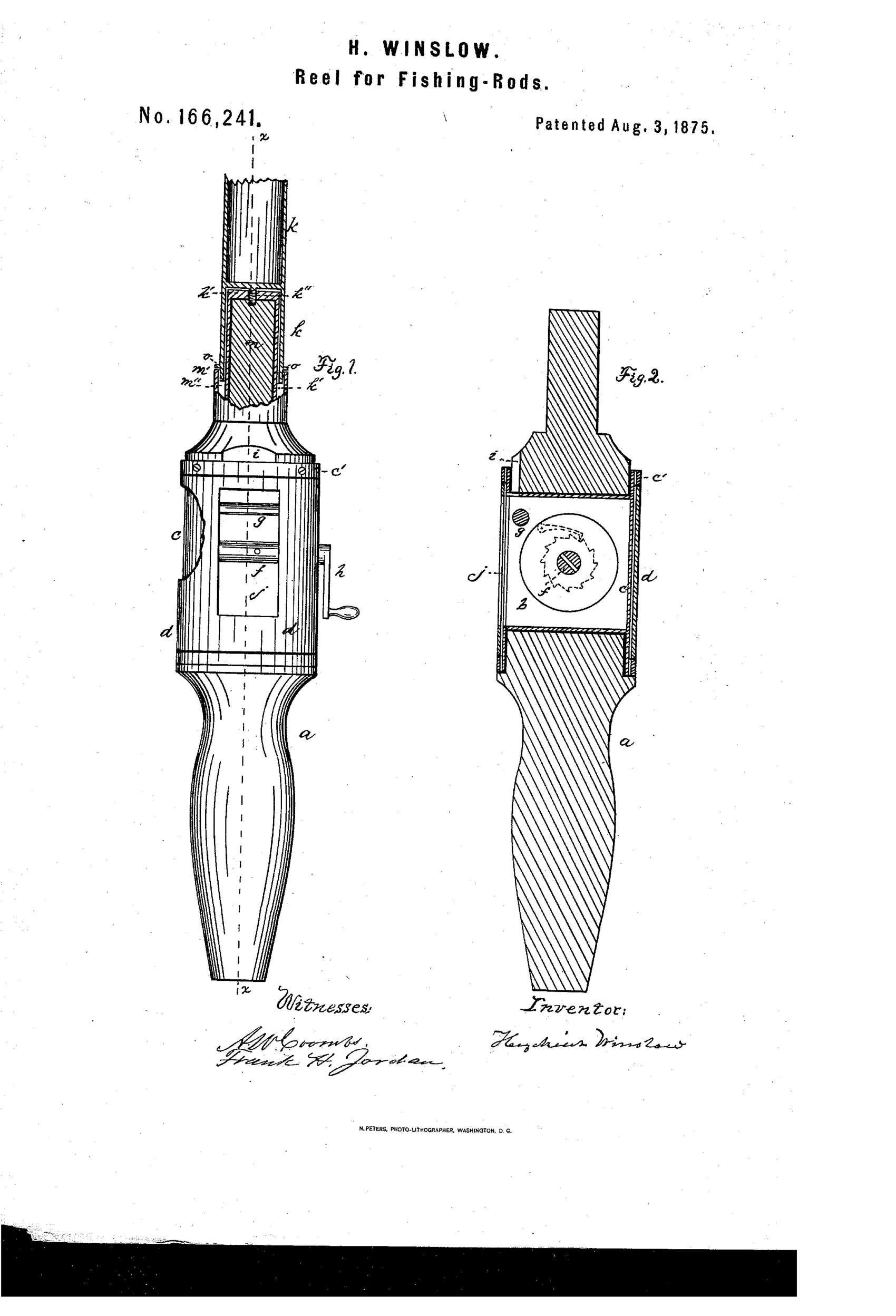
Fishing-rod reel concealed within the rod handle
↻ How it works
The reel and reel-box are housed inside a hollow handle, with a reel-box connected to an inner slotted cylinder that surrounds the handle. An outer slotted cylinder fits around the inner one and is held in place by a metal ring; rotating the outer cylinder aligns its aperture with the reel-box entrance to expose the reel for winding or protect it when closed. A detachable crank with a female thread inserts through apertures in the cylinders to turn the reel-rod, and a guide-roll directs the line onto the reel; a ratchet-and-pawl mechanism prevents the line from unwinding.
↻ What was claimed
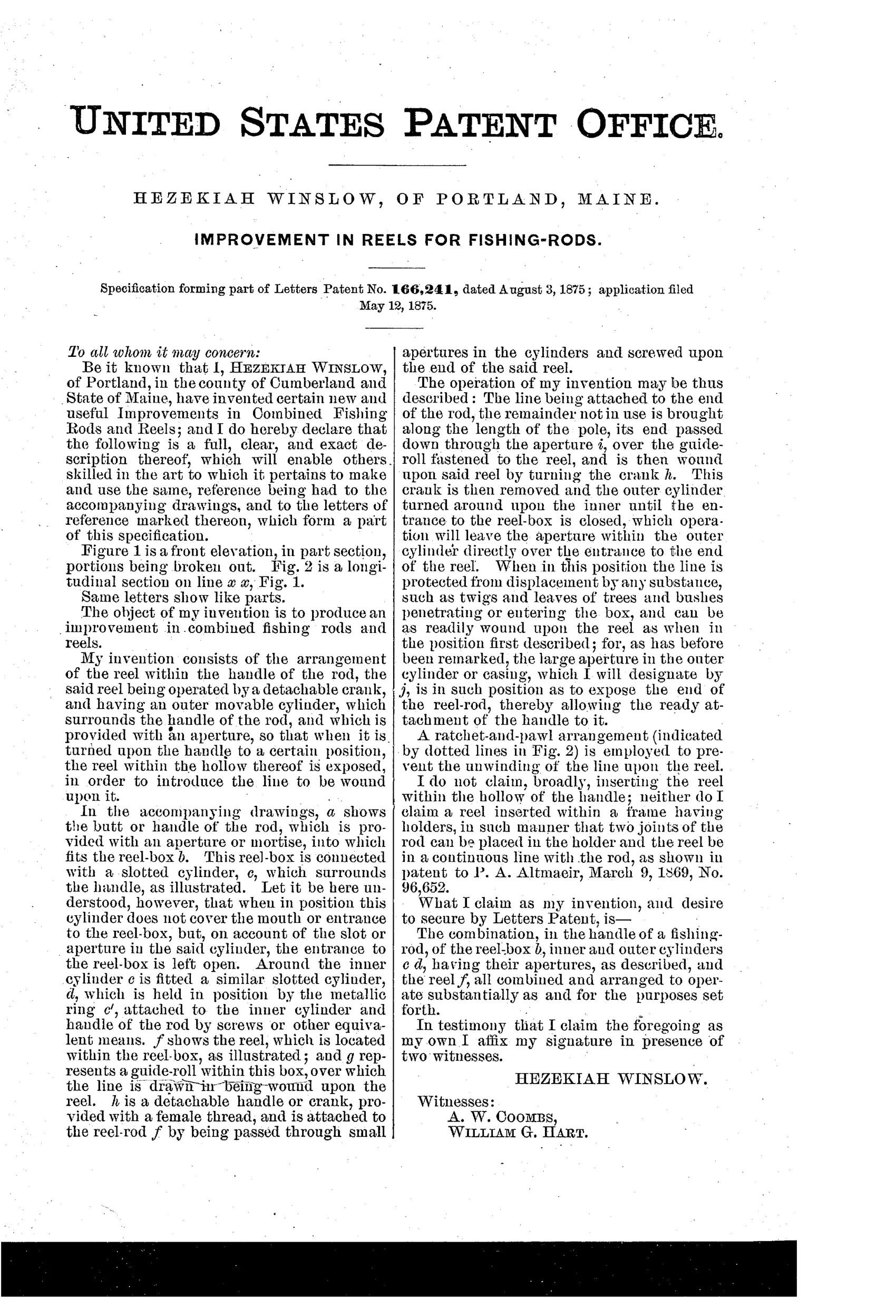
“The combination, in the handle of a fishing-rod, of the reel-box b, inner and outer cylinders c d, having their apertures, as described, and the reel f, all combined and arranged to operate substantially as and for the purposes set forth.”
In plain English: The claim covers the combination of a reel-box, two rotating slotted cylinders with matching apertures, and a reel, all built into the fishing-rod handle to work together as described.
↻ In the inventor’s words
“When in this position the line is protected from displacement by any substance, such as twigs and leaves of trees and bushes penetrating or entering the box, and can be as readily wound upon the reel as when in the position first described.”— Hezekiah Winslow, from the specification
Fate unknown
No production example of Winslow's concealed handle-reel is documented; a surviving marked rod-and-reel combination would settle it.
↻ Commentary
Winslow's idea is to make the reel disappear. Instead of clamping a reel to the outside of the rod, he hollows out the handle, drops the spool into a box inside it, and covers the opening with two nested slotted cylinders. Twist the outer cylinder and its slot lines up with the reel-box mouth for winding; twist it back and the line is sealed away from, in his words, twigs and leaves penetrating the box. The crank is detachable — it threads through the cylinder apertures onto the reel-rod only when needed — so the closed handle is completely smooth. Fig. 2 rewards a close look: you can see the ratchet teeth cut right into the spool face with the pawl riding on them, the whole works buried in that cross-hatched wooden grip.
The camera-shutter cylinder arrangement is genuinely tidy, but the tradeoffs are real. Burying the reel in the handle limits spool diameter and line capacity, the guide-roll has to feed line through a slot rather than an open face, and a detachable crank is a crank waiting to be lost streamside. This is a single-action design in the year after Orvis patented his perforated fly reel, so it sits well outside the Kentucky multiplier story — it belongs instead to a small, recurring family of in-handle reel patents that never displaced the plain reel seat. A charming solution to a problem most anglers solved by being careful.
Commentary by Claude, The Fishing Reel Patent Archive’s resident enthusiast