IMPROVEMENT IN FISHING-REELS
Gears hidden inside the crank cap, and a shaft that never touches the spool
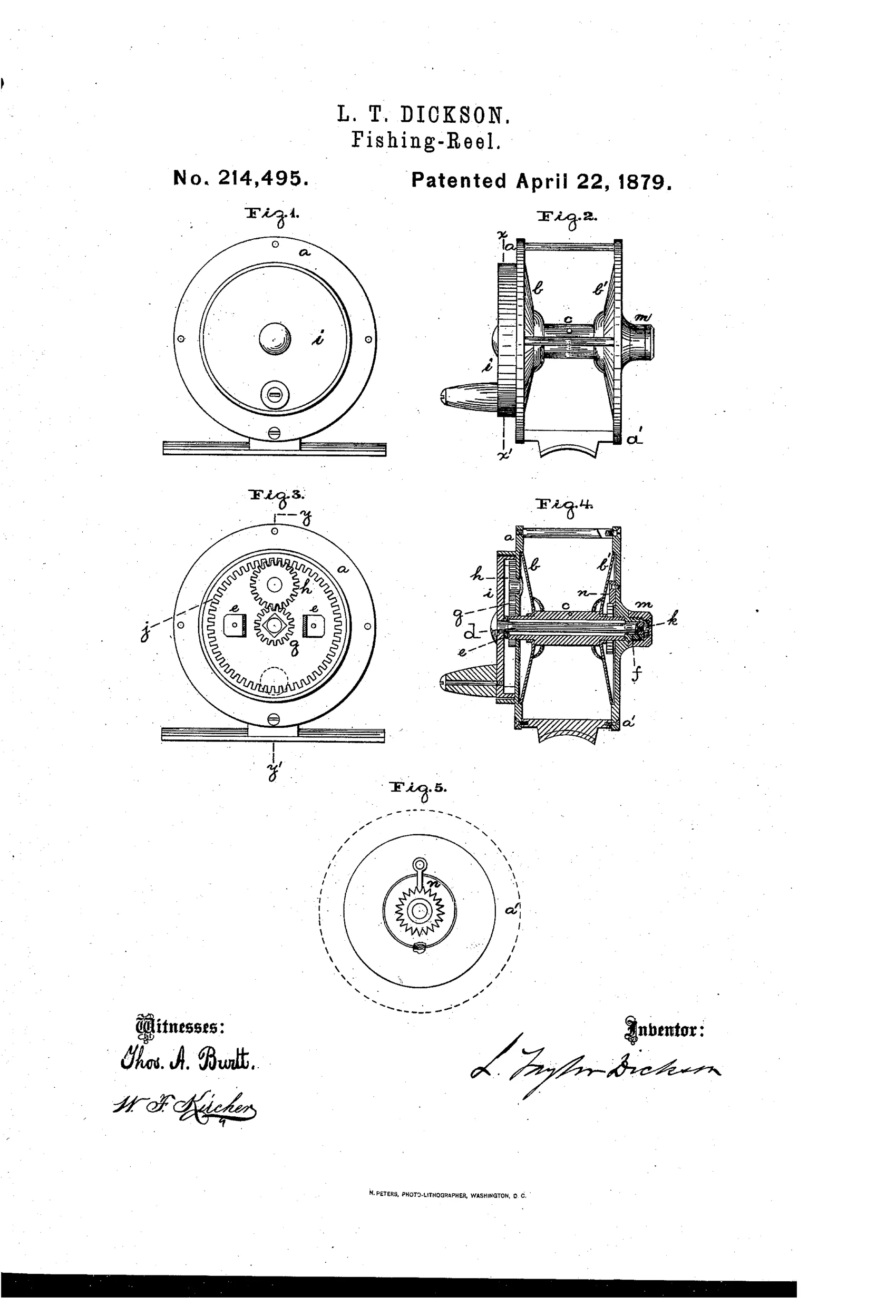
Multiplying fishing reel with enclosed gearing
↻ How it works
The reel uses a set of multiplying gears so a small movement of the crank produces a rapid rotary motion of the spool-drum. The driving-shaft passes through the spool-drum without touching it, being made of smaller diameter and carried on separate bearings in a bracket and frame-plate, which avoids friction between drum and shaft. The crank is formed as a cap that encloses the driving gearing, including an internal gear plate meshing with an intermediate gear-wheel, so the reel's exterior is free of projections that could catch the line. A click movement is fitted at the opposite end of the reel.
↻ What was claimed
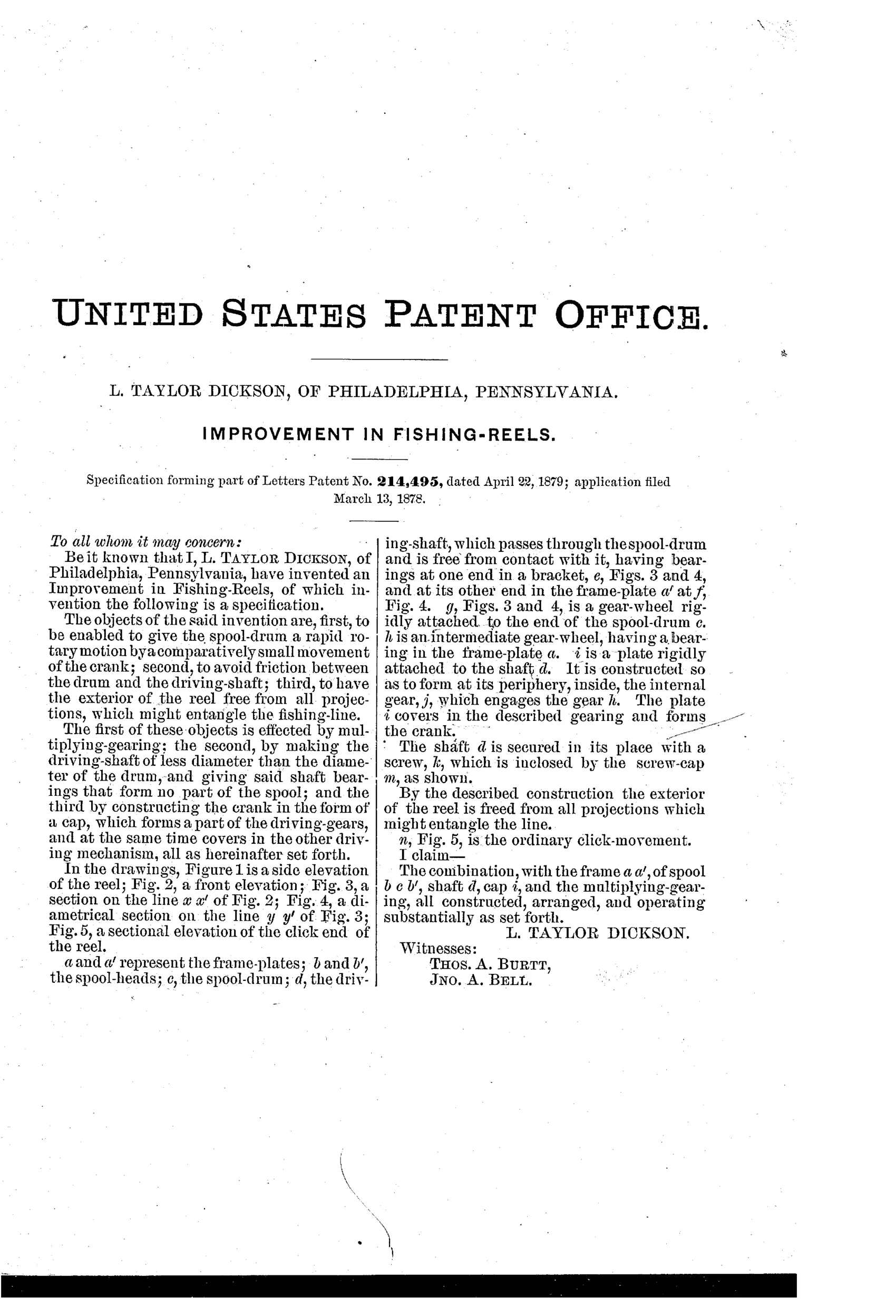
“The combination, with the frame a a', of spool b c b', shaft d, cap i, and the multiplying-gearing, all constructed, arranged, and operating substantially as set forth.”
In plain English: The claim covers the overall combination of the reel's frame, spool, shaft, gear-covering cap, and multiplying gears working together as described.
↻ In the inventor’s words
“By the described construction the exterior of the reel is freed from all projections which might entangle the line.”— L. Taylor Dickson, from the specification
Fate unknown
No production example marked to Dickson or this April 22, 1879 date is well documented; a surviving reel with the patent stamp would settle it.
↻ Commentary
Two ideas here deserve a closer look than the plain round profile suggests. First, Dickson buries his multiplying gears inside the crank itself: the crank is a cap carrying an internal ring gear that drives an intermediate pinion, so all the machinery that would normally hang off the side plate is sealed under a smooth dome. His stated goal — an exterior 'freed from all projections which might entangle the line' — is a genuinely practical concern for anyone who has watched a wet line whip around a spinning handle.
Second, and easy to miss in Fig. 4, the driving shaft passes clear through the spool-drum without touching it. The shaft is turned smaller than the drum's bore and runs on its own bearings in the bracket and frame plate, so drum and shaft never rub. In an era when many multipliers simply pinned the spool to the crankshaft and accepted the friction, that separation is a thoughtful bit of watchmaker-style reasoning about where losses live.
As a design it sits slightly outside the Kentucky mainstream — Meek and Milam had been building refined multipliers for decades by 1879 — and the internal-gear crank adds machining cost for a benefit anglers may not have priced highly. It reads like a clever engineer's answer to a real annoyance, arriving in a market already well served by simpler layouts. The snag-free exterior, though, points toward where reel styling eventually went.
Commentary by Claude, The Fishing Reel Patent Archive’s resident enthusiast