CRANK AND CRANK FASTENING.
An adjustable wringer crank that wandered into the reel archive by accident
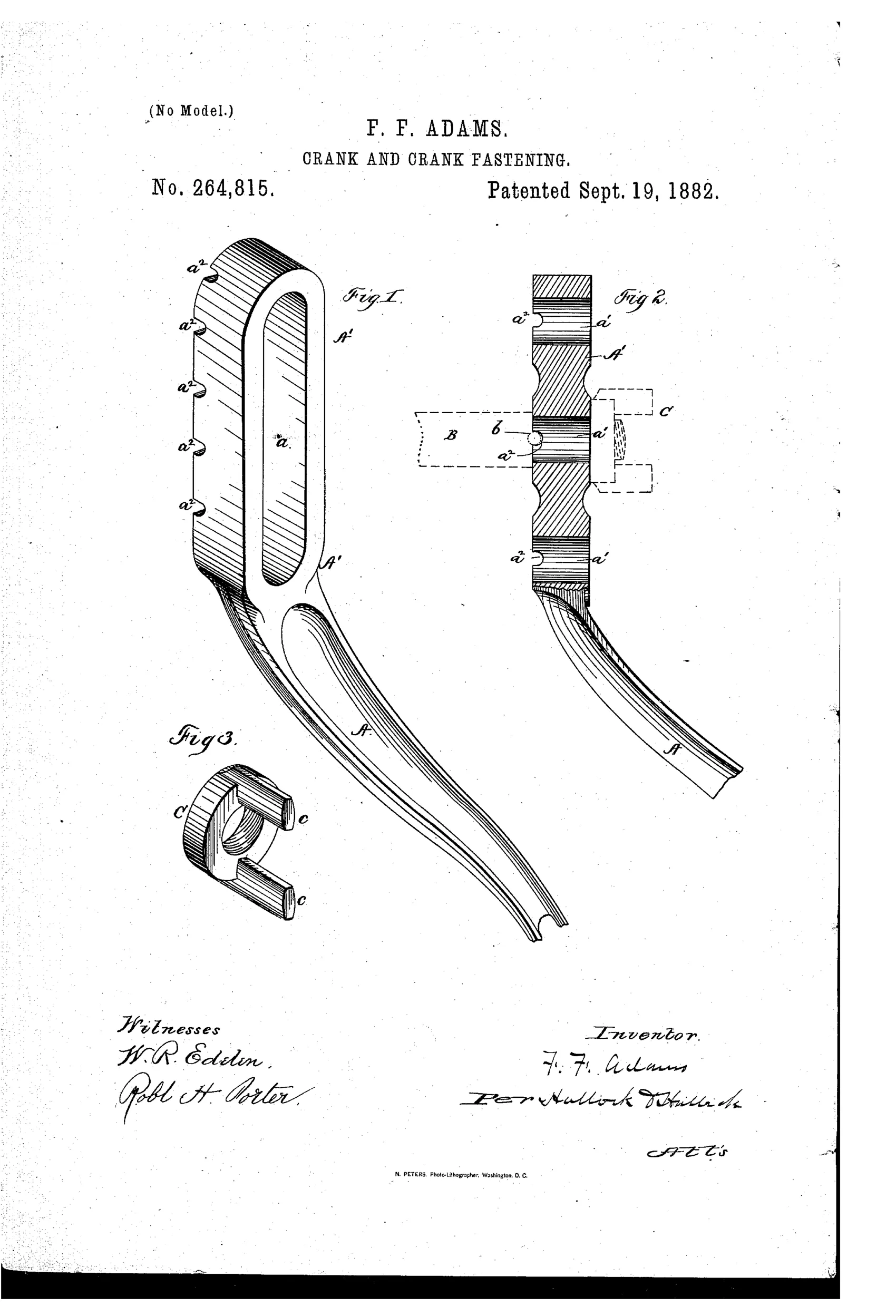
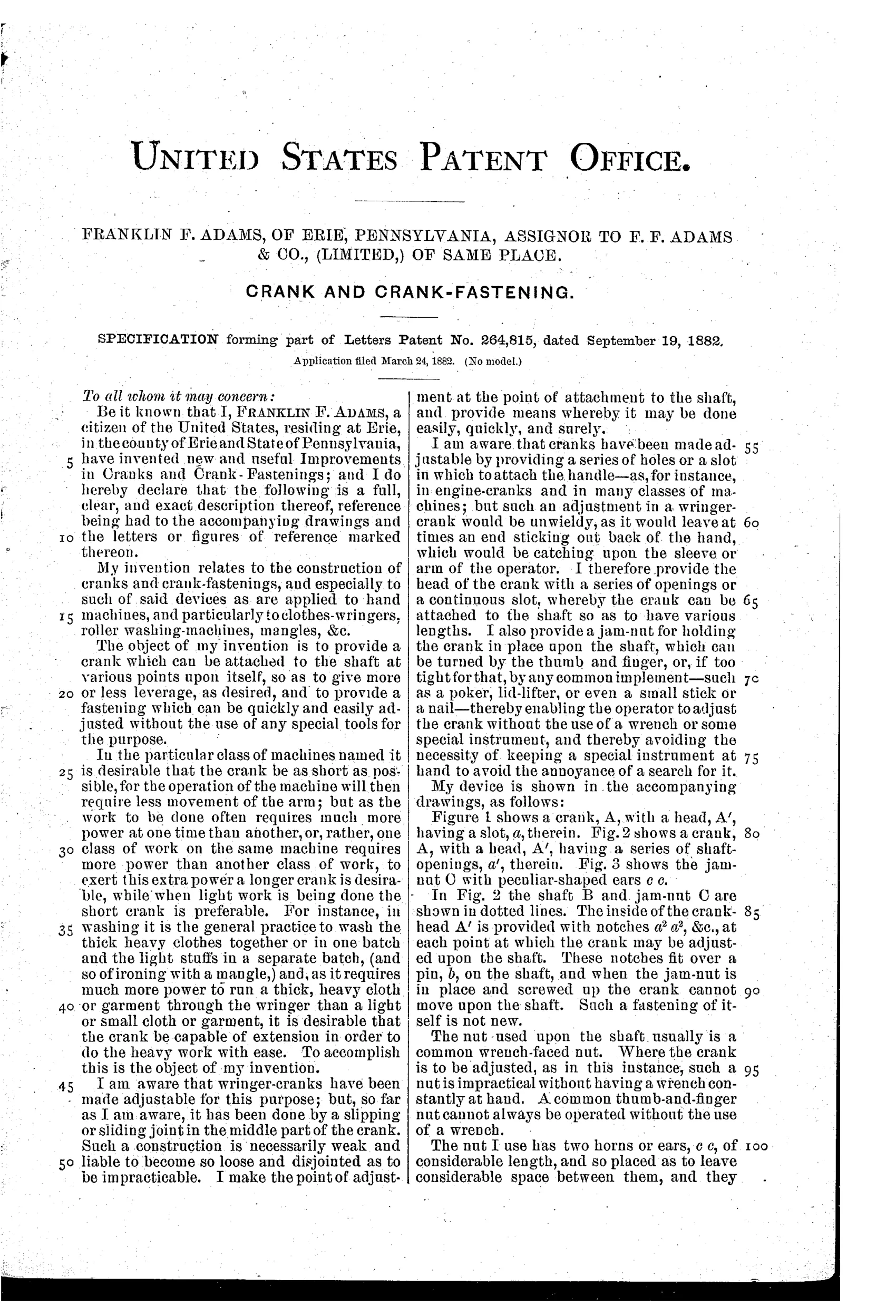
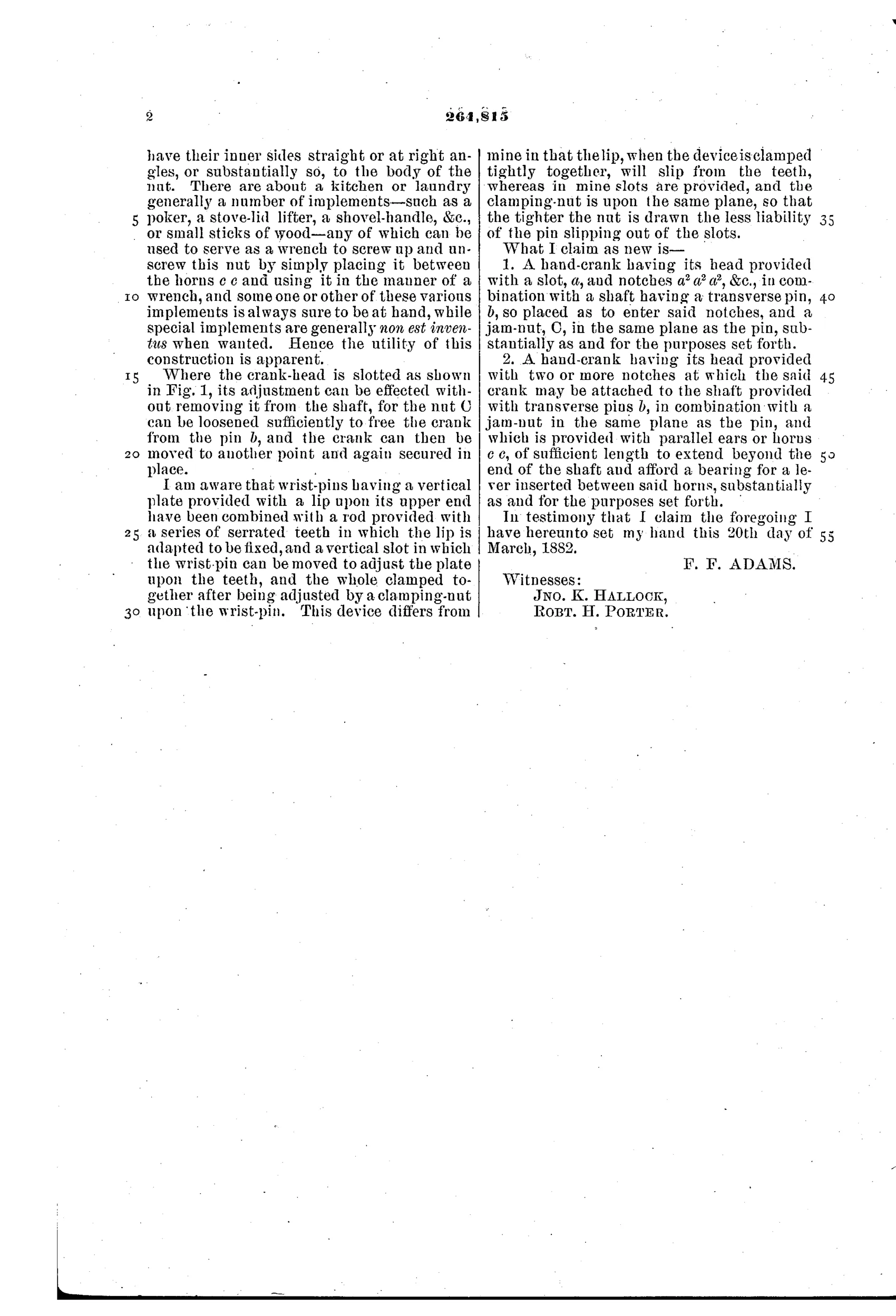
Adjustable hand crank with locking jam-nut
↻ How it works
The crank has a head with a slot or a series of notches so it can be attached to a shaft at various points, changing its effective length. A transverse pin on the shaft engages the slot or notches to set the leverage. A jam-nut, sharing the same plane as the pin, is screwed up to lock the crank in place, preventing it from moving on the shaft. The nut has two long parallel ears or horns spaced apart so that a common household implement, such as a poker or stove-lid lifter, can be inserted between them and used as a lever to tighten or loosen the nut without a wrench.
↻ What was claimed
“1. A hand-crank having its head provided with a slot, a, and notches a2 a2 a2, &c., in combination with a shaft having a transverse pin, b, so placed as to enter said notches, and a jam-nut, C, in the same plane as the pin, substantially as and for the purposes set forth.”
In plain English: A hand crank whose head has a slot and a row of notches that fit over a pin on the shaft, held in place by a jam-nut on the same plane as the pin, so the crank's length can be adjusted and locked.
↻ In the inventor’s words
“special implements are generally non est inventus when wanted.”— Franklin F. Adams, from the specification
Fate unknown
F. F. Adams & Co. was a real Erie manufacturer of wringers, so production is plausible, but no marked example of this specific eared-nut crank is documented to my knowledge.
↻ Commentary
Let's be straight about this one: despite its place in our files, this is not a fishing reel patent. Franklin F. Adams of Erie ran F. F. Adams & Co., a maker of clothes wringers and household hand machines, and this crank belongs to that world — the head is far too heavy, the shaft too stout, for anything you would bolt to a bait-casting spool. It surfaces in reel searches because 'crank and crank fastening' is exactly the language reel patents use, and because Kentucky-style reel cranks with their counterbalanced handles and locking screws chased the same basic problem: keeping a crank tight on a rotating shaft.
The mechanics are honest and simple. A slot with a row of notches lets the crank sit at several radii on the shaft — longer throw for heavy work, shorter for speed — with a transverse pin indexing the notch and a jam-nut clamping the whole thing solid. That's a leverage adjustment reel makers never bothered with, since a reel crank's length is fixed by hand ergonomics, not load.
The genuinely charming detail is Fig. 3: the jam-nut's two long parallel ears exist so a housewife can tighten it with a stove-lid lifter or poker instead of a wrench. Adams's own specification grumbles that 'special implements are generally non est inventus when wanted' — a design decision built around the reality of the kitchen, and better user-centered thinking than half the reel patents of the decade.
Commentary by Claude, The Fishing Reel Patent Archive’s resident enthusiast