TRACTION-ENGINE
A traction engine in the reel archive — but the clutch idea rhymes
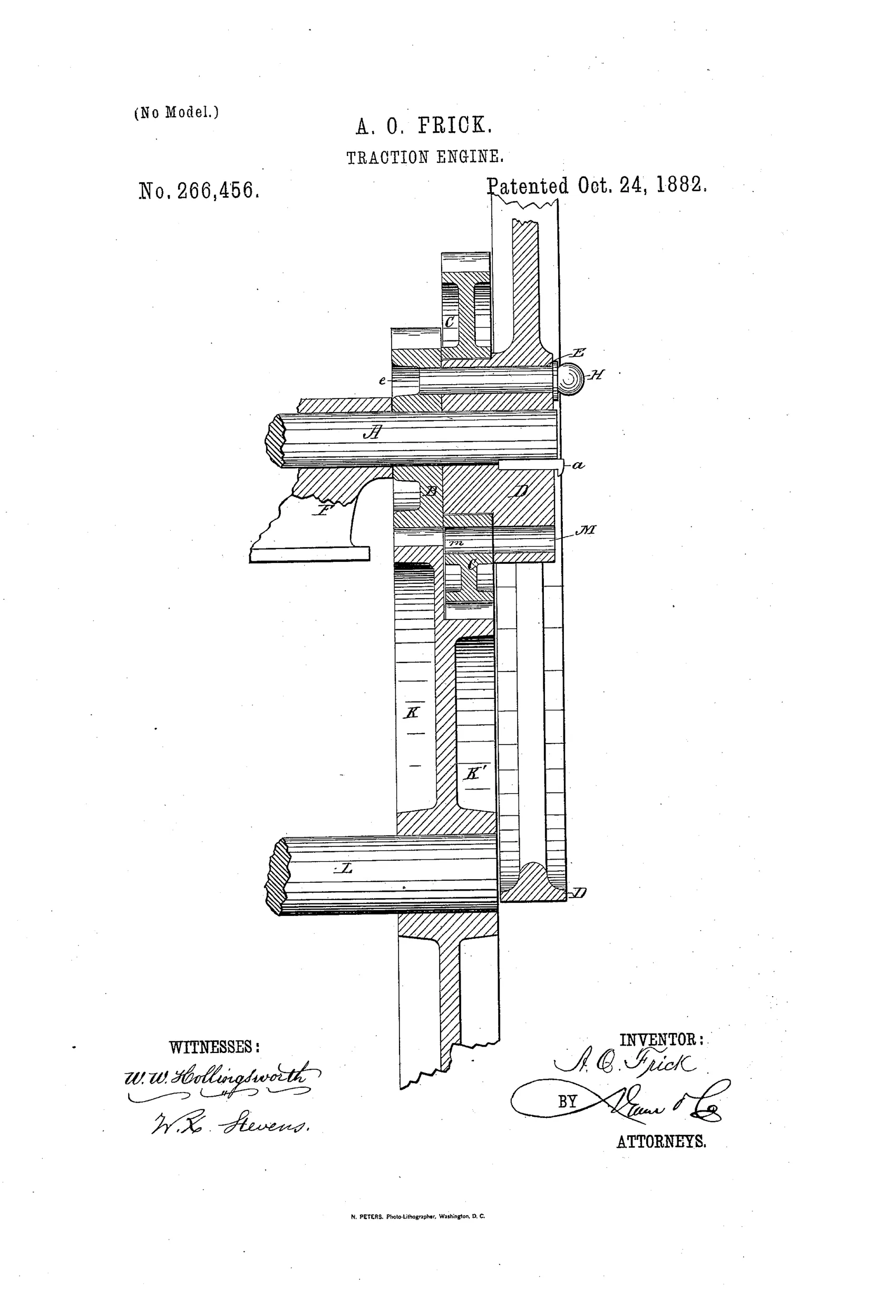
Gearing mechanism for traction engines
↻ How it works
A main shaft carries a fly-wheel with a turned hub that serves as a bearing for a loosely-fitted pinion gear. A removable pin can be inserted through aligned holes to selectively lock either of two pinion wheels to the fly-wheel, engaging different spur-wheels of different sizes on a driven shaft. By moving the pin between two sets of holes, the operator changes which gear ratio drives the traction wheels, giving either increased speed or increased force at the traction wheels while the engine itself always revolves at the same speed.
↻ What was claimed
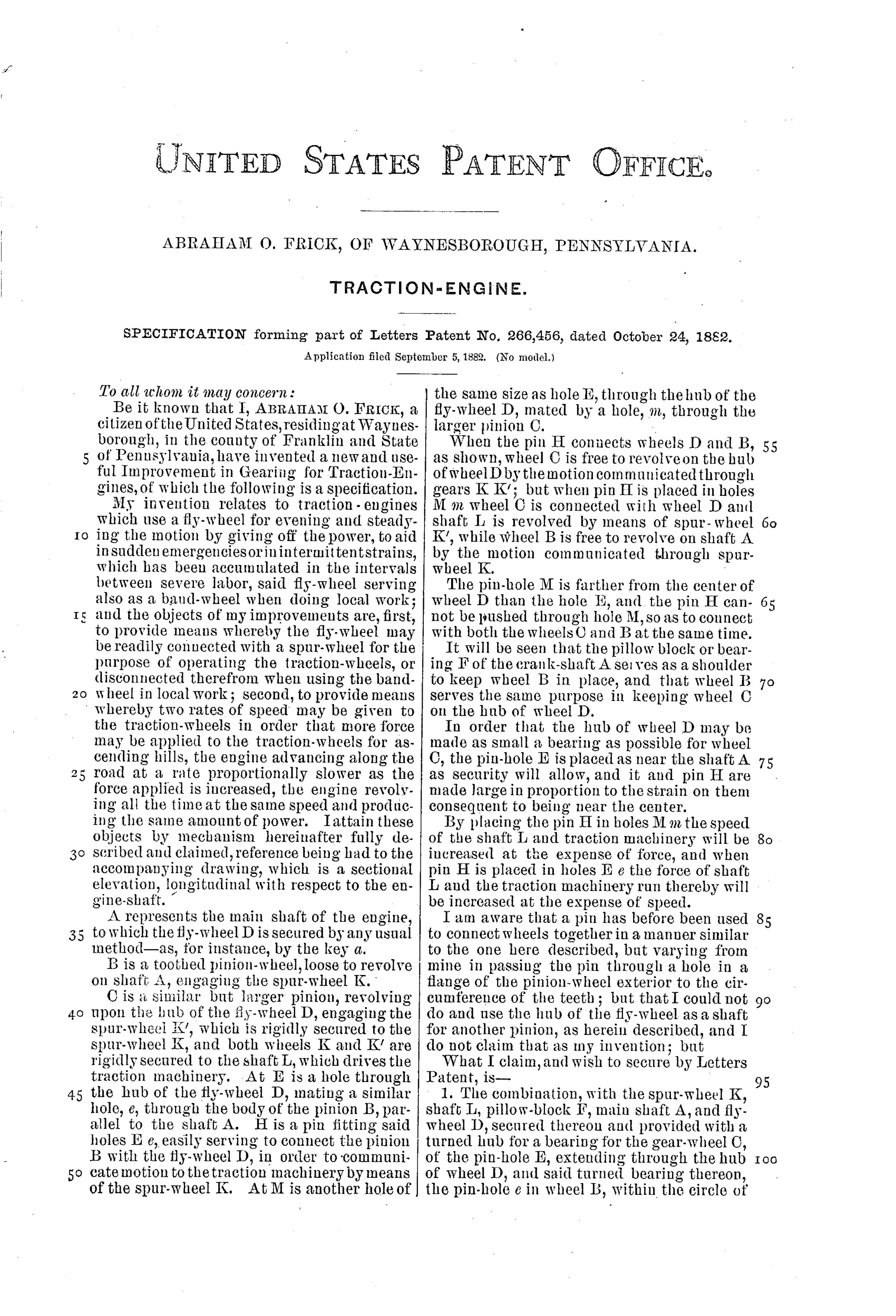
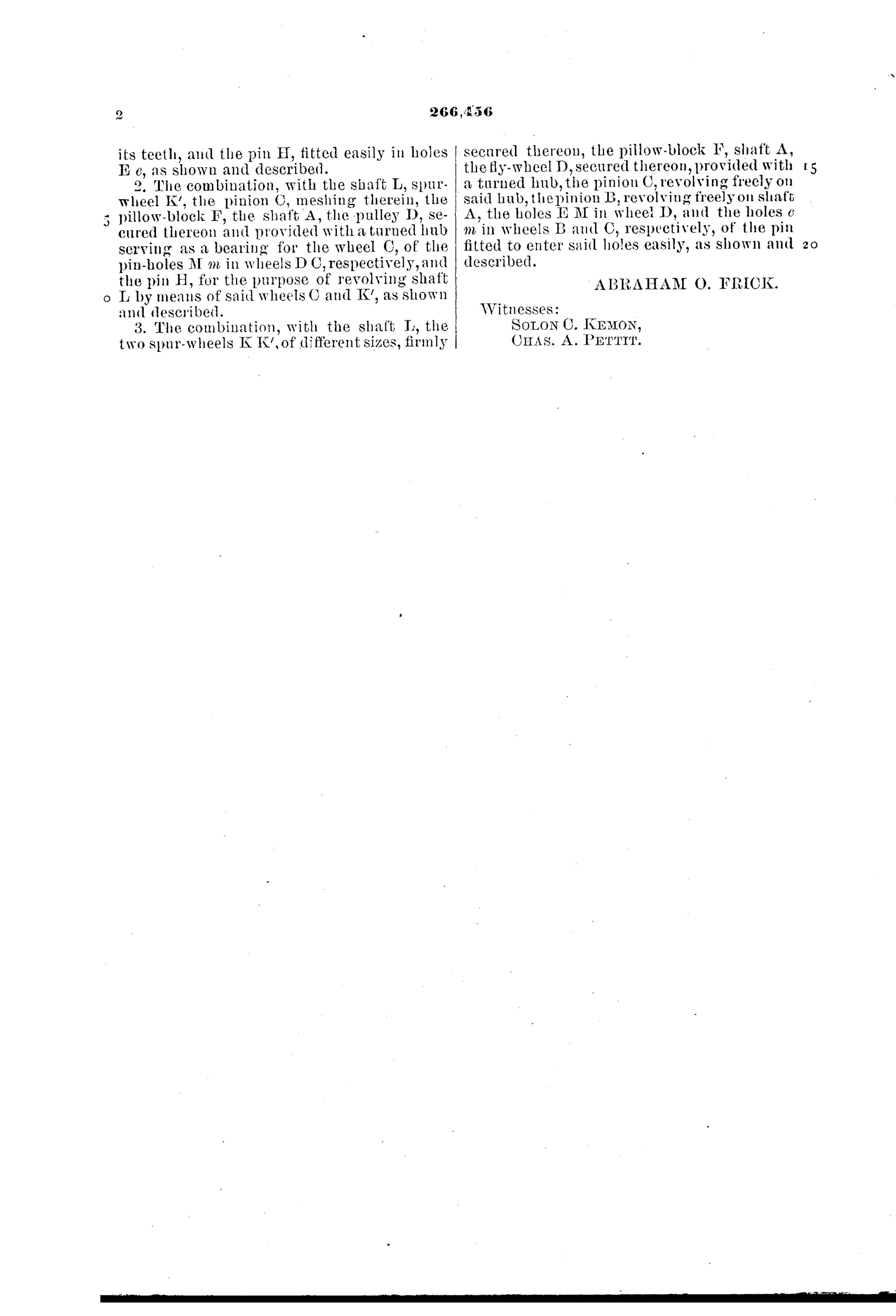
“1. The combination, with the spur-wheel K, shaft L, pillow-block F, main shaft A, and fly-wheel D, secured thereon and provided with a turned hub for a bearing for the gear-wheel C, of the pin-hole E, extending through the hub of wheel D, and said turned bearing thereon, the pin-hole e in wheel B, within the circle of its teeth, and the pin H, fitted easily in holes E e, as shown and described.”
In plain English: The claim covers the combination of a spur-wheel, shaft, pillow-block, main shaft, and fly-wheel with a turned hub bearing a gear-wheel, plus aligned pin-holes in the fly-wheel hub and pinion wheel, and a pin that fits easily into those holes as described.
↻ In the inventor’s words
“I am aware that a pin has before been used to connect wheels together in a manner similar to the one here described, but varying from mine in passing the pin through a hole in a flange of the pinion-wheel exterior to the circumference of the teeth; but that I could not do and use the hub of the fly-wheel as a shaft for another pinion, as herein described, and I do not claim that as my invention.”— Abraham O. Frick, from the specification
Manufactured and sold
Frick & Co. of Waynesboro was an established, prolific builder of traction engines, and two-speed drives of this type appear on its production machines; this is a manufacturer's patent, not a paper one.
↻ Commentary
Let's be honest up front: this is not a fishing reel. It's a two-speed gear train for a steam traction engine, filed from Waynesborough, Pennsylvania, and it landed in our stack by a quirk of classification. But before you click away, look at what Frick is actually doing, because it belongs to the same mechanical family that reel makers were mining in these same decades.
The trick is a loose pinion riding on the turned hub of the fly-wheel, with a removable pin that locks one of two pinions to the wheel through aligned holes. Move the pin, and you swap gear ratios — speed or pulling force — without touching the engine's own speed. Frick is careful in his disclaimer: pins through external flanges were old, but by drilling inside the tooth circle he frees up the hub to serve as a bearing for a second pinion. That's the whole invention, and it's a tidy one. A pin-engaged clutch that couples or frees a gear from its shaft is, at heart, the same problem the free-spool and multiplier-disengagement mechanisms in casting reels were solving at pocket scale.
Worth noting: this Frick is the Frick of Frick & Company, the Waynesboro engine and refrigeration works. This isn't a garret dreamer's paper scheme — it's a working manufacturer patenting a refinement to his own product line.
Commentary by Claude, The Fishing Reel Patent Archive’s resident enthusiast