IMPROVEMENT IN FISHING-REELS.
A working level-wind in 1860, forty years before the trade caught up
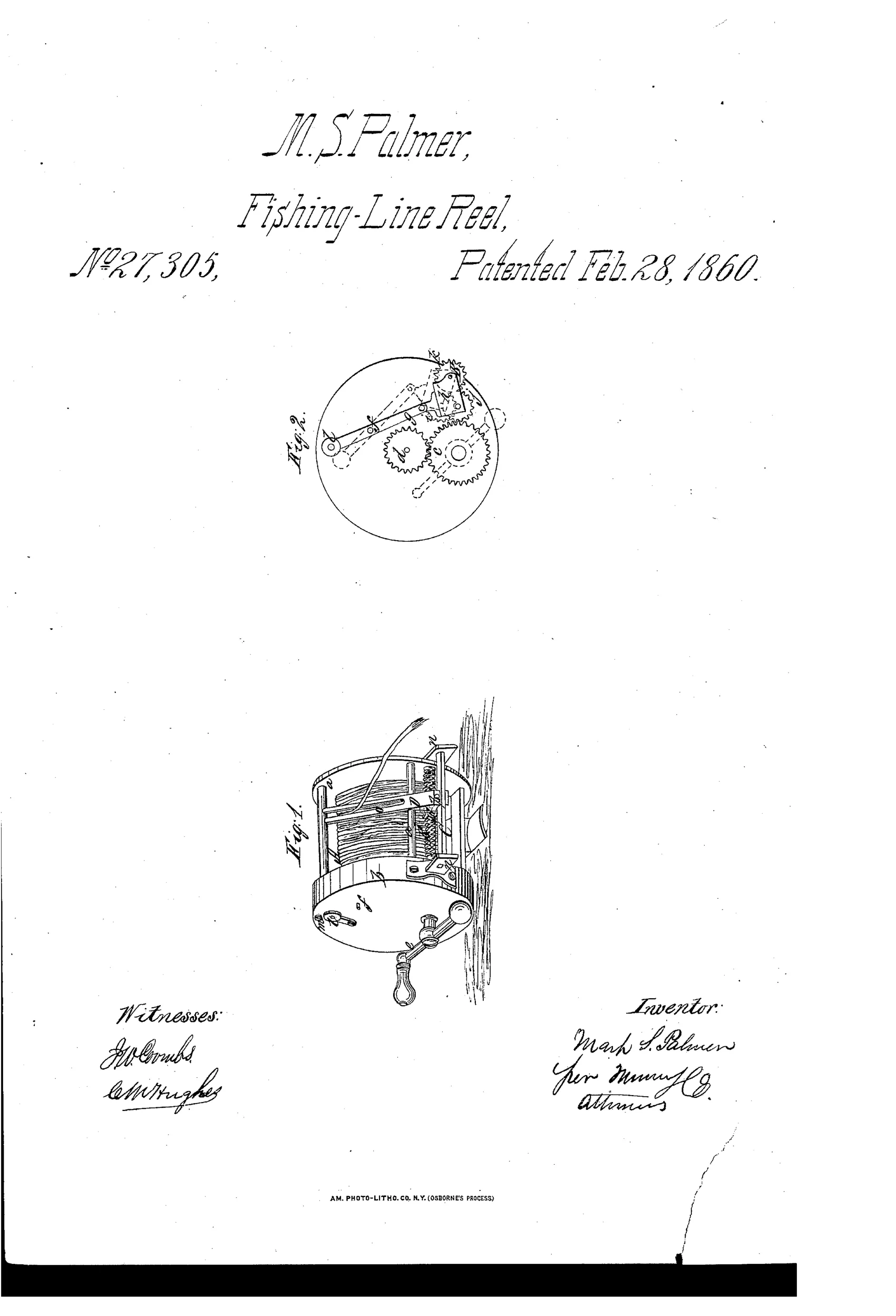
Fishing reel with automatic level-wind line guide
↻ How it works
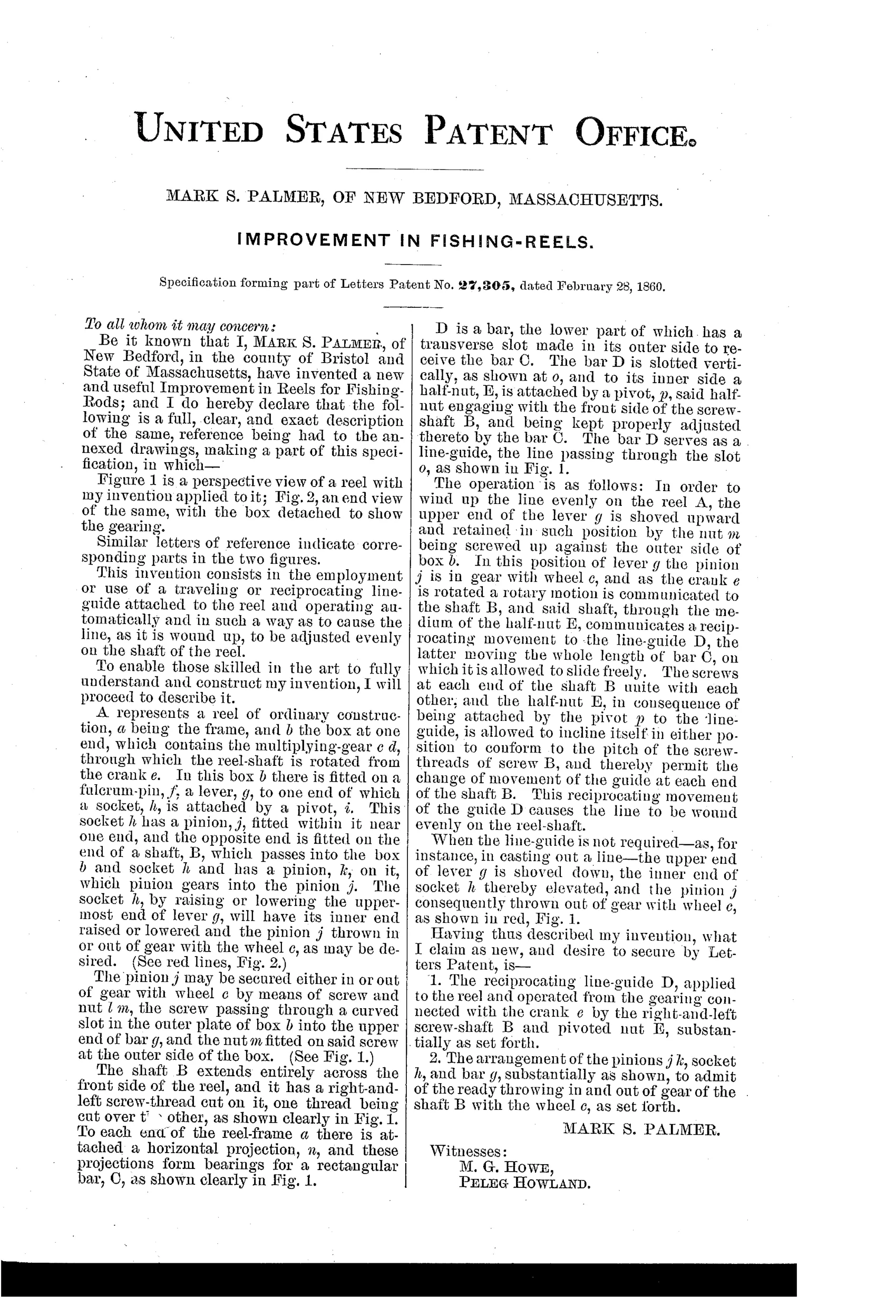
A traveling line-guide bar D is mounted on a rectangular bar C and driven by a right-and-left threaded screw-shaft B, which reciprocates via a pivoted half-nut E as the crank e turns the gearing. A lever g with pinions j and k can be raised or lowered to throw the guide's gear into or out of mesh with wheel c, allowing the guide to be engaged for winding or disengaged for casting. This reciprocating motion causes the fishing line to wind evenly back and forth across the reel-shaft as it is retrieved.
↻ What was claimed
“1. The reciprocating line-guide D, applied to the reel and operated from the gearing connected with the crank e by the right-and-left screw-shaft B and pivoted nut E, substantially as set forth. 2. The arrangement of the pinions j k, socket h, and bar g, substantially as shown, to admit of the ready throwing in and out of gear of the shaft B with the wheel c, as set forth.”
In plain English: The inventor claims a line guide that automatically moves back and forth across the reel using a screw shaft and pivoted nut driven by the crank, plus a lever-and-gear mechanism that lets the user easily engage or disengage this winding mechanism.
↻ In the inventor’s words
“This invention consists in the employment or use of a traveling or reciprocating line-guide attached to the reel and operating automatically and in such a way as to cause the line, as it is wound up, to be adjusted evenly on the shaft of the reel.”— Mark S. Palmer, from the specification
Fate unknown
No manufactured example or maker association is documented; a marked specimen or period advertisement would settle it.
↻ Commentary
The level-wind — a line guide that shuttles back and forth so the retrieve lays evenly across the spool — is usually told as a story of the early 1900s, when Shakespeare and the Marhoff patent made it standard equipment on casting reels. Here is Mark Palmer of New Bedford working out the whole idea in 1860, using the classic machinist's answer: a right-and-left threaded screw shaft. A half-nut riding that double thread reverses the guide's travel automatically at each end, no cams or trip levers needed. It is the same basic geometry that later level-winds settled on.
The second claim is the shrewder one. Palmer knew a permanently engaged guide would drag on the line during payout, so he provided a lever and pinion arrangement to throw the screw shaft out of mesh — engage for winding, free for letting line run. That anticipates the disengaging level-winds anglers argued about well into the twentieth century.
Fig. 2 rewards a close look: the exposed gear train shows this is also a multiplying reel, crank geared up to the spool, which puts Palmer in conversation with the Kentucky watchmakers even from a Massachusetts whaling port. The likely trouble was practical — an exposed screw thread near wet line collects grit, and 1860 anglers weren't asking for this yet. A good idea arriving before its market.
Commentary by Claude, The Fishing Reel Patent Archive’s resident enthusiast