FISHING-REEL.
One threaded tube replaces pillars and nuts — a reel frame you unscrew whole
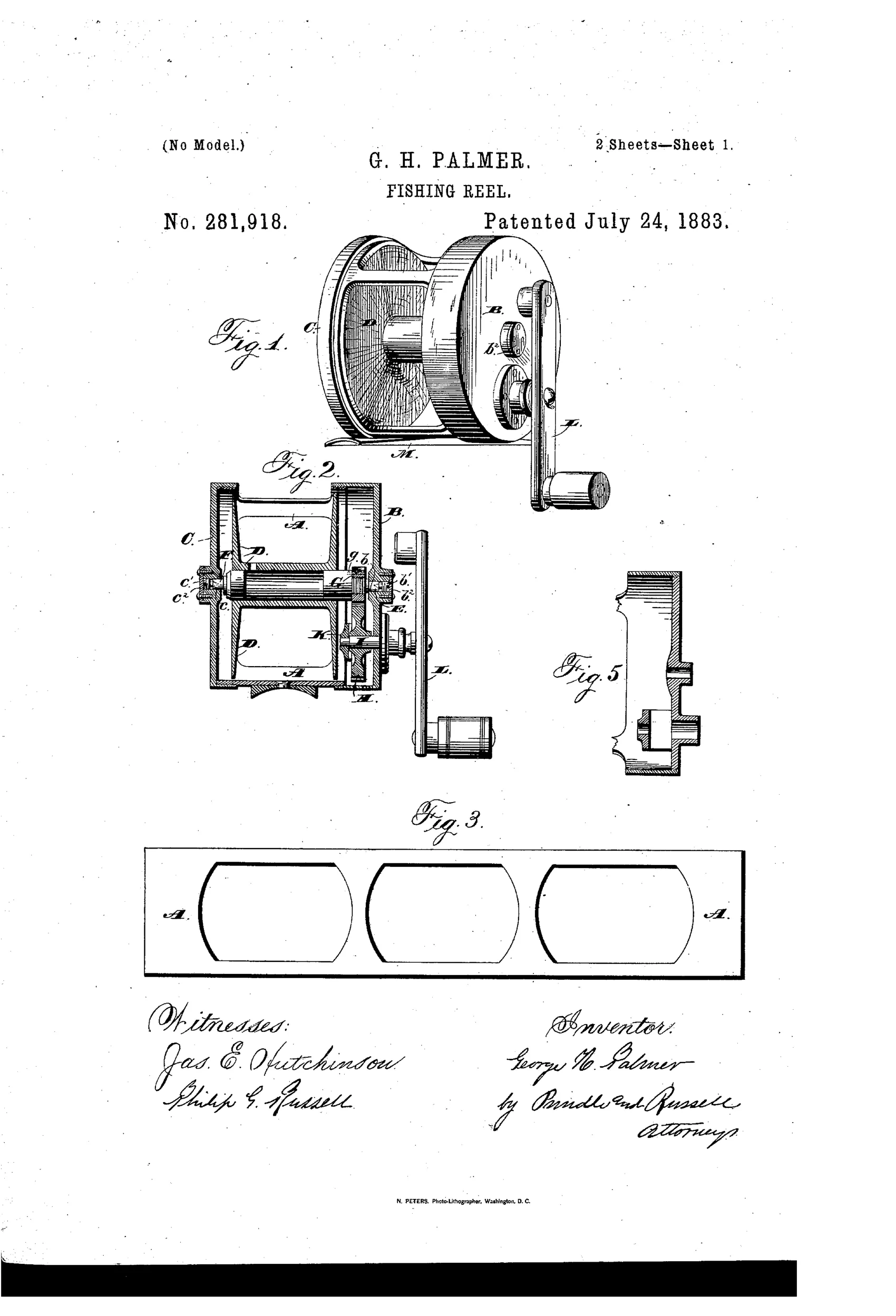
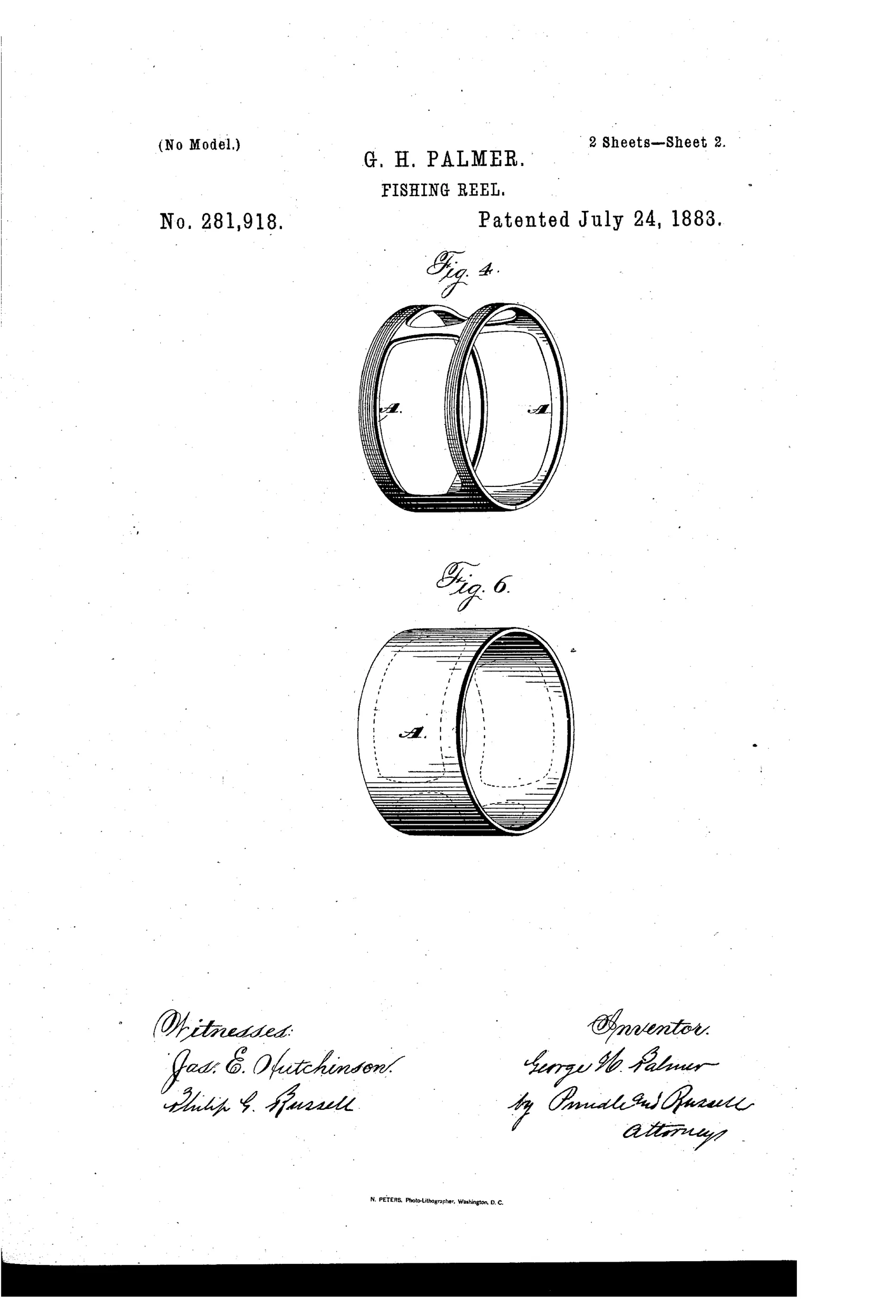
Multiplying fishing reel with screw-jointed drum frame
↻ How it works
The reel's frame consists of a single tubular metal drum with screw-threaded ends, eliminating the usual pillars and nuts that connect end plates. Cup-shaped end caps screw directly onto or into the threaded drum ends, with one cap deep enough to house multiplying gearing. A pinion on one spool spindle meshes with a larger gear wheel fixed to the crank shaft, which is journaled in the cap and a bridge-piece projecting from it. Adjustable screw-plugs in the hub of each end cap bear against the spool-spindle ends to set the spool's longitudinal position, and covering plates conceal these openings.
↻ What was claimed
“In a fishing-reel, the drum made in one piece, with suitable openings cut therein to make an open frame, and provided at each end with screw-threaded portions, in combination with the end caps, provided with corresponding screw-threaded portions to fit those on the drum, substantially as and for the purpose set forth.”
In plain English: The reel's frame is a single tubular drum with screw threads cut into each end, onto which matching threaded end caps screw directly, replacing separate pillars and end plates.
↻ In the inventor’s words
“These nuts are, as is well known, very liable to work loose and get lost.”— George H. Palmer, from the specification
Fate unknown
The assignment to Conroy, an active New York reel seller, argues for commercial intent, but no documented reel with this one-piece threaded drum is known to me; a marked specimen would settle it.
↻ Commentary
Every angler of 1883 knew the annoyance Palmer is attacking: the pillars connecting a reel's end plates were held by tiny nuts, and as his patent puts it, "these nuts are, as is well known, very liable to work loose and get lost." His answer is radical simplification. Cut openings in a single metal tube to make an open frame, thread both ends, and screw cup-shaped caps directly onto them. No pillars, no nuts, no small parts to drop in the bottom of a boat.
Fig. 3 is the detail a casual reader skips past and shouldn't: the drum starts as a flat strip with the frame openings already cut, then gets rolled, joined, and threaded (Figs. 4 and 6). That is a manufacturing drawing as much as a mechanical one — Palmer is thinking about how to make these cheaply from sheet stock, not just how one should work. The section in Fig. 2 shows the deeper cap swallowing the multiplying gears, and the little screw-plugs in each hub that let you adjust the spool's end-play, then hide under cover plates. That end-play adjustment is a genuinely Kentucky-style refinement.
The assignment matters here: Thomas J. Conroy was one of New York's most prominent tackle houses, so this wasn't an amateur's daydream. Whether the screw-together frame survived contact with real production — threads that gall, caps that must clock the foot correctly — is the open question.
Commentary by Claude, The Fishing Reel Patent Archive’s resident enthusiast