FISHING-REEL.
A slipping-washer drag in 1889, a quarter century before the star drag
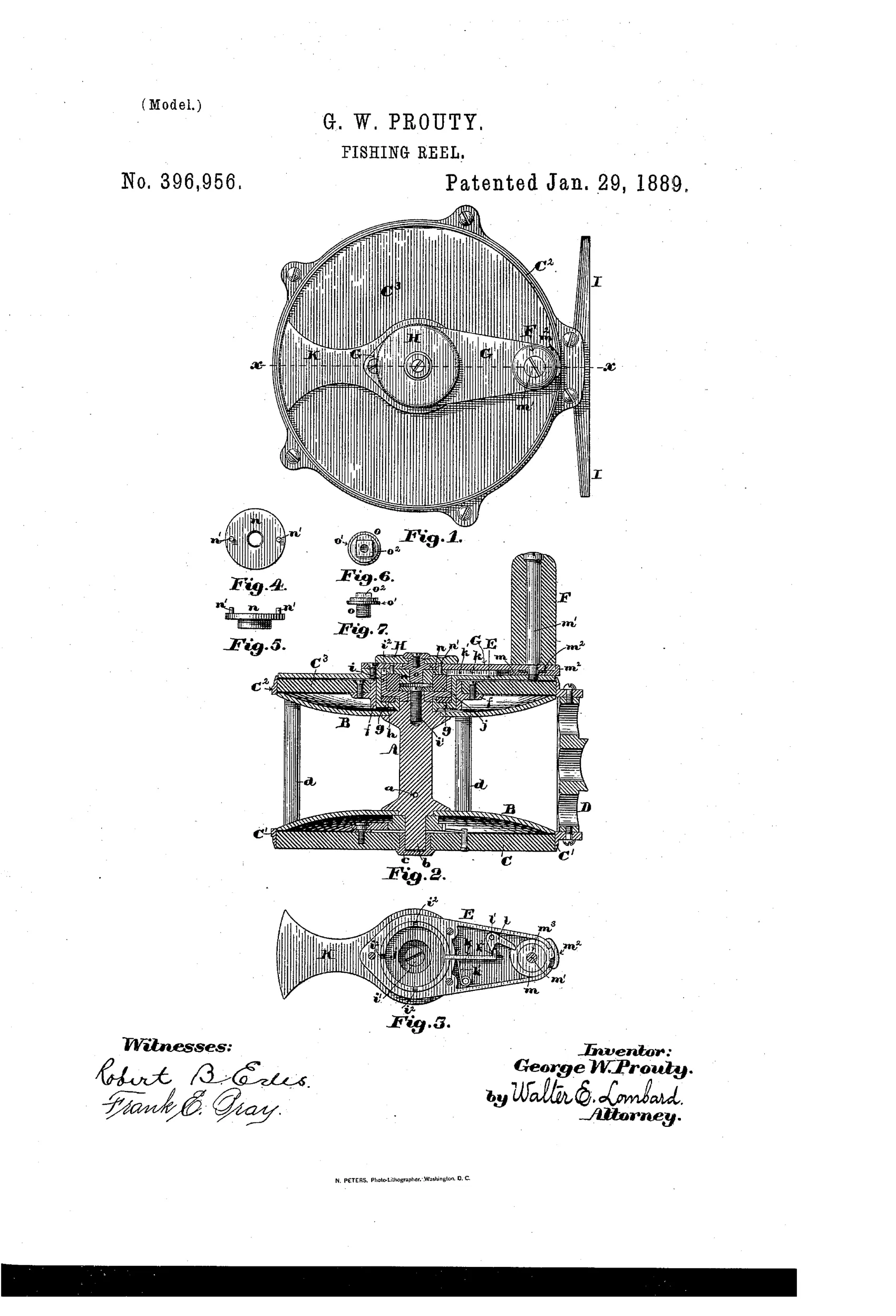
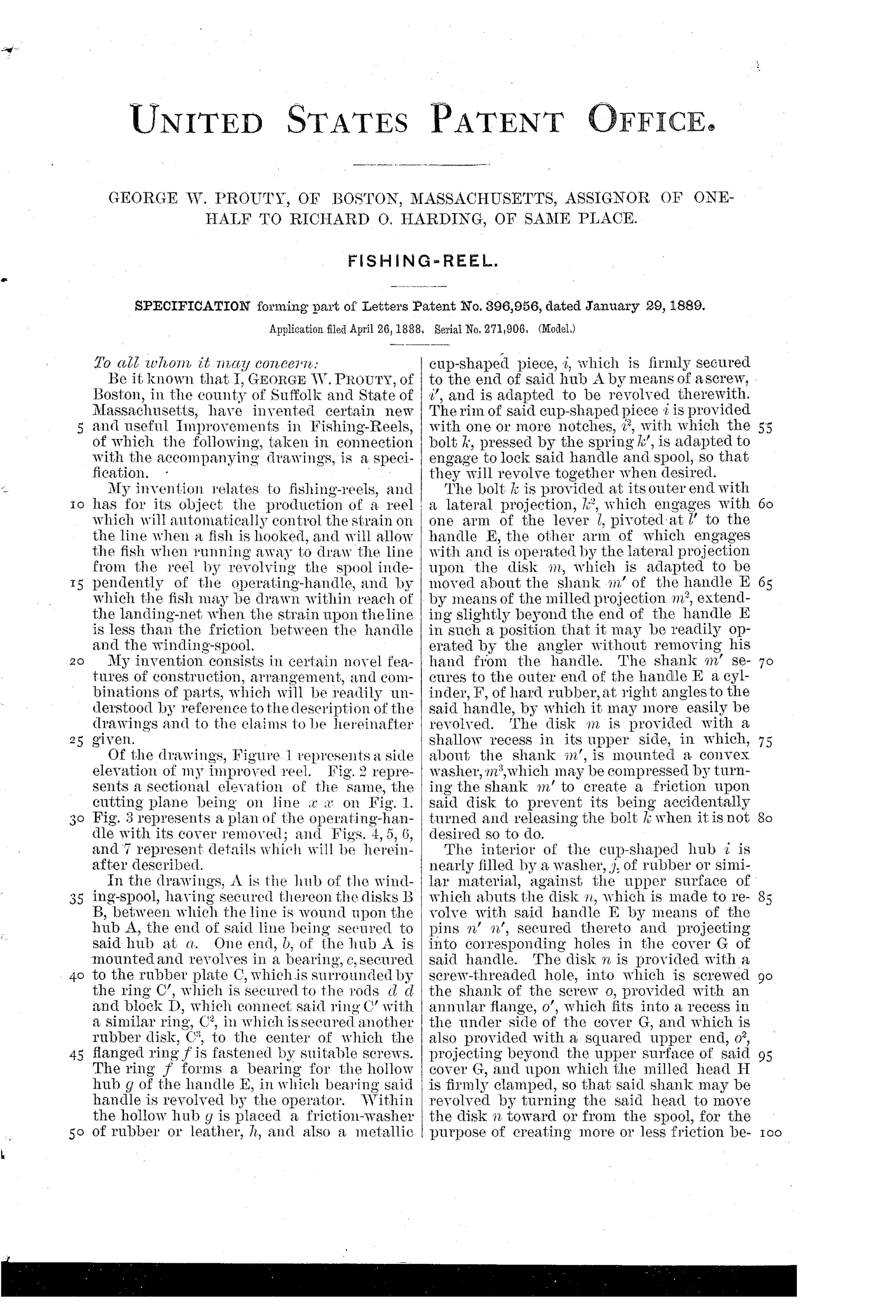
Fishing reel with automatic friction-clutch drag mechanism
↻ How it works
The winding spool's hub is journaled in bearings in the frame, and the operating handle is mounted so it can revolve independently on the same journal. A washer interposed between the handle and spool creates friction so that the handle normally rotates the spool to wind line, but the spool can slip and rotate backward when line strain exceeds the friction, allowing a hooked fish to run without the handle spinning. A sliding bolt, spring, and bell-crank lever operated by a milled thumb-piece on the handle allow the angler to positively lock the spool and handle together when desired, overriding the friction drag. The friction level itself is adjustable via a disk and screw that press a convex washer against the handle mechanism.
↻ What was claimed
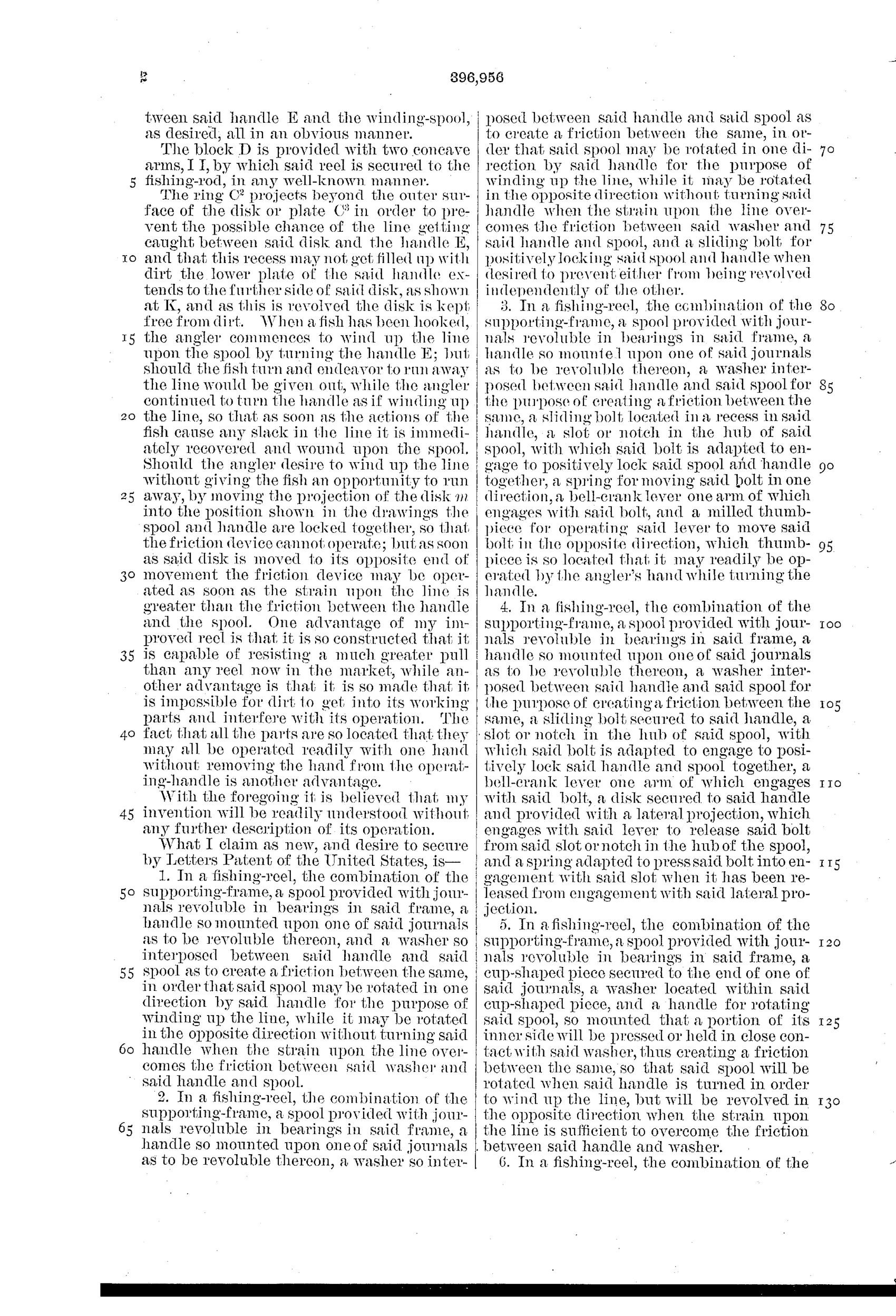
“1. In a fishing-reel, the combination of the supporting-frame, a spool provided with journals revoluble in bearings in said frame, a handle so mounted upon one of said journals as to be revoluble thereon, and a washer so interposed between said handle and said spool as to create a friction between the same, in order that said spool may be rotated in one direction by said handle for the purpose of winding up the line, while it may be rotated in the opposite direction without turning said handle when the strain upon the line overcomes the friction between said washer and said handle and spool.”
In plain English: The reel combines a frame, a spool on journals, and a handle that turns the spool via friction from a washer, so the handle winds line normally but the spool can spin freely backward when a fish pulls hard enough to overcome that friction.
↻ In the inventor’s words
“One advantage of my improved reel is that it is so constructed that it is capable of resisting a much greater pull than any reel now in the market, while another advantage is that it is so made that it is impossible for dirt to get into its working parts and interfere with its operation.”— George W. Prouty, from the specification
Fate unknown
No documented production example under Prouty's name is known to me; a marked specimen or trade listing would settle it.
↻ Commentary
Prouty's core idea is the one that eventually conquered saltwater fishing: don't lock the handle to the spool at all. Instead, let a friction washer carry the drive, so the handle winds normally but a hard-running fish can pull the spool backward against adjustable friction while the handle stays put. That is, in essence, the slip-clutch drag — the principle behind William Boschen's star drag, which wouldn't reach reels in commercially important form until around 1913. Prouty gets there in 1889, from Boston rather than the Kentucky or Brooklyn shops that dominated the trade.
The details are worth a look in Fig. 2 and Fig. 3. The friction level is set by a screw and disk pressing a convex washer against the handle assembly — a real adjustment, not a fixed slip point. And Prouty hedges his bet: a sliding bolt with a thumb-piece on the handle lets the angler positively lock spool to handle, overriding the clutch for straight winching. That two-mode arrangement shows he understood the objection anglers would raise — that a slipping handle feels untrustworthy when horsing a fish in close.
His boast that the reel resists 'a much greater pull than any reel now in the market' is exactly right in principle: a drag that yields protects the line where a rigid reel breaks it. The half-interest assignment to Harding suggests someone thought it worth backing. Whether the market of 1889, still oriented around click checks and thumb pressure, was ready is another matter.
Commentary by Claude, The Fishing Reel Patent Archive’s resident enthusiast