FISHING-REEL.
Vom Hofe's thumb-adjustable spool bearing, the date stamped on countless back plates
Adjustable fishing reel with anti-end-shake spool bearing
↻ How it works
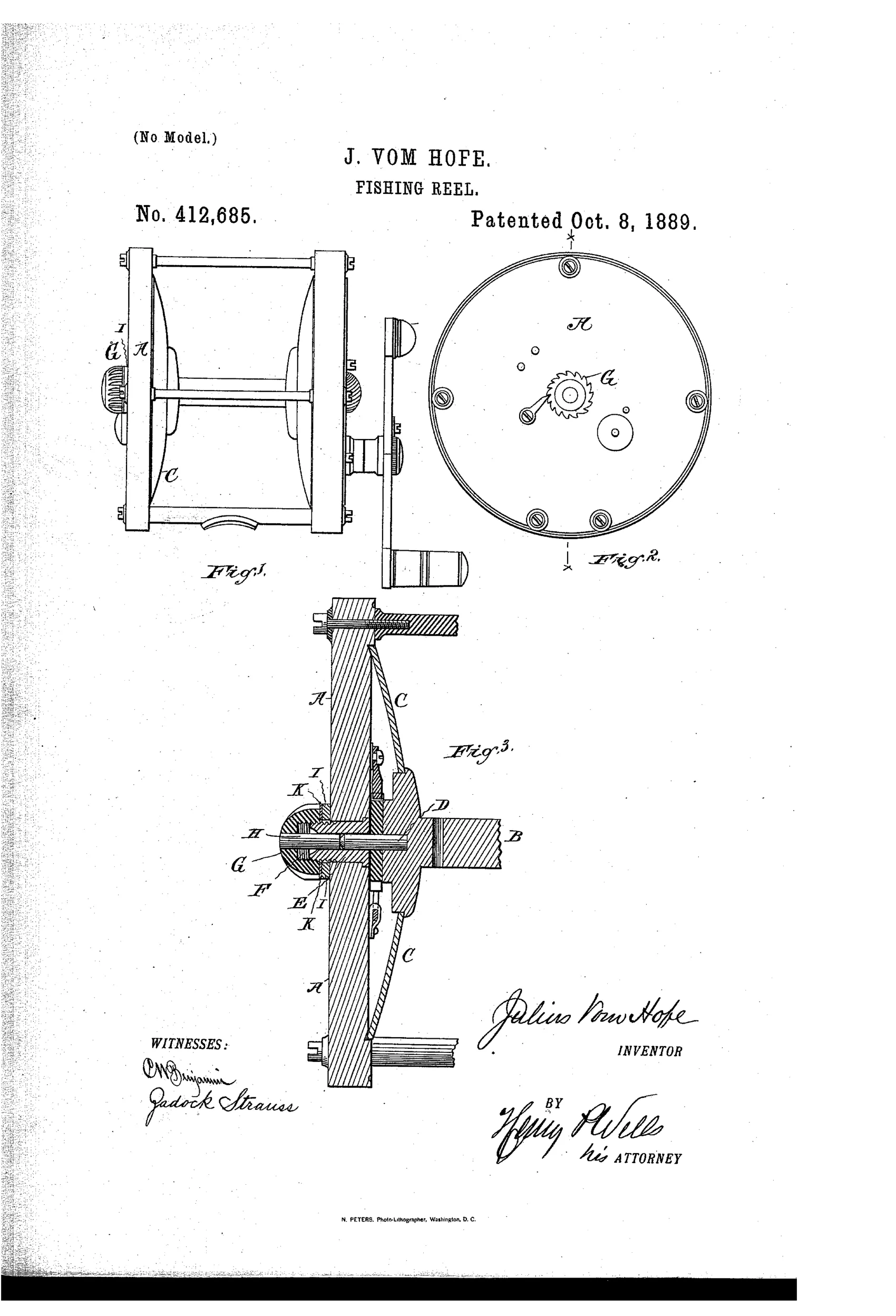
A spool axle B revolves on a pivot D that is journaled in a sleeve-bearing E fixed to the side plate A. The outer end of the sleeve-bearing is screw-threaded, and a cap G with an integral pin H screws onto it, the pin bearing against the end of the axle. Turning the cap G inward or outward pushes or releases the axle, taking up end shake or loosening the spool as needed, all adjustable by thumb and finger without tools. An elastic rubber washer I between the plate and cap, sometimes with a metal washer K, holds the cap in place and prevents it from working loose, and a ratchet and pawl may further lock the cap against unscrewing.
↻ What was claimed
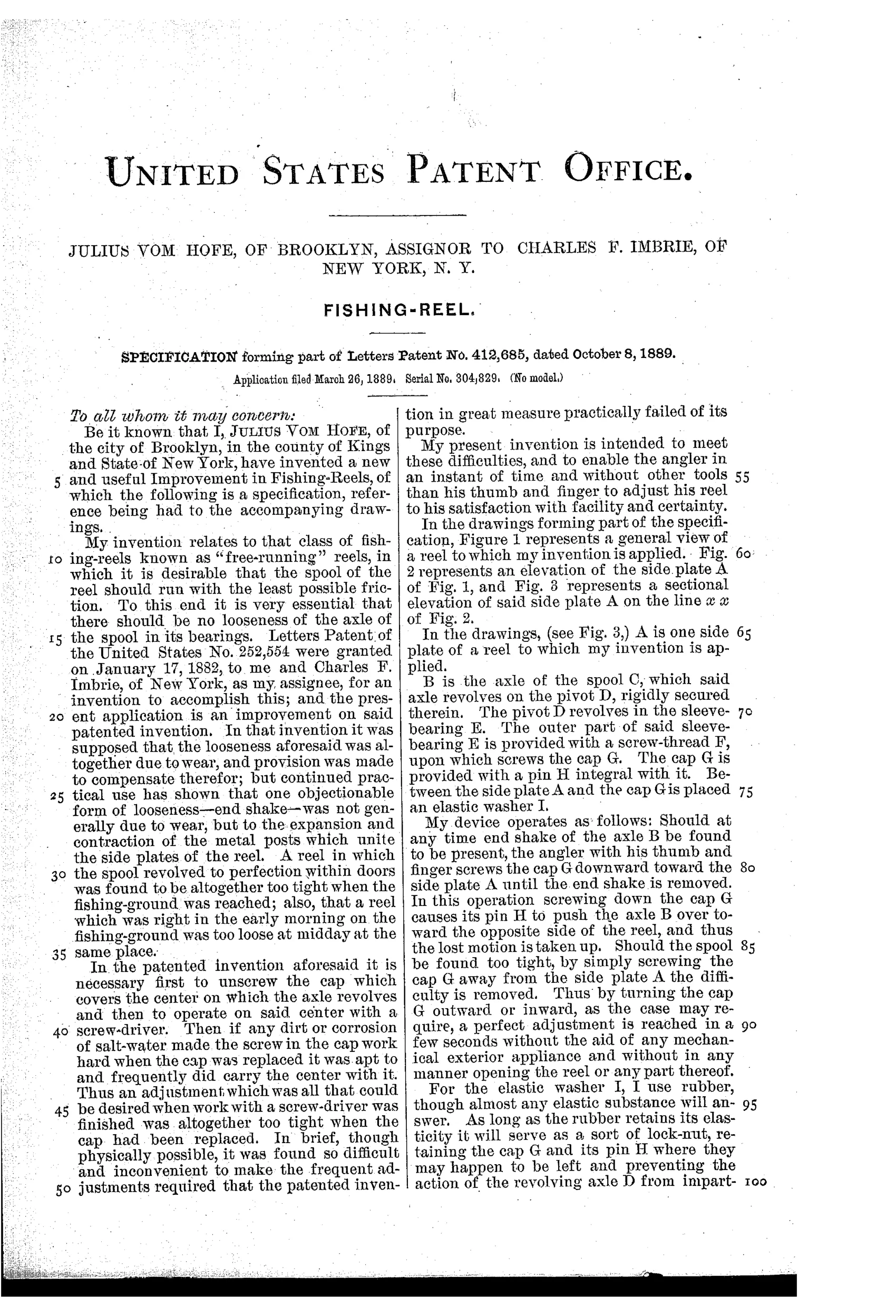
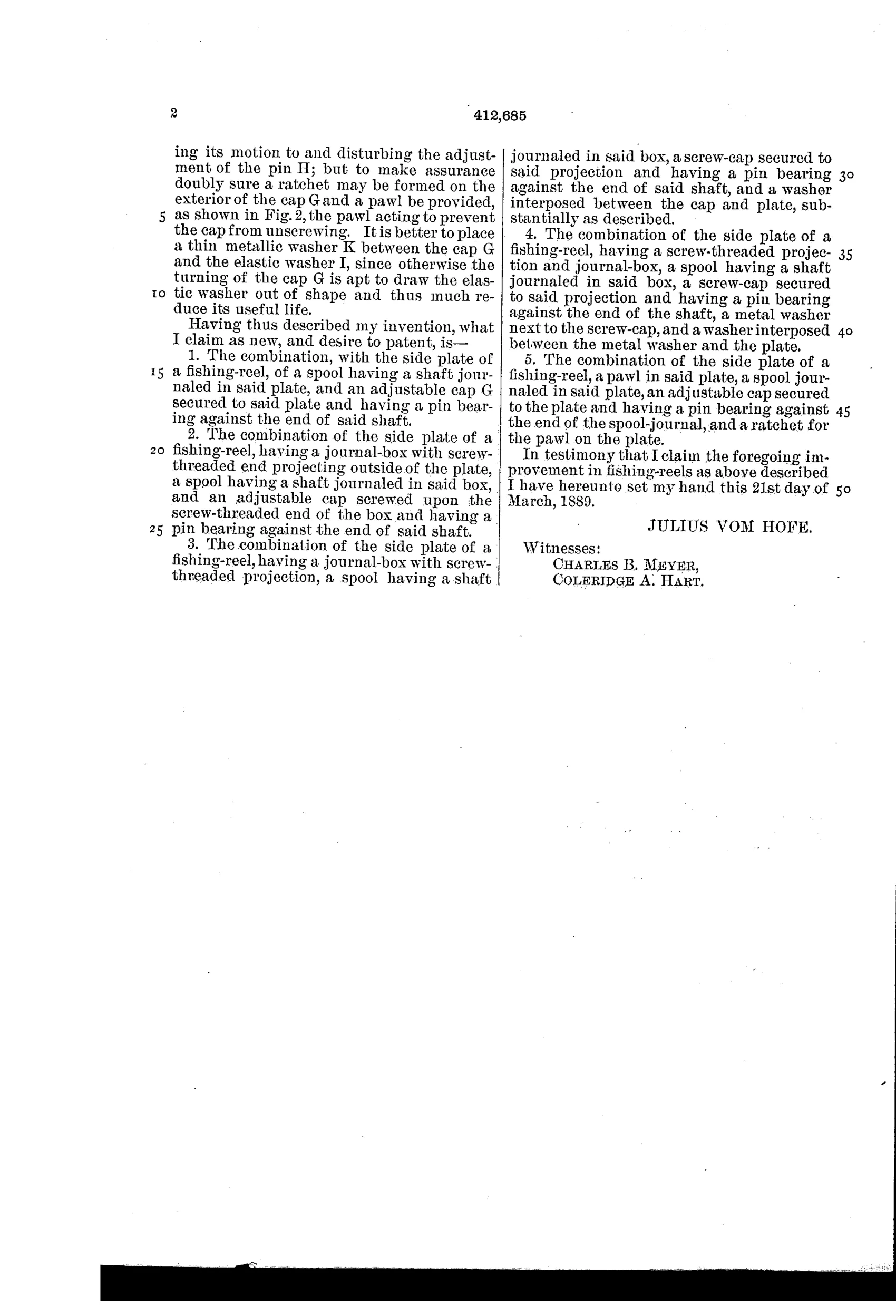
“1. The combination, with the side plate of a fishing-reel, of a spool having a shaft journaled in said plate, and an adjustable cap G secured to said plate and having a pin bearing against the end of said shaft.”
In plain English: A fishing reel side plate combined with a spool shaft journaled in the plate and an adjustable cap with a pin that presses against the end of the shaft to take up play.
↻ In the inventor’s words
“My present invention is intended to meet these difficulties, and to enable the angler in an instant of time and without other tools than his thumb and finger to adjust his reel to his satisfaction with facility and certainty.”— Julius Vom Hofe, from the specification
Manufactured and sold
The October 8, 1889 patent date appears stamped on production Julius vom Hofe reels, and the adjustable bearing cap is a documented feature of the line.
↻ Commentary
The problem here is mundane and universal: a spool axle running between pivots either binds when set too tight or rattles with end shake when set too loose, and the adjustment on most reels of the day meant a screwdriver and guesswork. Vom Hofe's answer is elegantly minimal. A sleeve bearing threaded on its outer end carries a knurled cap with an integral pin that presses against the axle's tip. Turn the cap and you shift the axle by fractions, tuning free spin against wobble on the water with bare fingers.
The detail worth lingering on in Fig. 3 is the rubber washer I tucked between plate and cap. A screw adjustment that a hand can turn is also one that vibration can turn, and a fine-tuned bearing that unscrews itself mid-fight is worse than no adjustment at all. The elastic washer loads the threads with friction, and the patent adds an optional ratchet-and-pawl lock for belt and suspenders. That is a working engineer's touch, not a draftsman's.
The assignment to Charles F. Imbrie — of the great New York tackle house Abbey & Imbrie — tells you this was headed straight for the catalog. The 'Oct. 8, 89' patent date is a familiar sight stamped on vom Hofe reels, and the adjustable end cap became a signature of the marque's free-running salt-water reels. This is a refinement, not a revolution, but it is the kind of refinement that defined Brooklyn's best.
Commentary by Claude, The Fishing Reel Patent Archive’s resident enthusiast