FISHING-ROD AND REEL.
Rochester inventor hides a whole automatic reel inside the rod butt itself
Spring-powered automatic fishing rod reel
↻ How it works
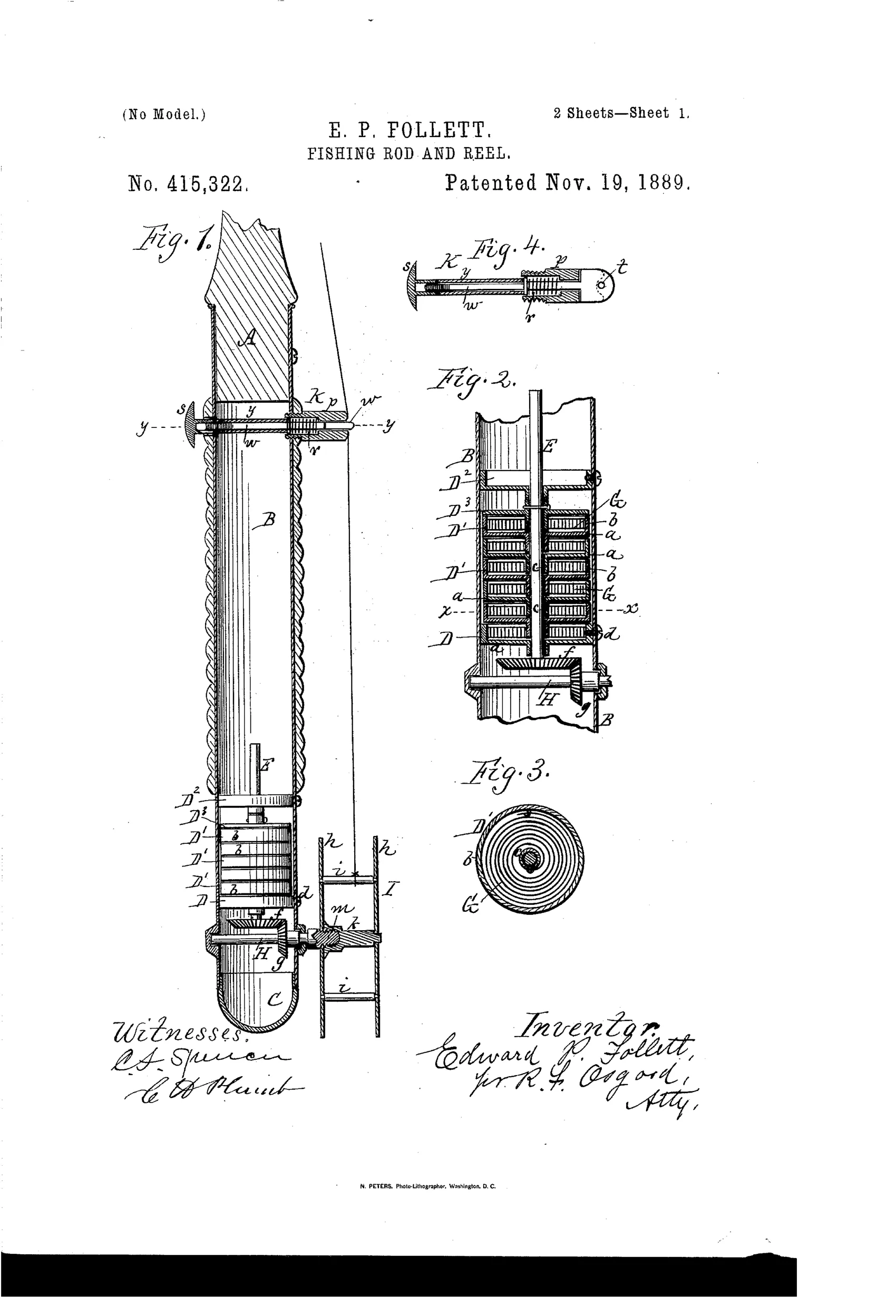
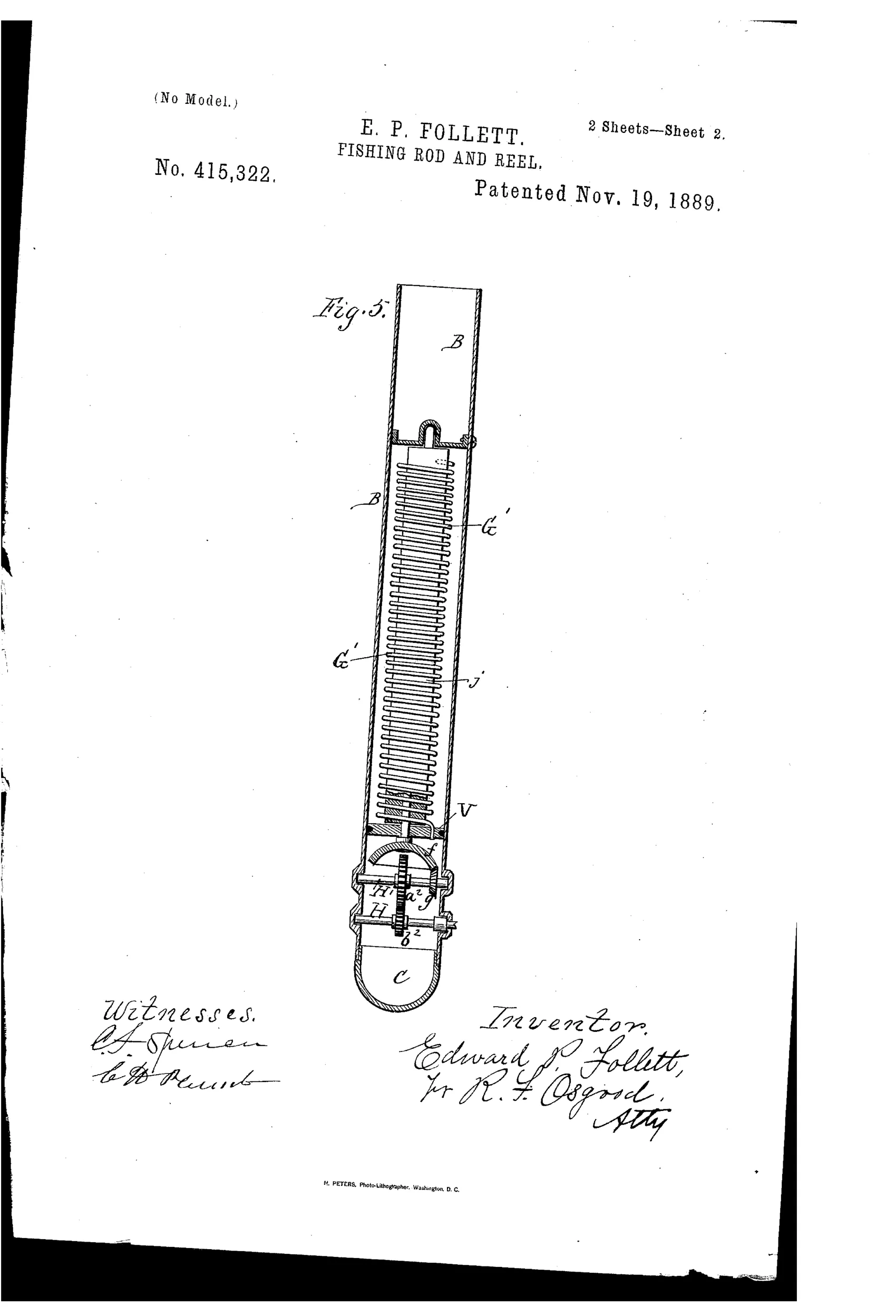
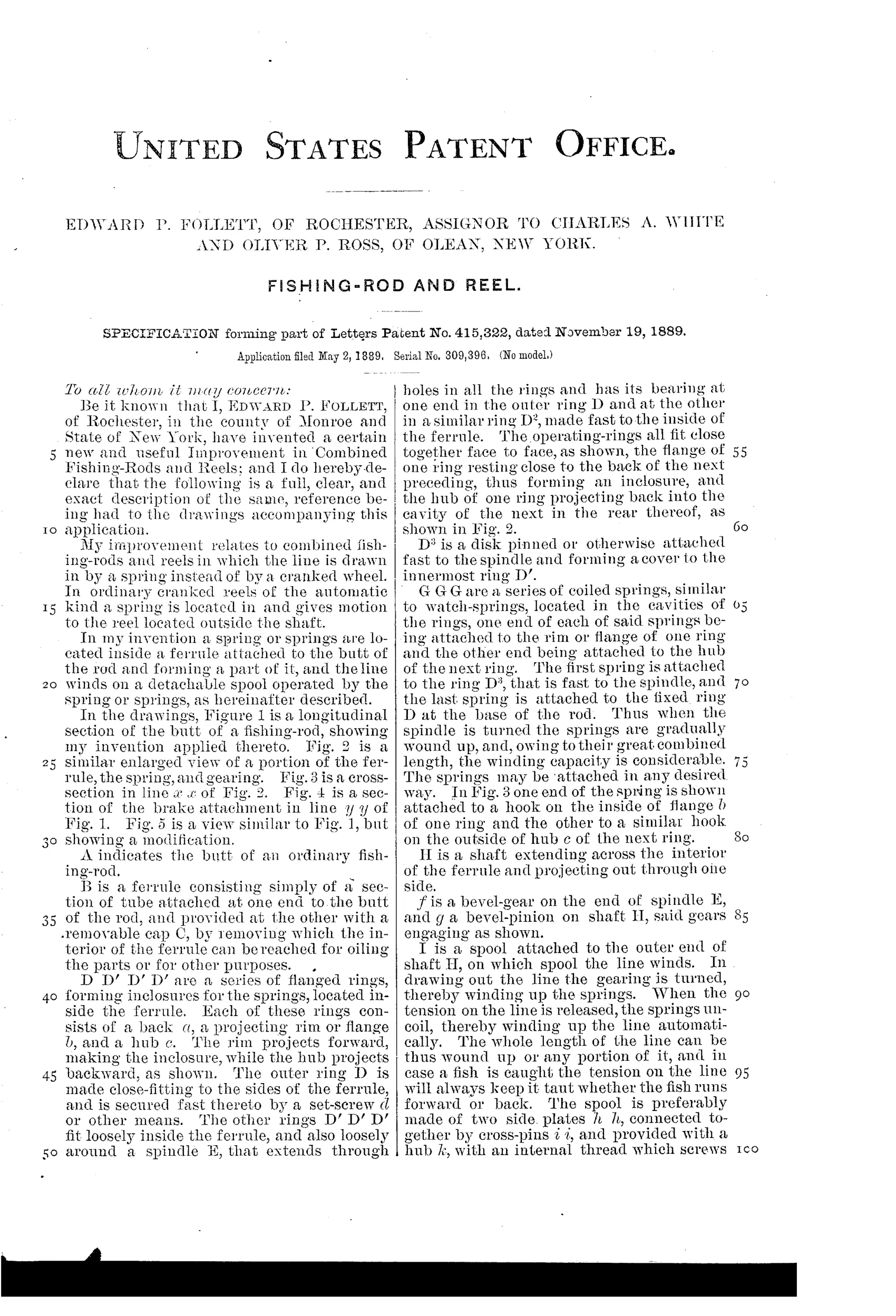
A ferrule attached to the rod butt houses a spindle surrounded by a stack of flanged rings, each pair connected by a coiled watch-spring, so that turning the spindle winds all the springs together for greater combined capacity. The spindle drives a cross-shaft through bevel gearing, and a detachable spool mounted on the cross-shaft winds the line. Pulling out line turns the gearing and winds the springs, and when tension is released the springs uncoil and automatically reel the line back in, keeping it taut whether a hooked fish runs forward or back. A separate brake device, consisting of a spring-loaded pin and plug in the ferrule with a hole for the line, can be pressed to clamp or free the line for control.
↻ What was claimed
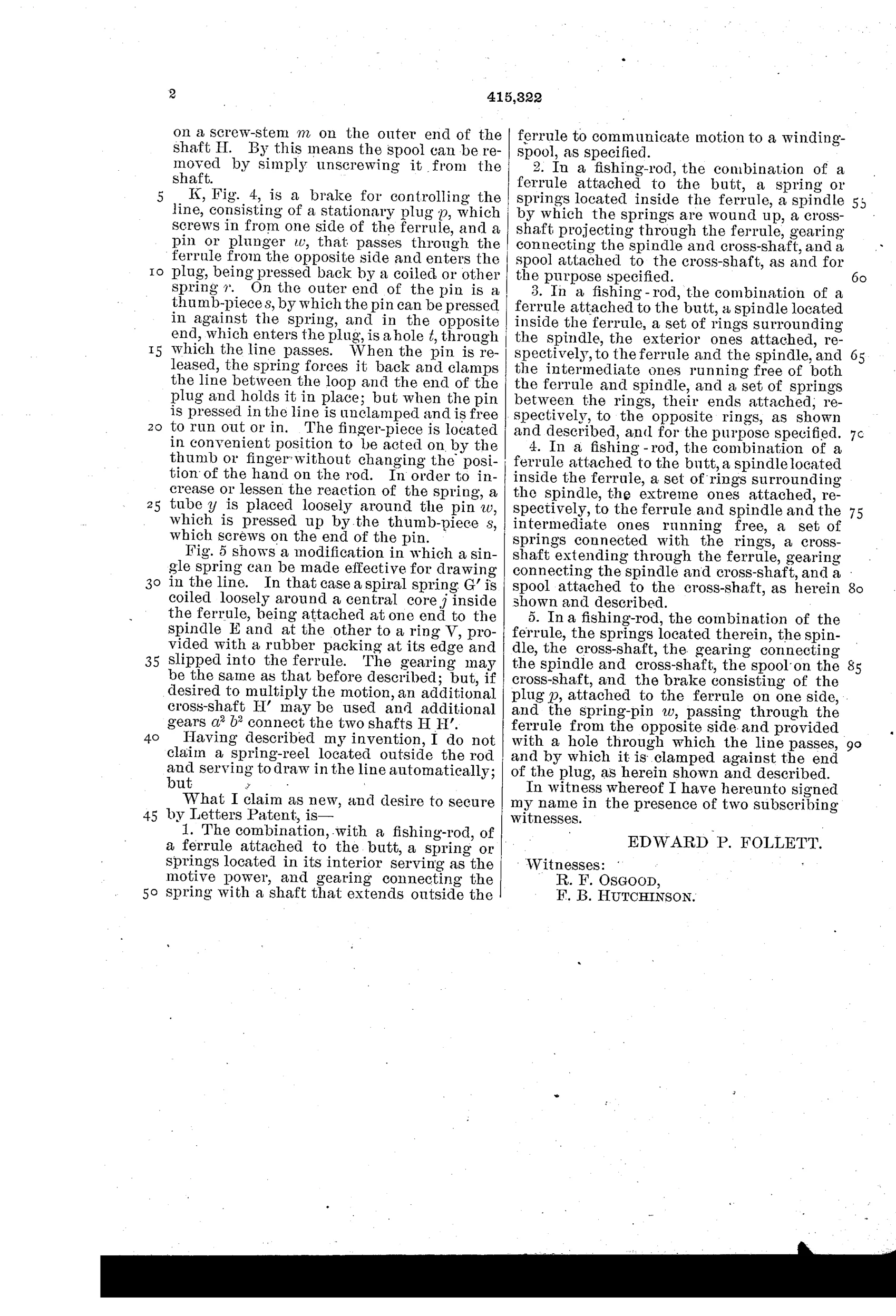
“The combination, with a fishing-rod, of a ferrule attached to the butt, a spring or springs located in its interior serving as the motive power, and gearing connecting the spring with a shaft that extends outside the ferrule to communicate motion to a winding-spool, as specified.”
In plain English: A fishing rod with a spring hidden inside the butt ferrule that, through gearing, automatically drives an external winding spool.
↻ In the inventor’s words
“The whole length of the line can be thus wound up or any portion of it, and in case a fish is caught the tension on the line will always keep it taut whether the fish runs forward or back.”— Edward P. Follett, from the specification
Fate unknown
No manufactured example of a Follett spring-butt rod is documented; a surviving marked rod or trade advertisement would settle it.
↻ Commentary
Follett's answer to the slack-line problem is radical: don't bolt a reel onto the rod, build the motor into it. The butt ferrule houses a spindle wrapped in a stack of flanged rings, each pair joined by a coiled watch-spring, so the springs act in series like a gang of clock mainsprings. Pulling line off winds them; letting tension slack lets them unwind and reel the line home through bevel gearing to a small external spool on a cross-shaft. Fig. 2 is the view worth studying — that stacked-ring spring cartridge is a genuinely clever way to get long spring travel into a slim tube, and Fig. 4 shows the plunger brake that clamps the line against the ferrule, the angler's only real control over all that stored energy.
The timing and the geography are no accident. Rochester in the 1880s was the epicenter of the automatic-reel idea — Loomis and the Yawman & Erbe operation were working the same spring-driven vein — and Follett is clearly chasing the same fish-runs-and-slacks scenario his best line describes.
The trouble is proportion. A spring stack strong enough to retrieve a running fish's line fights the angler on every strip-out, and the whole assembly makes the butt heavy exactly where automatics were already criticized for weight. The market settled on Yawman & Erbe's compact clamp-on automatic, not on rods with clockwork buried in the handle. This is an inventive dead end, but an honest one.
Commentary by Claude, The Fishing Reel Patent Archive’s resident enthusiast