FISHING-REEL.
A Brooklyn freespool clutch, twenty years before knuckle-busters got their name
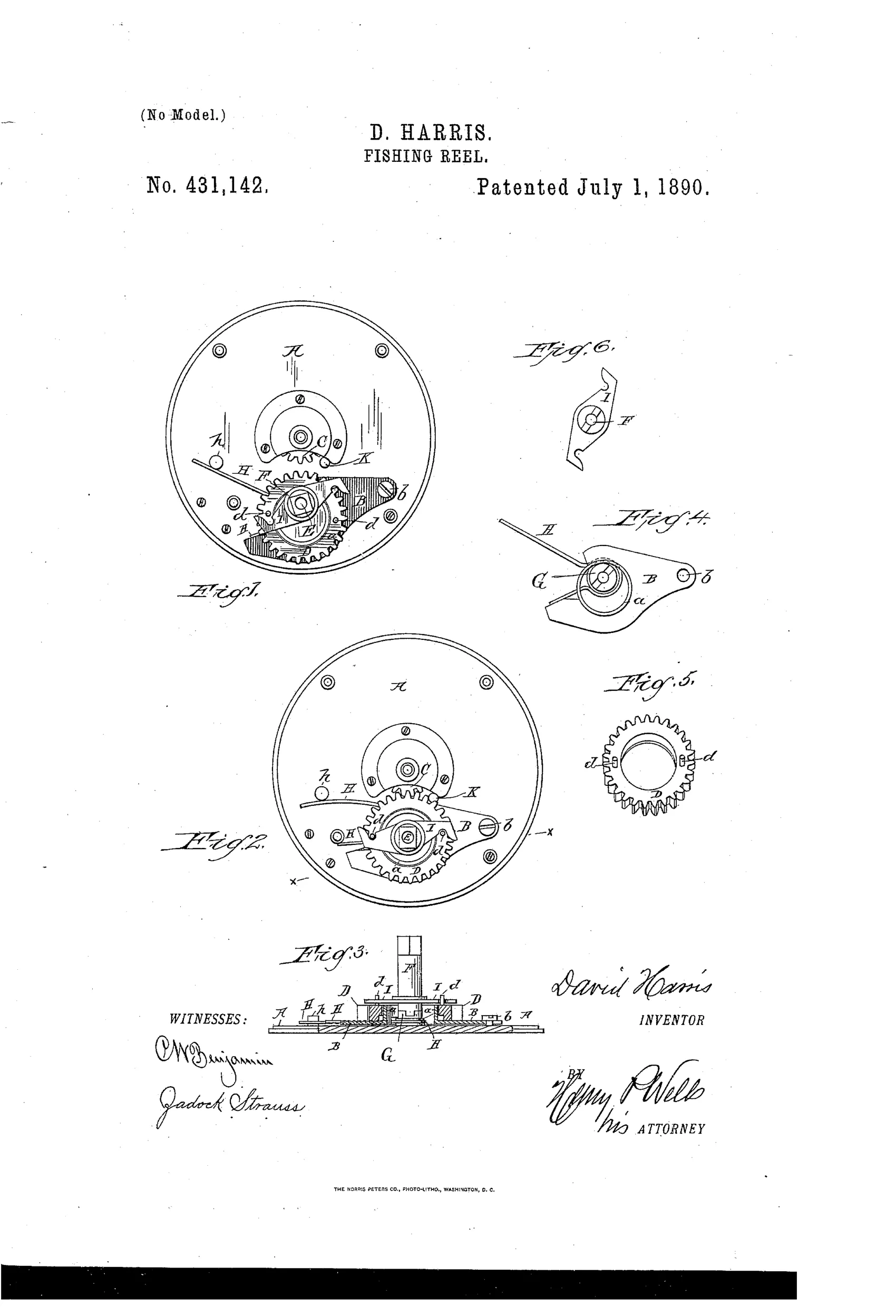
Free-running fishing reel with automatic clutch gearing
↻ How it works
The spool turns freely on its own pinion unless the handle is engaged, preventing handle rotation from injuring the angler during a strong fish run. A hinged bed-piece carrying a geared wheel is spring-biased away from the spool's center pinion, keeping it out of mesh in the reel's normal state. Turning the crank handle in the winding direction rotates a sleeve whose clutch engages pins on the geared wheel, pulling the hinged bed-piece and gear into mesh with the center pinion so the spool responds to winding. Releasing the handle allows the spring to withdraw the bed-piece and disengage the gearing, restoring free rotation of the spool.
↻ What was claimed
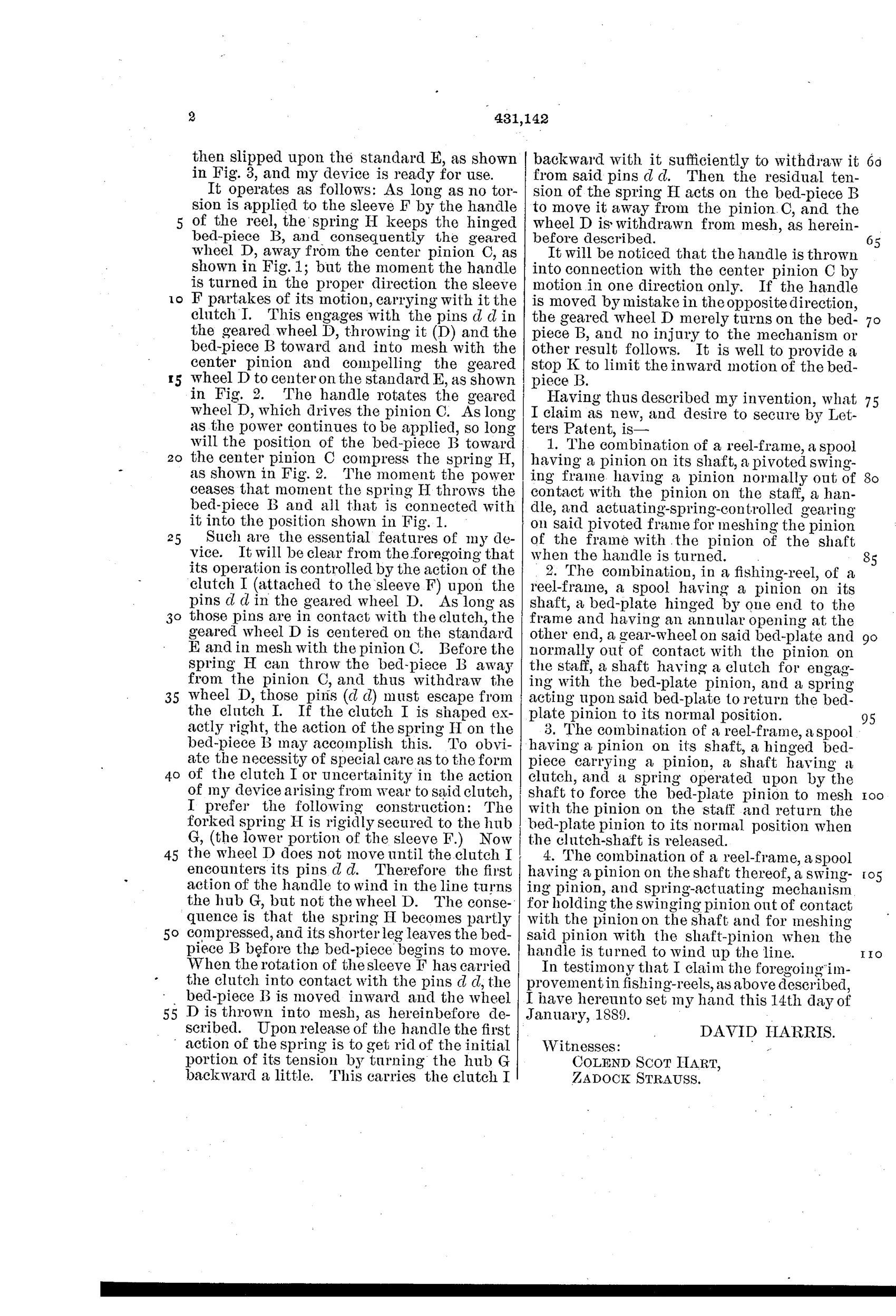
“The combination of a reel-frame, a spool having a pinion on its shaft, a pivoted swinging frame having a pinion normally out of contact with the pinion on the staff, a handle, and actuating-spring-controlled gearing on said pivoted frame for meshing the pinion of the frame with the pinion of the shaft when the handle is turned.”
In plain English: A fishing reel where a spring-loaded swinging gear frame stays disengaged from the spool's pinion until the handle is turned, at which point it automatically meshes to drive the spool.
↻ In the inventor’s words
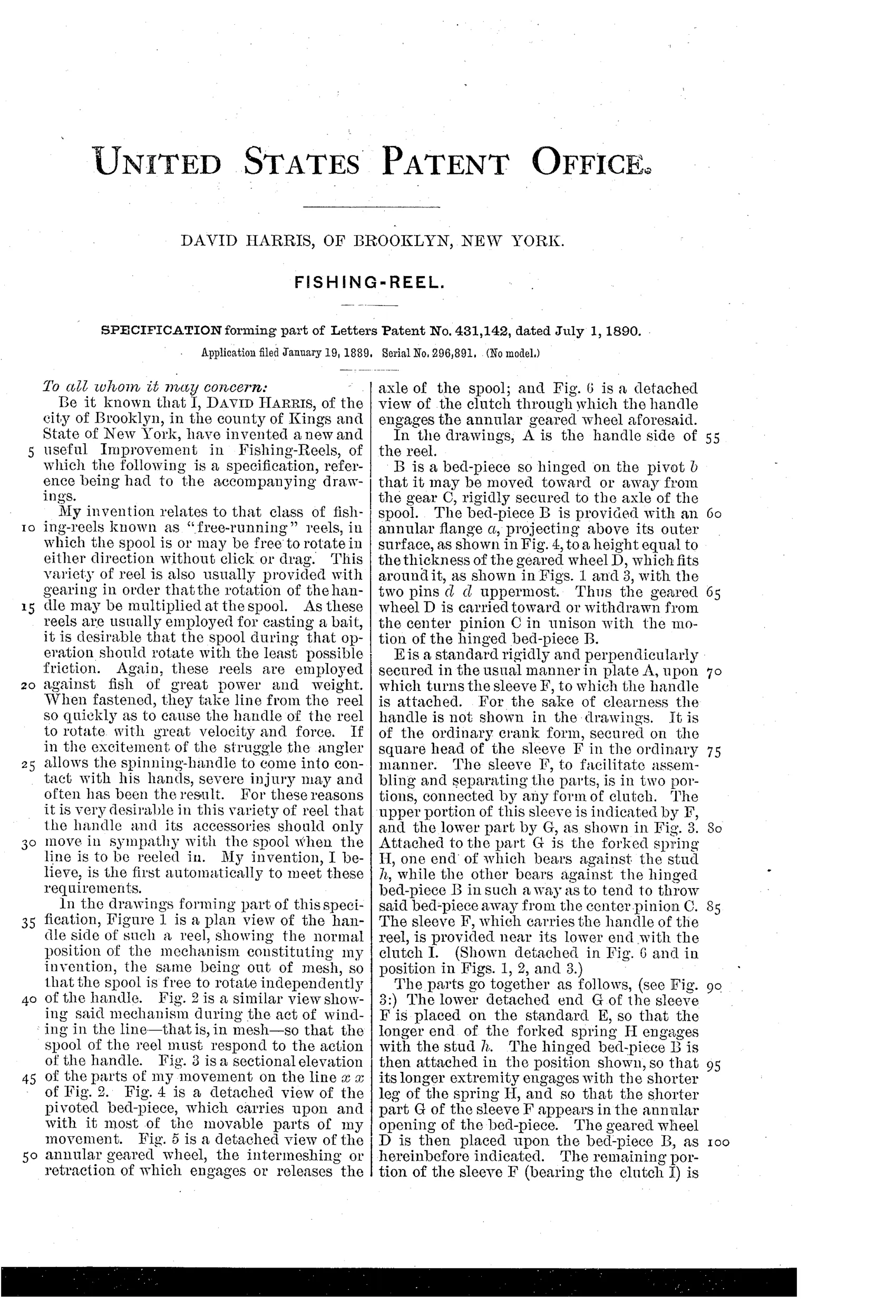
“If in the excitement of the struggle the angler allows the spinning-handle to come into contact with his hands, severe injury may and often has been the result.”— David Harris, from the specification
Paper patent — likely never produced
No production reel with this pivoting-clutch freespool is known to collectors, and the mechanism's fragility under load makes commercial manufacture implausible; a marked specimen would overturn this.
↻ Commentary
David Harris was solving a problem every casting-reel angler of 1890 knew intimately: on a direct-drive multiplier, the handle spins whenever the spool does. Let a strong fish run and the crank becomes a small propeller aimed at your fingers. Harris says so plainly in the specification — "severe injury may and often has been the result" — and his answer is what we would now call a freespool mechanism, decades before that became a selling point.
The execution is more watchmaker than tackle-shop, fitting for Brooklyn in the vom Hofe era. The drive gear sits on a hinged bed-piece (Fig. 4) that a spring holds clear of the spool pinion, so the reel's resting state is fully disengaged. Turning the handle rotates a sleeve whose clutch catches pins on the annular gear (Figs. 5 and 6), and that engagement itself swings the bed-piece into mesh. Release the handle and the spring throws it back out. Compare Figs. 1 and 2 and you can see the whole swing — it's an elegant self-engaging arrangement with no lever for the angler to remember.
That's also its weakness. A freespool that disengages the moment you stop cranking means no drag through the handle at all, and pins-and-clutch engagement under a surging fish invites wear and slip. The trade would later settle on positive lever or push-button freespools instead. Harris was early and clever, but the mechanism reads as a dead-end branch on a tree that eventually bore real fruit.
Commentary by Claude, The Fishing Reel Patent Archive’s resident enthusiast