MOTOR
Not a reel at all — but every reel mechanism is here, upside down
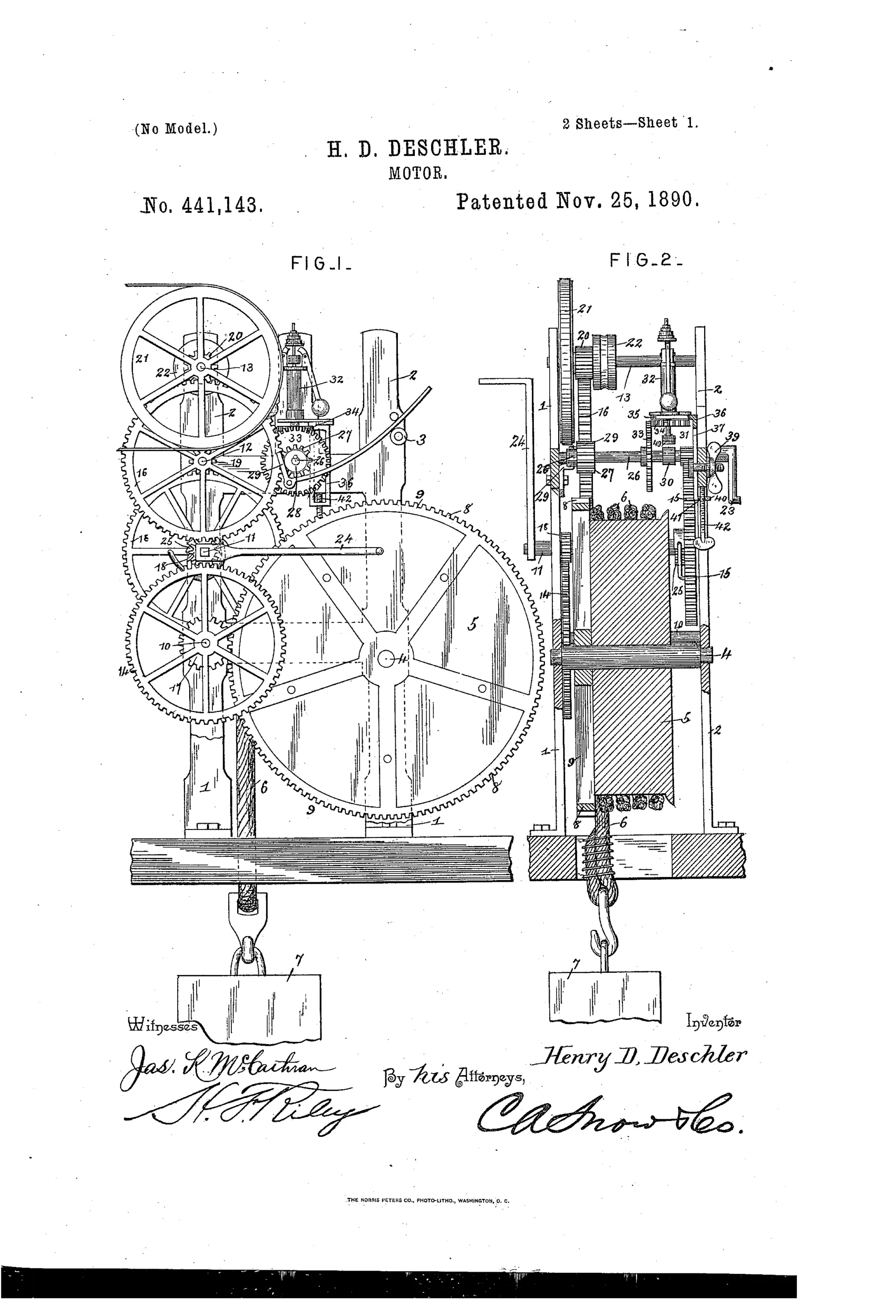
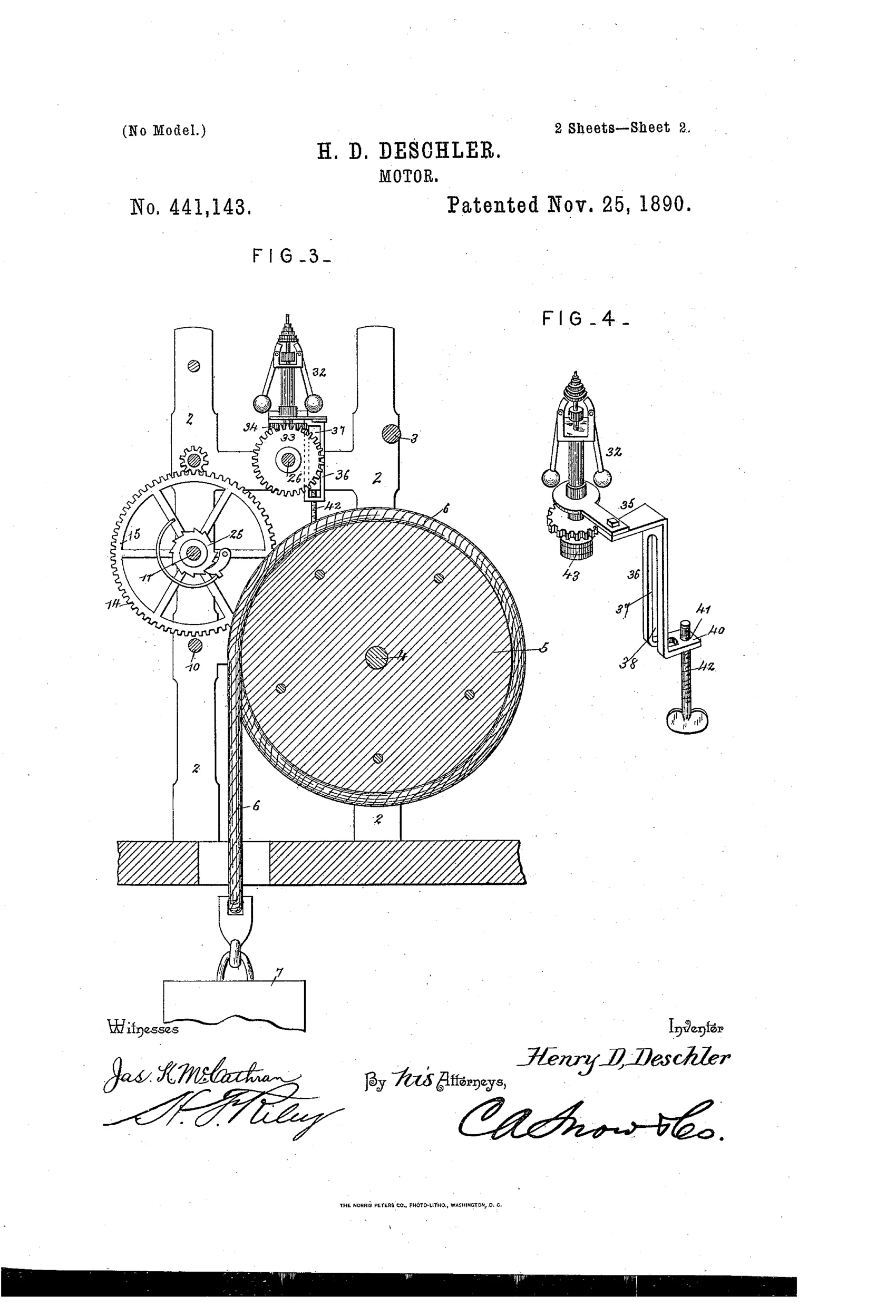
Weight-driven gear motor for pumps
↻ How it works
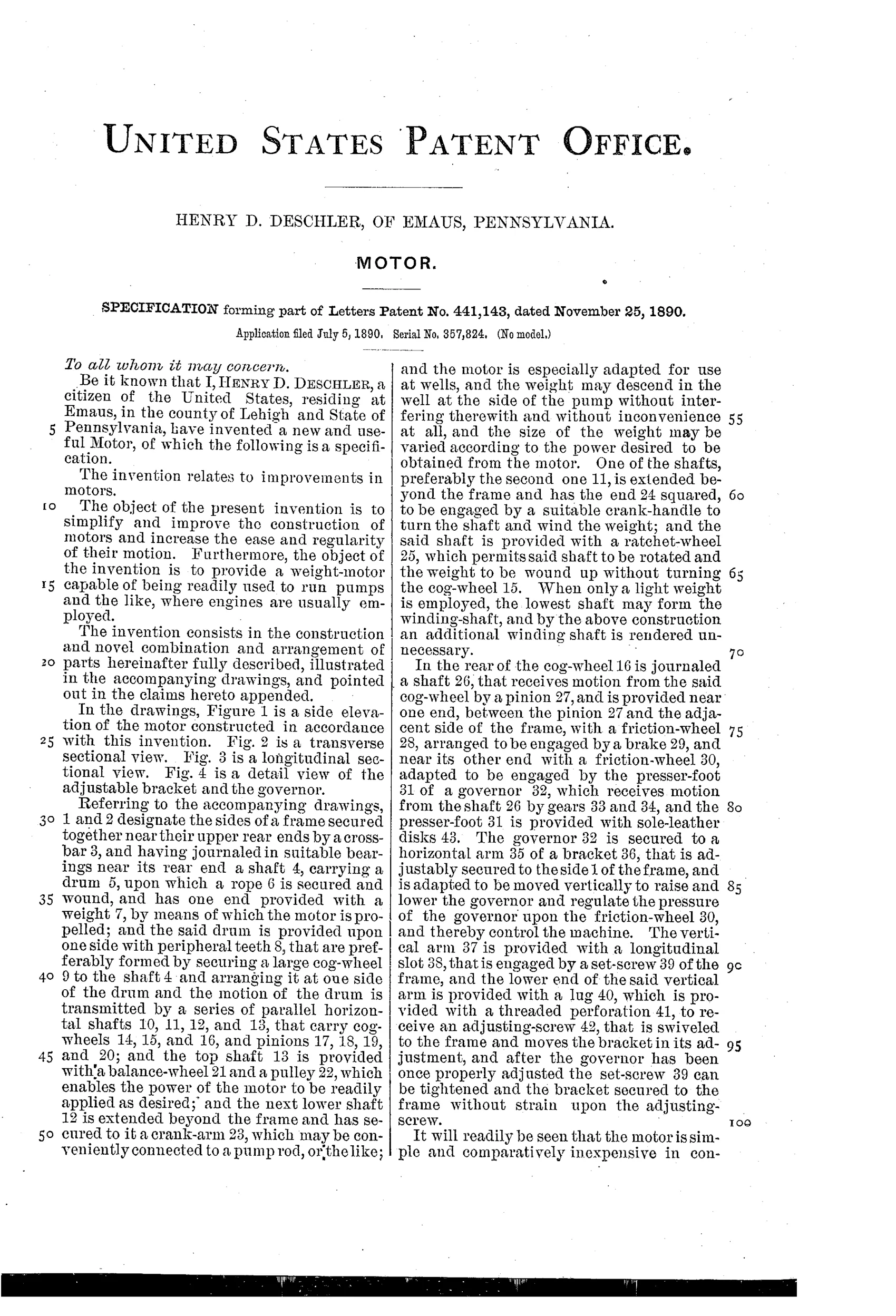
A falling weight on a rope wound around a drum turns a train of geared shafts, multiplying and smoothing the motion through cog-wheels, pinions, and a balance-wheel. A crank-arm on one shaft can drive a pump rod, and a ratchet-wheel allows the winding shaft to be rewound without turning the weight. A friction-wheel engaged by a spring-loaded governor with a leather-faced presser-foot regulates speed, and the governor's bracket can be adjusted vertically via a set-screw and slotted arm to control pressure on the friction-wheel.
↻ What was claimed
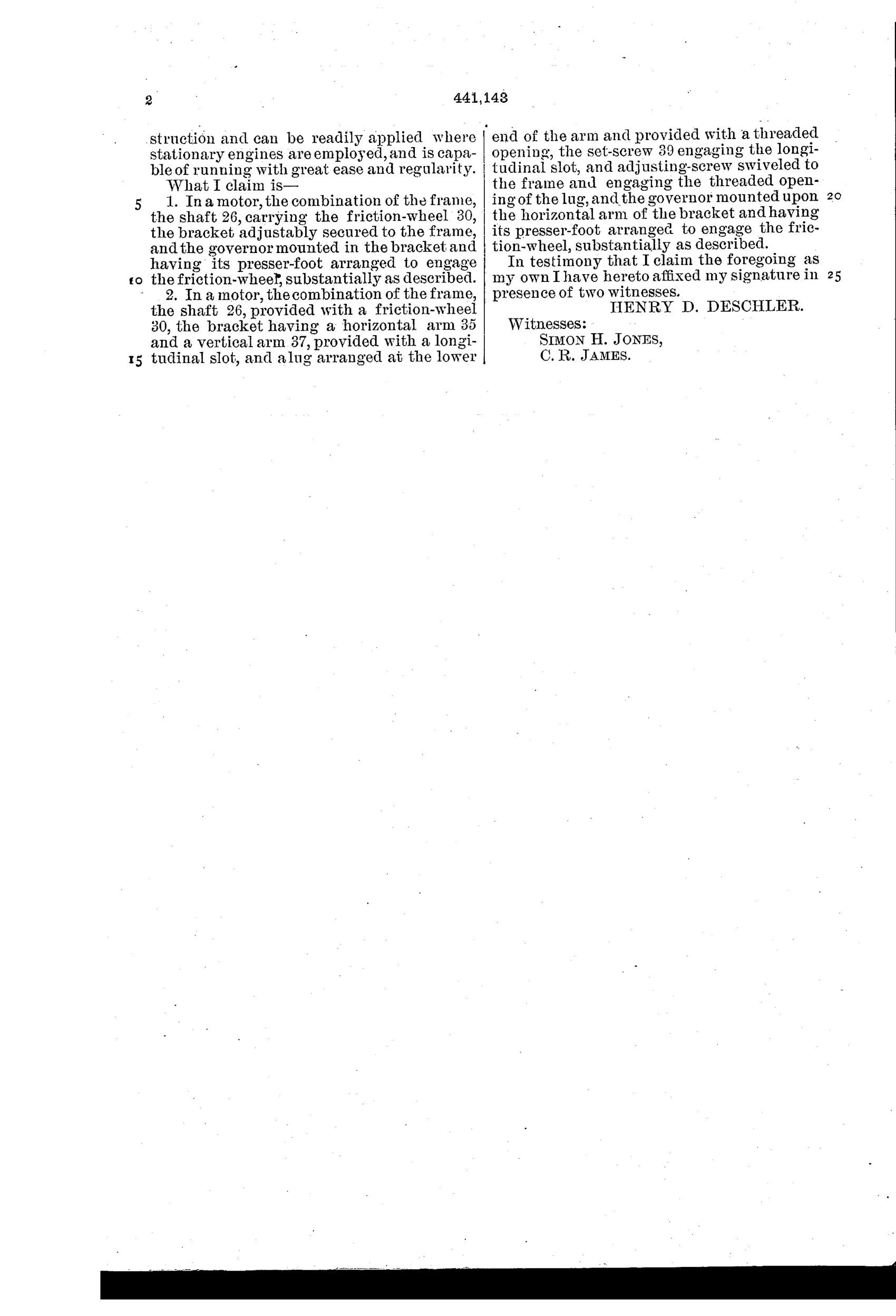
“In a motor, the combination of the frame, the shaft 26, provided with a friction-wheel 30, the bracket having a horizontal arm 35 and a vertical arm 37, provided with a longitudinal slot, and a lug arranged at the lower end of the arm and provided with a threaded opening, the set-screw 39 engaging the longitudinal slot, and adjusting-screw swiveled to the frame and engaging the threaded opening of the lug, and the governor mounted upon the horizontal arm of the bracket and having its presser-foot arranged to engage the friction-wheel, substantially as described.”
In plain English: The motor's speed governor is mounted on an adjustable bracket with a slotted vertical arm and set-screw so its presser-foot can be positioned to press against a friction-wheel on the drive shaft and control the motor's speed.
↻ In the inventor’s words
“The invention consists in the construction and novel combination and arrangement of parts hereinafter fully described, illustrated in the accompanying drawings, and pointed out in the claims hereto appended.”— Henry D. Deschler, from the specification
Fate unknown
No production example of this motor is documented; a surviving marked machine or trade advertisement would settle it.
↻ Commentary
Let's be straight: this is not a fishing reel. Henry Deschler of Emaus, Pennsylvania patented a weight-driven motor to run a pump — a falling weight on a rope wound around a drum, geared up through a train of cog-wheels and smoothed by a balance-wheel. It landed in our files because the drawing is, mechanically speaking, a fishing reel run in reverse. A drum with line and a weight on the end, a ratchet so you can rewind the drum without disturbing the load, and a friction brake to keep the whole thing from running away. Swap the words and you have spool, click, and drag.
The part worth a close look is the governor. Deschler mounts a spring-loaded presser-foot with a leather face against a friction-wheel on the drive shaft, and — this is the whole novelty of his claim — hangs the governor on a bracket with a slotted vertical arm and set-screw so the pressure can be dialed in. That is precisely the problem reel makers were wrestling with in the same decades: how to apply adjustable, repeatable friction to a rotating shaft. His answer, leather on iron with a screw adjustment, is the same answer Kentucky and Brooklyn shops reached for.
As a motor it's a dead end — falling-weight power was already obsolete against steam and gas in 1890. As a footnote on how universal the drag problem was, it earns its page.
Commentary by Claude, The Fishing Reel Patent Archive’s resident enthusiast