FISHING-ROD
An entire multiplying reel, with alarm bell, hidden inside the rod handle
Fishing rod with reel built into hollow handle
↻ How it works
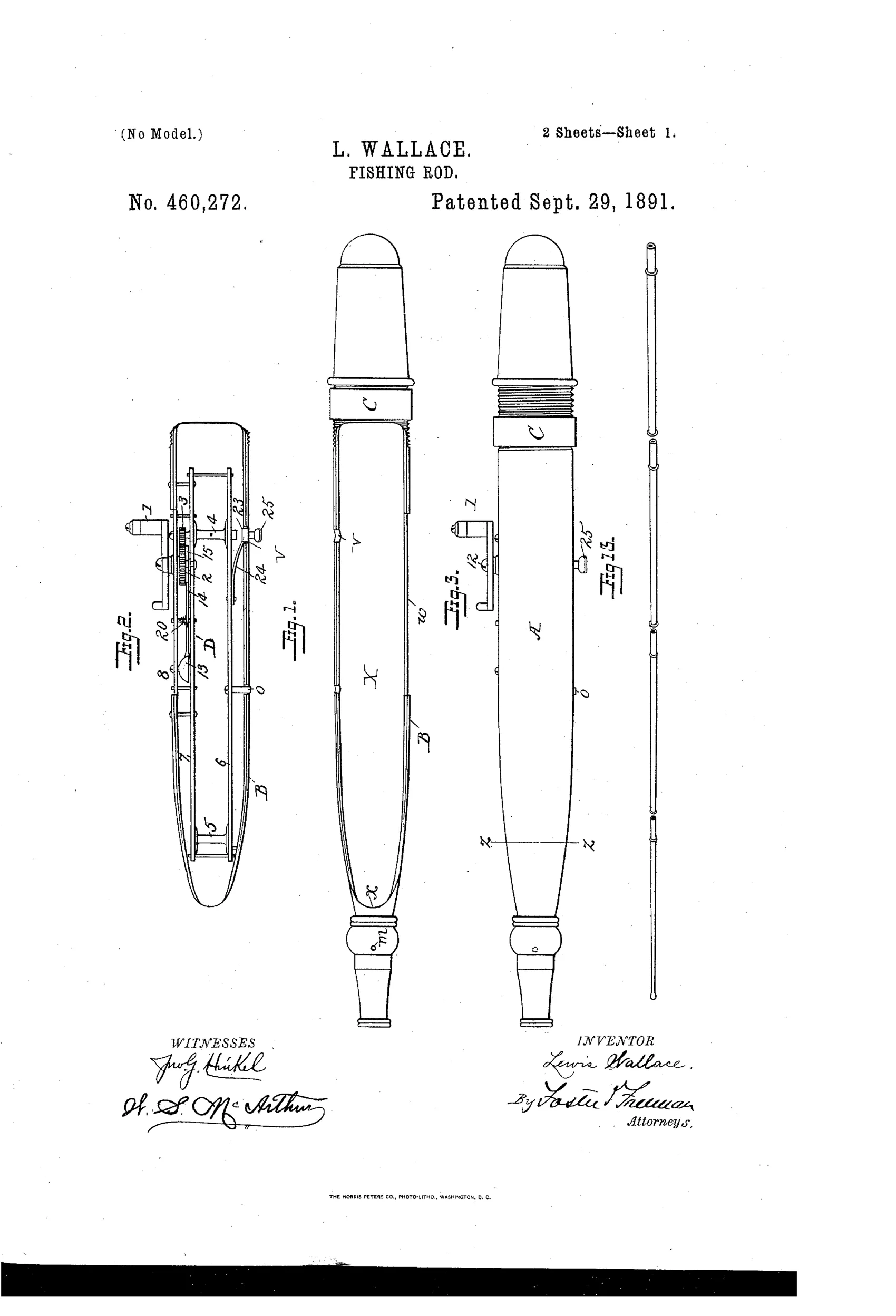
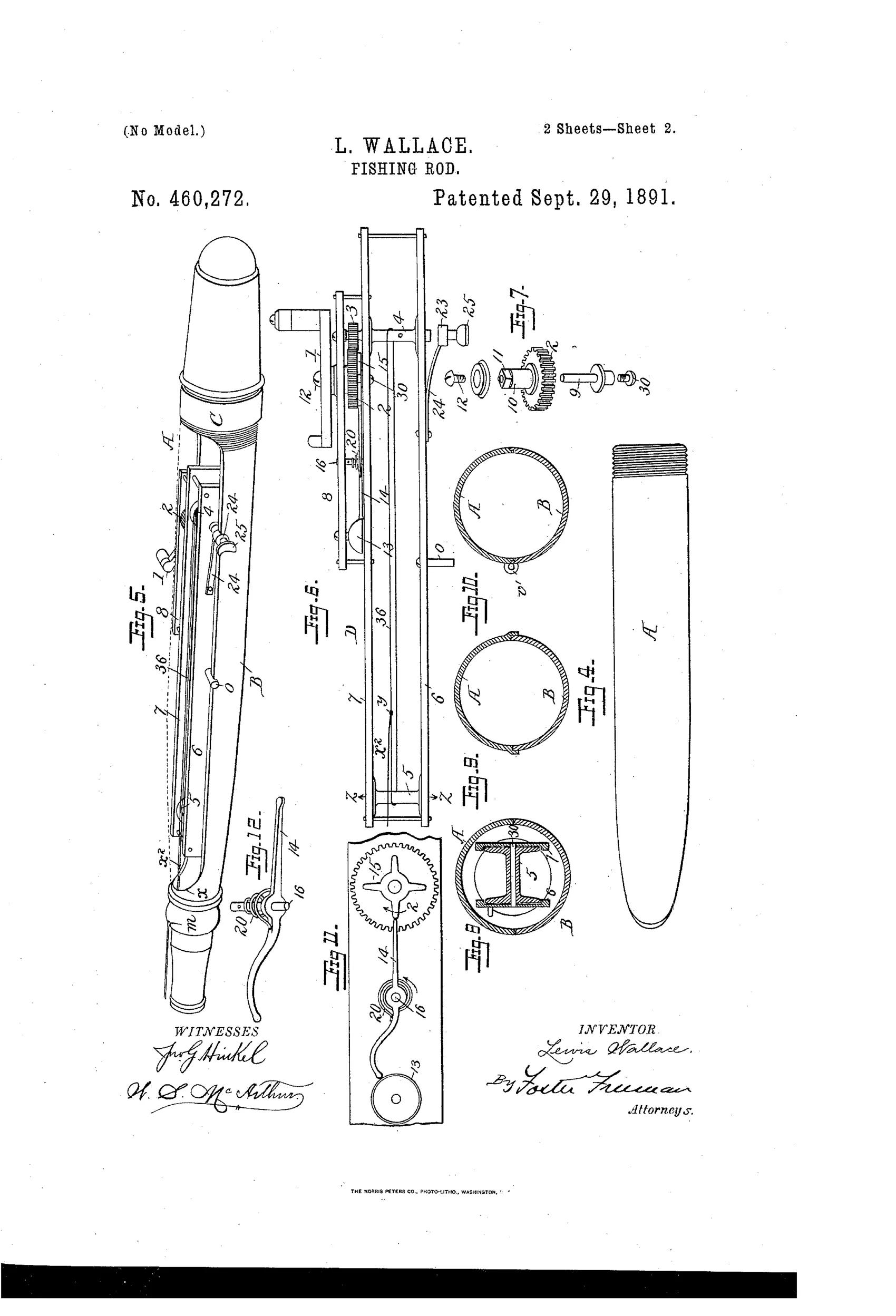
The rod's handle is hollowed into a chamber containing a detachable frame that carries the entire reel mechanism. A crank outside the handle drives a toothed wheel meshing with a pinion that turns the spool, with a second free-turning spool allowing conversion between single and double-spool operation. A gear-driven alarm bell strikes via radiating arms and a spring-loaded hammer as line pays out, while a finger-operated knob applies a friction brake shoe to the spool shaft to control the line. A removable cap-piece, secured by a threaded ring, encloses the reel chamber and can be swung open or removed for access.
↻ What was claimed
“1. A fishing-rod provided with a chamber in the handle, with side plate-supports 6 7 connected together independently of the handle for the spool or spools adapted to receive the line, the latter lying between the plates, substantially as set forth.”
In plain English: A fishing rod with a hollow handle chamber containing side plates that support the line spools independently of the handle itself.
↻ In the inventor’s words
“It will be further evident that by supporting all of the operating parts of the reel upon a frame D practically independent of the handle the entire reel and its operating appliances may be withdrawn and replaced without the necessity of separating the operating parts from each other or manipulation by means of tools or other appliances, and that access may thus be had to all the parts whenever required.”— Lewis Wallace, from the specification
Paper patent — likely never produced
No production example of this elaborate rod-and-reel combination is known; the complexity and lack of any maker connection make manufacture implausible, though a marked specimen would overturn that.
↻ Commentary
Lewis Wallace of Crawfordsville decided the reel shouldn't hang off the rod at all — it should live inside it. The handle is bored out into a chamber, and the whole works — geared spool, crank, brake, even a spring-hammer alarm bell that rings as line pays out — rides on a self-contained frame that drops in and lifts out without tools. That detachable-frame idea is the genuinely thoughtful part: he anticipated the maintenance nightmare of servicing a mechanism buried in a wooden handle and designed around it. His first claim is careful to protect exactly that — side plates supporting the spools 'independently of the handle.'
Look at Fig. 2 and Fig. 6 and you can see how much he crammed in: a toothed drive wheel meshing with a spool pinion (a multiplier, in the Kentucky tradition), a second free-running spool so the reel converts between single and double operation, and a finger knob at 25 pressing a brake shoe on the spool shaft. The threaded cap ring at C, borrowed from good rod-ferrule practice, seals it all up.
The trouble is the arithmetic of it. A hollowed handle weakens the rod where casting stress concentrates, the enclosed spool limits line capacity, and the alarm bell is angler's whimsy. Hollow-handle rod-reels were tried repeatedly across this era and never displaced the plain external reel — this is one of the more elaborate dead ends, executed with real care.
Commentary by Claude, The Fishing Reel Patent Archive’s resident enthusiast