FISHING-ROD AND CANE.
A cane that hides a full rod and a gear-driven reel in its handle
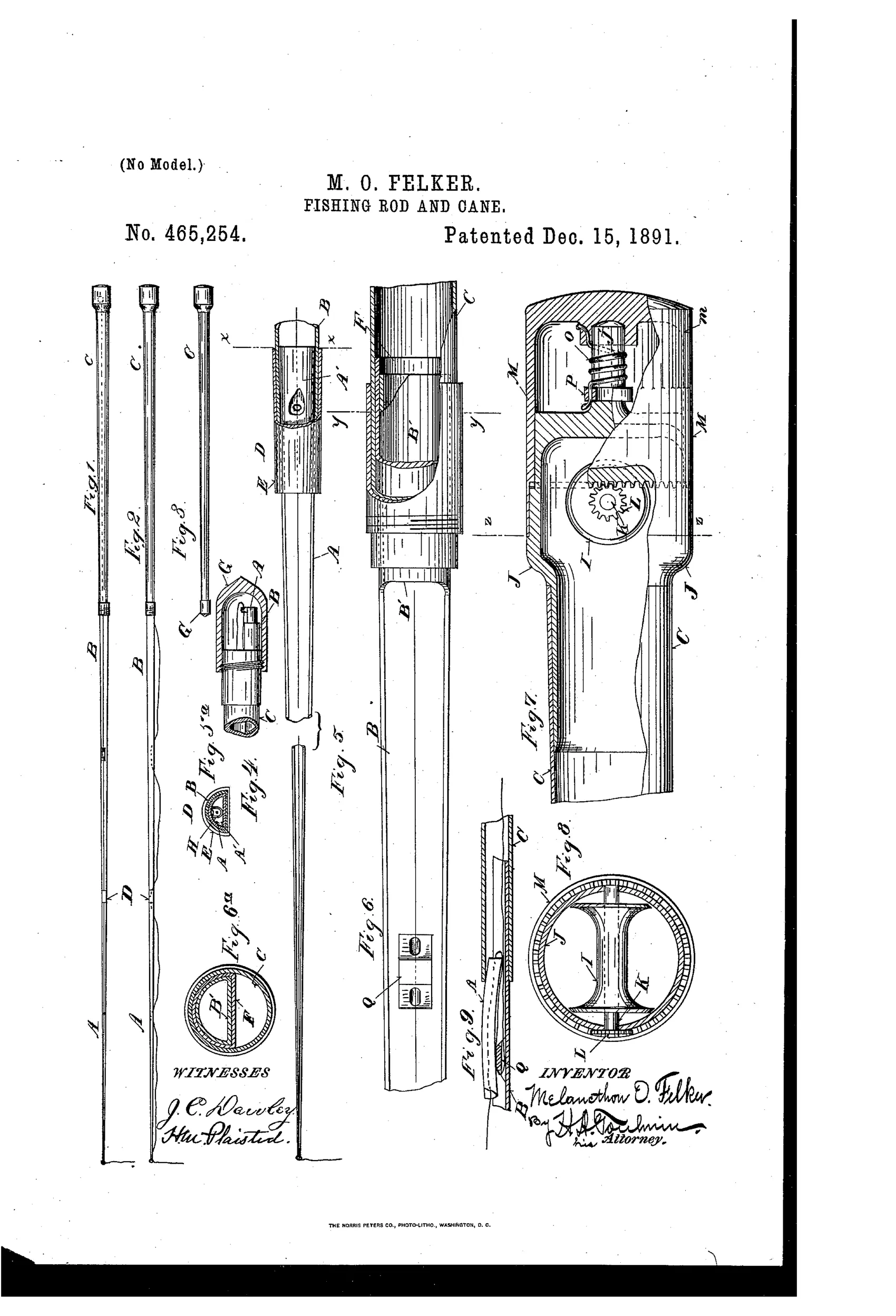
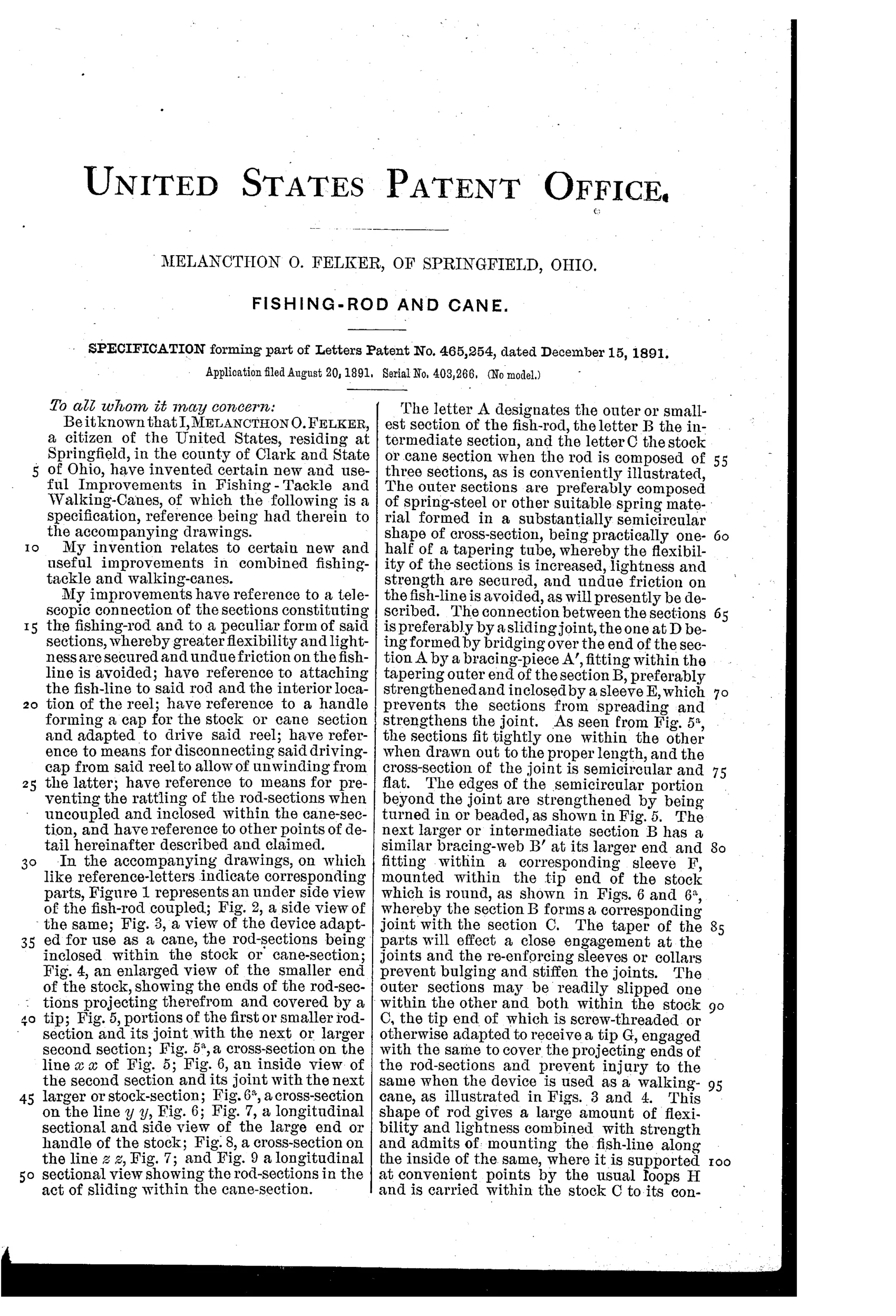
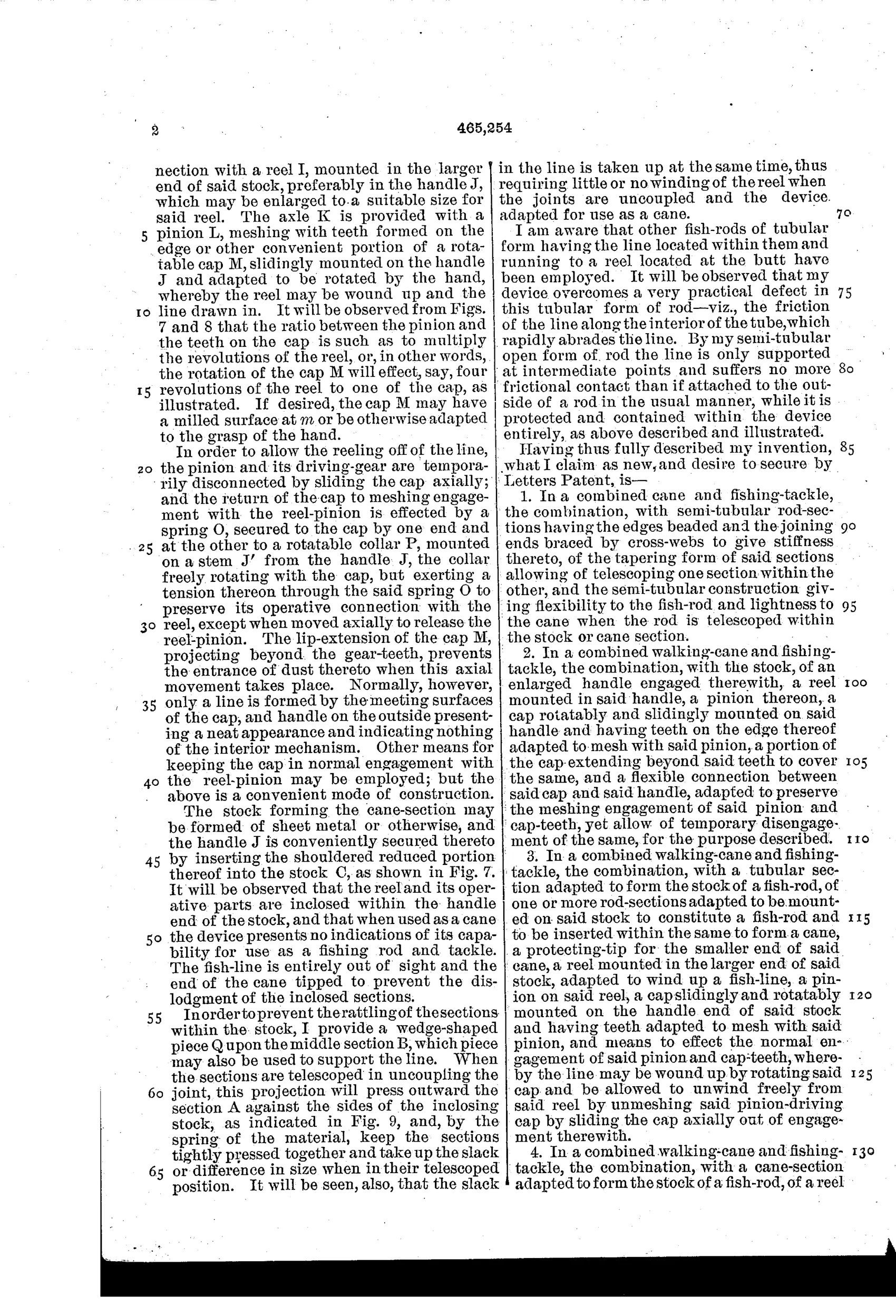
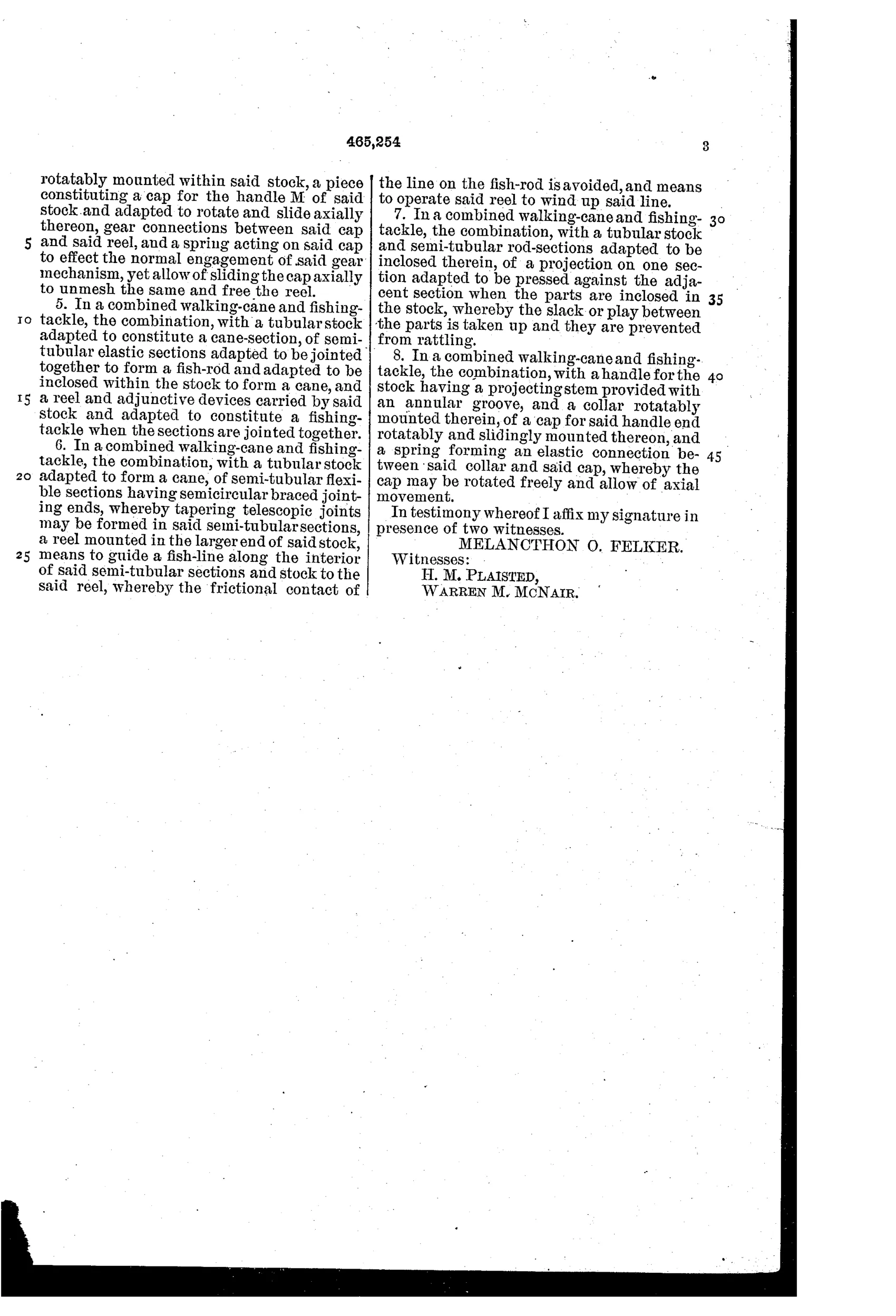
A combined telescoping fishing rod and walking cane
↻ How it works
The fishing rod sections are semi-tubular spring-steel pieces that telescope one within the other and slide together to form a joint braced by cross-webs. When collapsed, the rod sections nest inside a hollow tubular cane-section stock, with a tip covering the projecting ends for use as a walking cane. A fishing reel is mounted inside the enlarged handle end of the stock, driven by a pinion meshing with teeth on a rotatable, axially-slidable cap; a spring keeps the cap engaged with the pinion for winding, but the cap can be slid out of engagement to let the line freely unwind. A wedge-shaped projection on the middle section presses the sections against the inclosing stock to prevent rattling when collapsed.
↻ What was claimed
“In a combined cane and fishing-tackle, the combination, with semi-tubular rod-sections having the edges beaded and the joining ends braced by cross-webs to give stiffness thereto, of the tapering form of said sections allowing of telescoping one section within the other, and the semi-tubular construction giving flexibility to the fish-rod and lightness to the cane when the rod is telescoped within the stock or cane section.”
In plain English: The invention combines beaded, cross-web-braced semi-tubular rod sections that taper so they can telescope into each other and into the cane's stock, giving the fishing rod flexibility and the cane lightness.
↻ In the inventor’s words
“I am aware that other fish-rods of tubular form having the line located within them and running to a reel located at the butt have been employed. It will be observed that my device overcomes a very practical defect in this tubular form of rod—viz., the friction of the line along the interior of the tube, which rapidly abrades the line.”— Melancthon O. Felker, from the specification
Fate unknown
Fishing canes were commercially made in this era, but no Felker-marked example is documented; a surviving specimen would settle it.
↻ Commentary
Gadget canes were a Victorian cottage industry — sword canes, flask canes, camera canes — and fishing canes were among the most popular. Felker's entry stands out for how much genuine engineering he packs into the disguise. The rod sections aren't round tubes but semi-tubular spring-steel troughs with beaded edges, which lets them nest one inside another and slide into the hollow cane stock. He even adds a wedge on the middle section so the whole assembly won't rattle when you're strolling — the kind of detail that suggests he actually built and carried one.
The reel is where it earns a place on this site. Fig. 7 shows a spool buried inside the enlarged handle, driven by a pinion that meshes with gear teeth cut into a rotating end cap. Twist the cap to wind; slide it axially against a spring to disengage and let line run free. That slide-to-freespool cap is a crude ancestor of the free-spool clutches that would matter enormously in casting reels — though here it's just a convenience for a still-fishing cane.
His honest gripe about prior tubular rods — line abrading against the tube interior — shows he studied the competition. But semi-tubular steel sections make a heavy, dead-actioned rod, and the concealed reel holds little line. It's a clever curiosity at the far margin of reel history, not a step in its main line.
Commentary by Claude, The Fishing Reel Patent Archive’s resident enthusiast