FISH-LINE REEL.
A free-spool clutch in 1891 — decades before free-spool became standard
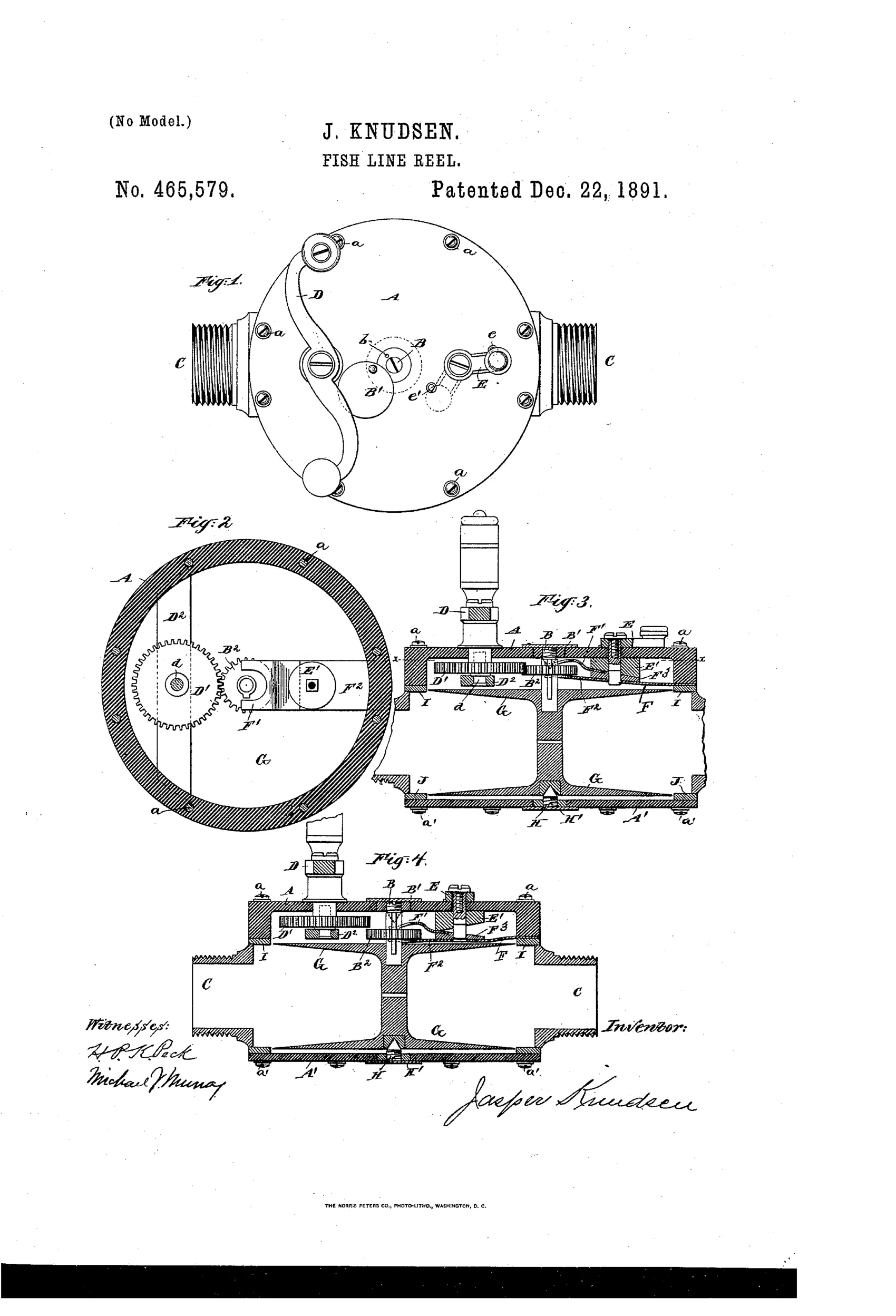
Fishing reel with disengageable spool gearing.
↻ How it works
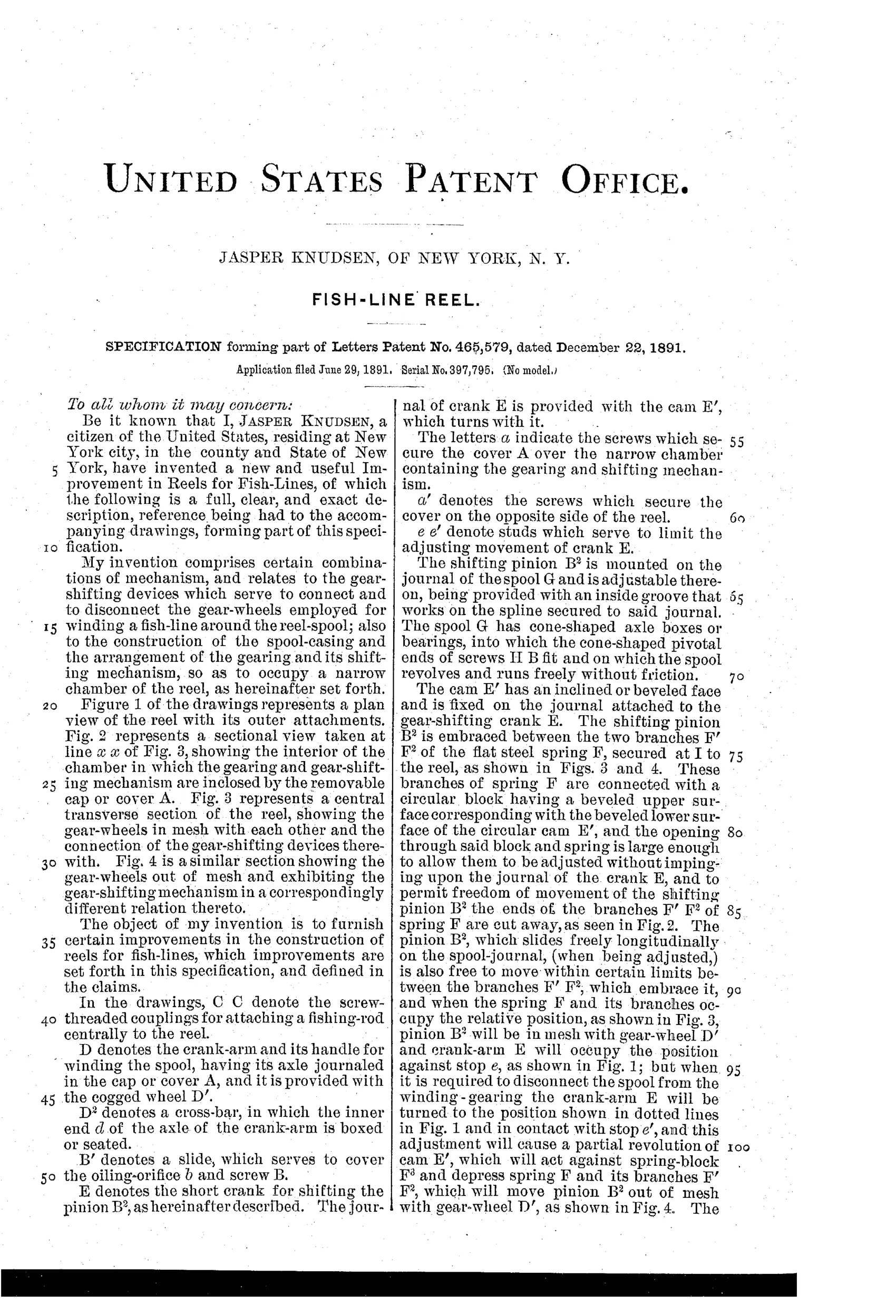
A winding crank turns a cogged gear-wheel that meshes with a spring-mounted shifting pinion splined to the spool journal. A pivoting shift crank carries a beveled cam that, when rotated, presses against a spring block and depresses the bifurcated strut-spring, pulling the pinion out of mesh with the drive gear. With the pinion disengaged the spool spins freely on cone-shaped pivot bearings for long, low-friction casts, and reversing the crank lets the spring snap the pinion back into mesh for retrieving line.
↻ What was claimed
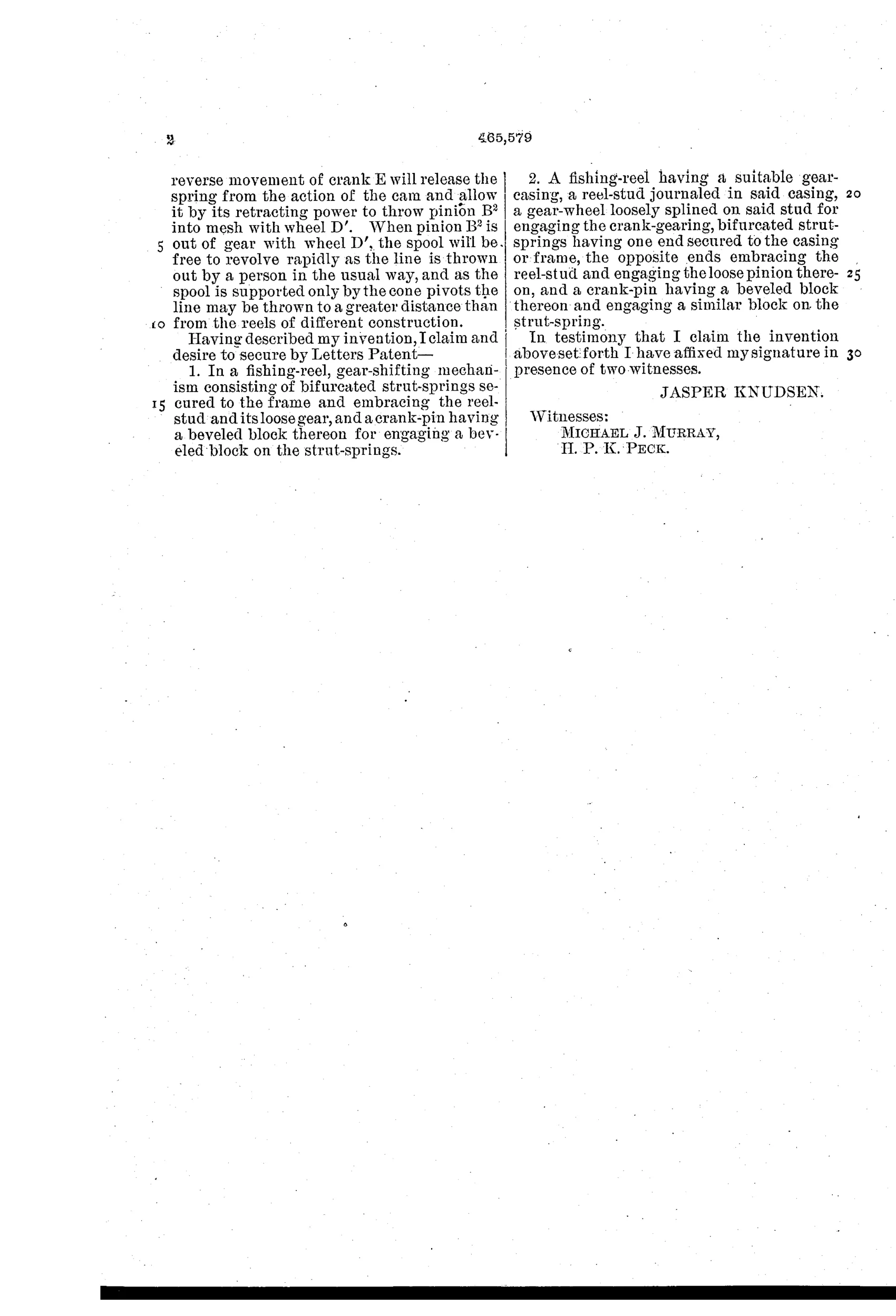
“1. In a fishing-reel, gear-shifting mechanism consisting of bifurcated strut-springs secured to the frame and embracing the reel-stud and its loose gear, and a crank-pin having a beveled block thereon for engaging a beveled block on the strut-springs.”
In plain English: The reel uses a forked spring clamped to the frame around the spool's shaft and gear, together with a crank pin fitted with a wedge-shaped block that presses against a matching block on the spring to shift the gear in and out of engagement.
↻ In the inventor’s words
“as the spool is supported only by the cone pivots the line may be thrown to a greater distance than from the reels of different construction.”— Jasper Knudsen, from the specification
Fate unknown
No production Knudsen reel is documented in the collecting record; a marked specimen or trade-catalog listing would settle it.
↻ Commentary
The core idea here is one the industry would eventually embrace wholesale: disconnect the spool from the gear train when you cast. Knudsen's mechanism is a splined pinion on the spool journal, held in mesh by a forked strut-spring; rotate the shift crank and a beveled cam wedges against the spring, pulling the pinion out of engagement. The spool then rides only on cone pivots, spinning with minimal friction. His own phrasing gets at the point — 'the line may be thrown to a greater distance than from the reels of different construction.' That's the free-spool argument in a sentence, made when nearly everyone else was still casting with the whole gear train dragging behind the spool.
Figures 3 and 4 are the pair worth studying: identical sections, gears in mesh and gears withdrawn, showing how little travel the pinion needs. The re-engagement scheme is clever too — reversing the crank lets the spring snap the pinion back home, so the angler doesn't fumble for a lever mid-strike.
The dubious parts are practical. Snapping a spring-loaded pinion into a gear that may be spinning fast invites clash and chewed teeth, and the bifurcated spring with matched beveled blocks is fussy watchwork for a fishing tackle price point. It reads as a genuinely prescient dead end: right destination, delicate road. Free-spool would arrive commercially through simpler, more robust clutches.
Commentary by Claude, The Fishing Reel Patent Archive’s resident enthusiast