PHONOGRAPH.
A phonograph governor in the reel files — a misfiled cousin worth a look
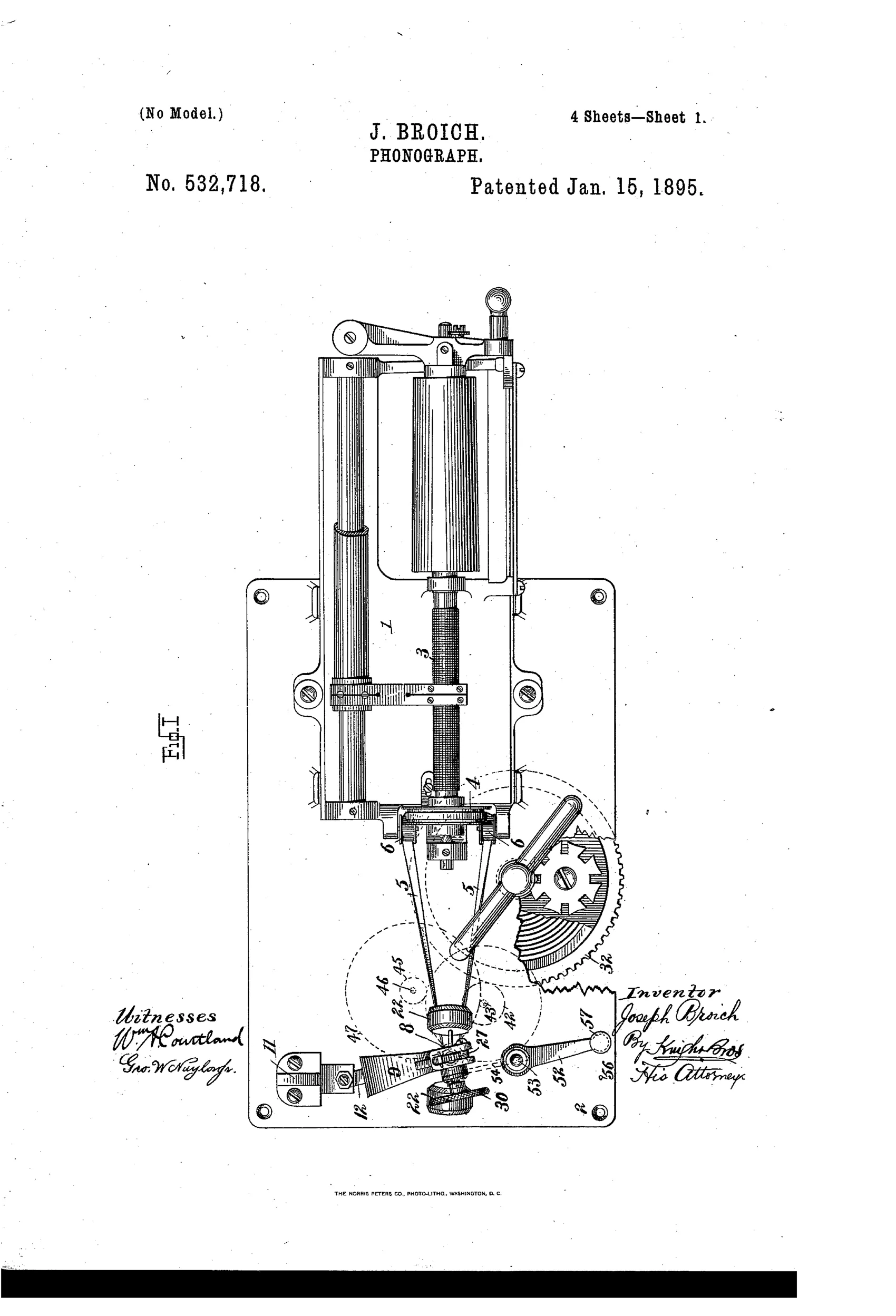
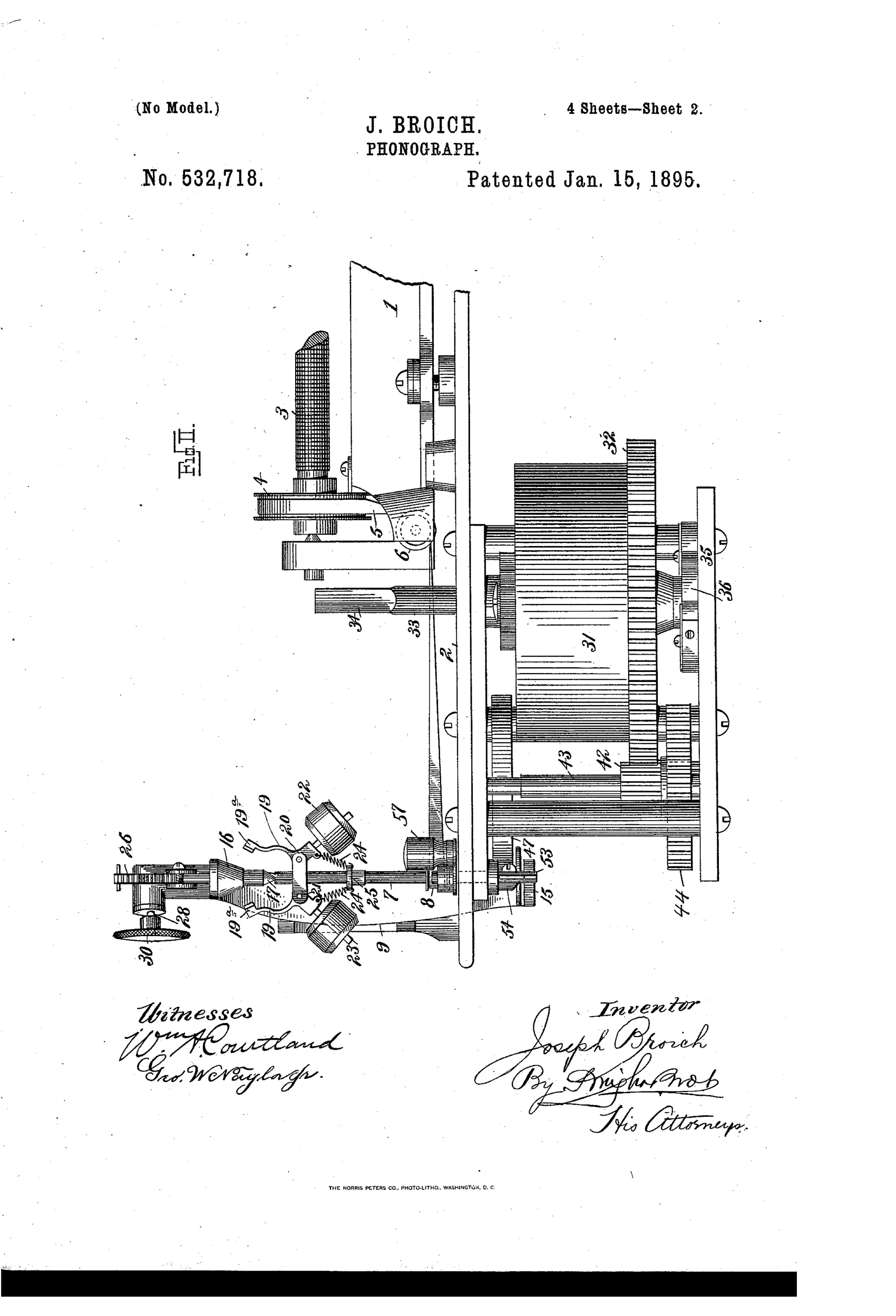
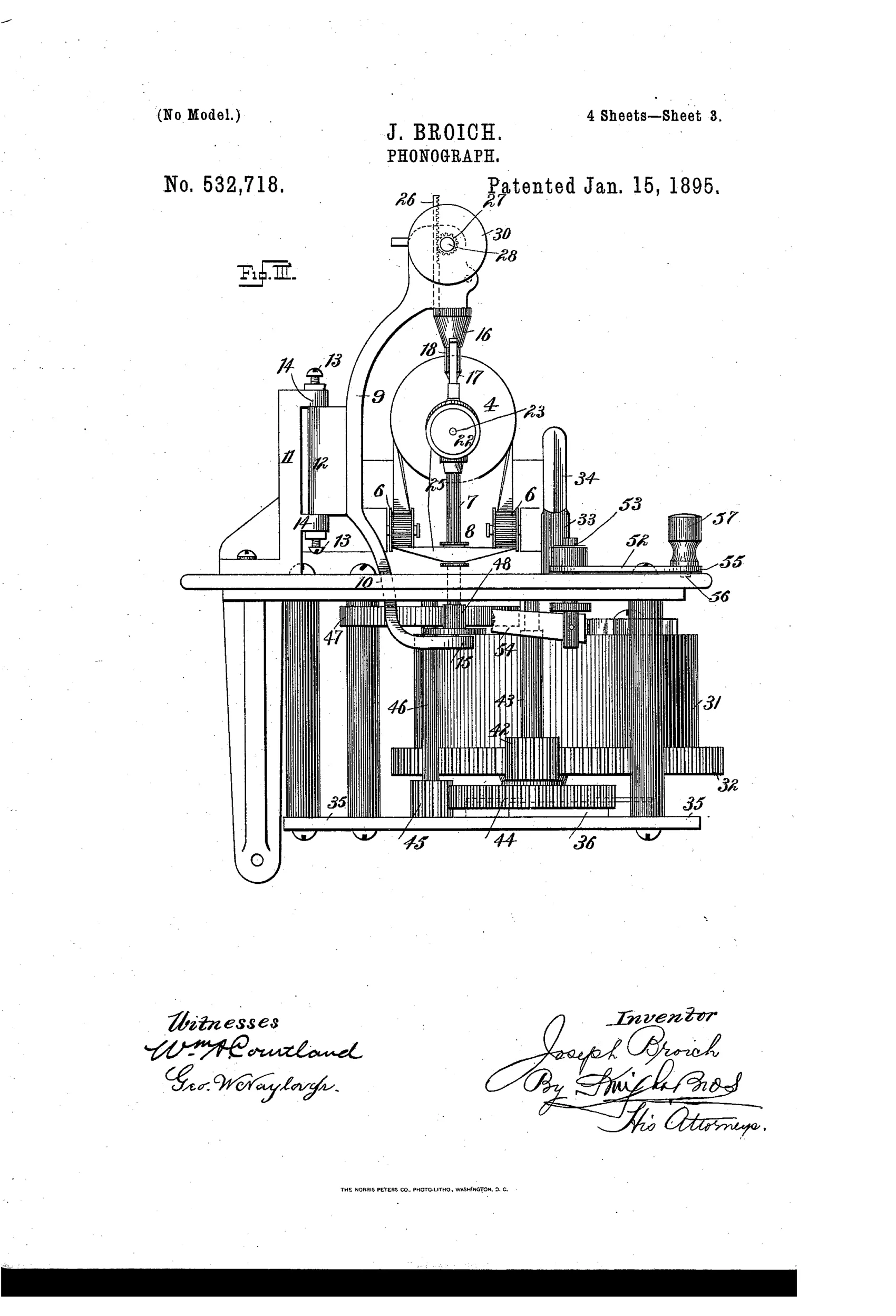
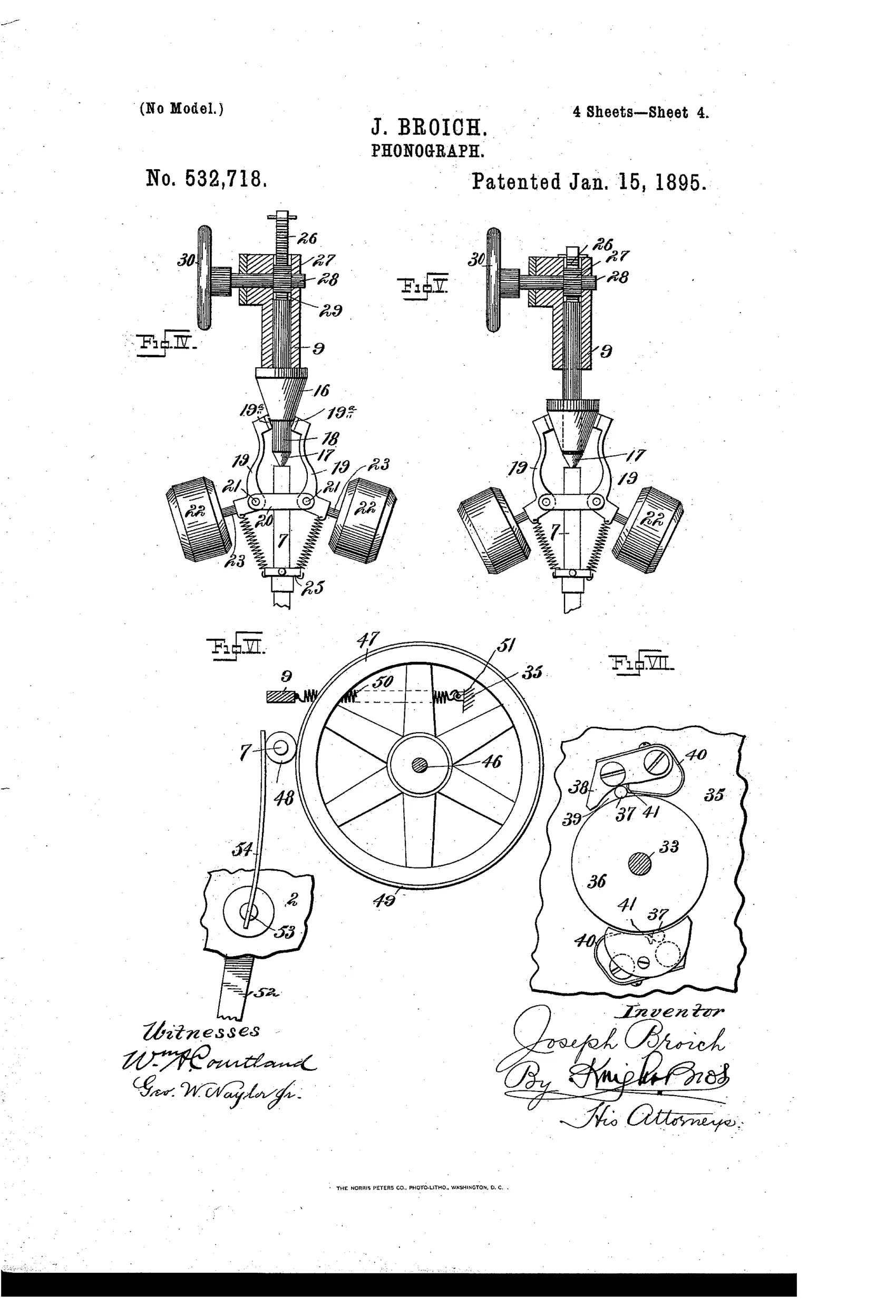
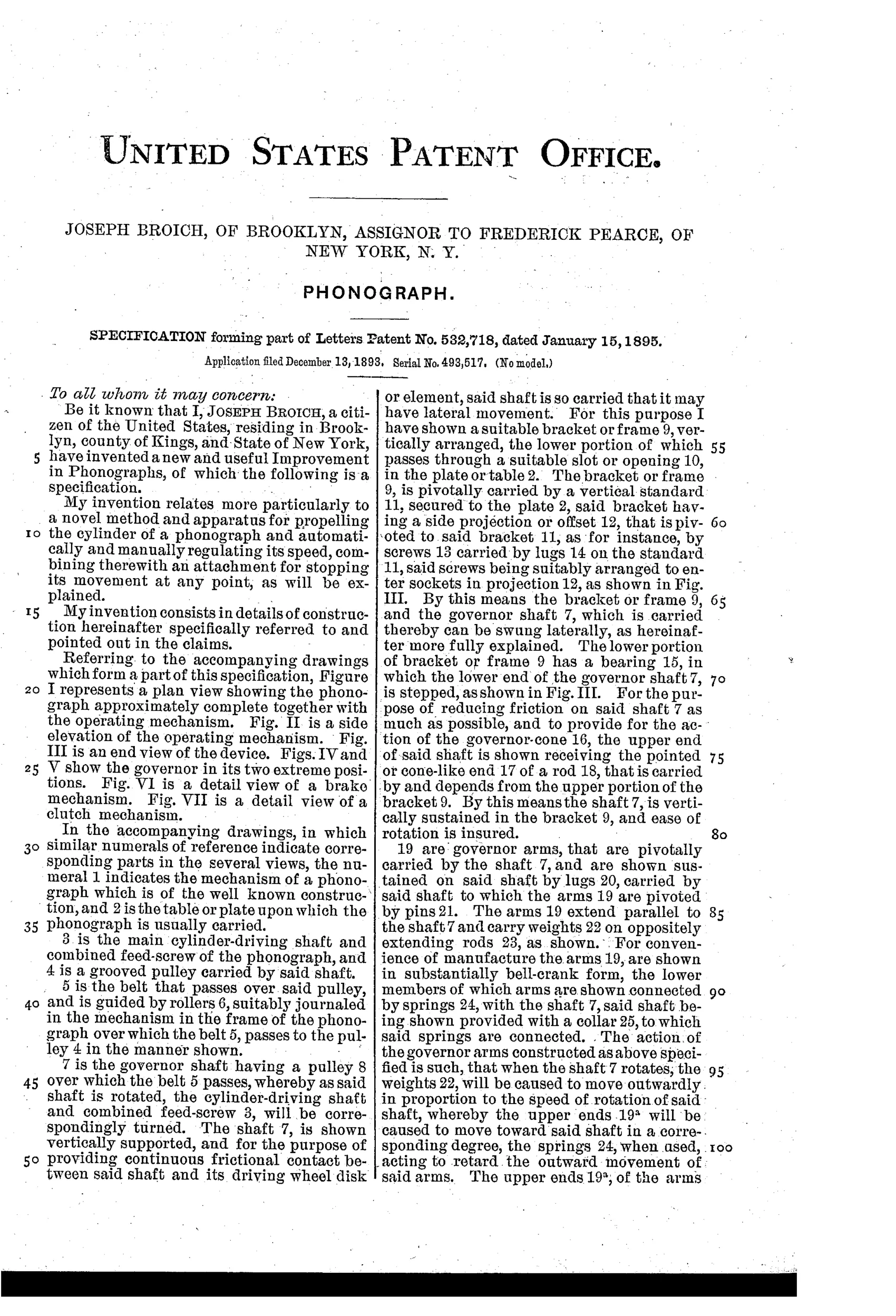
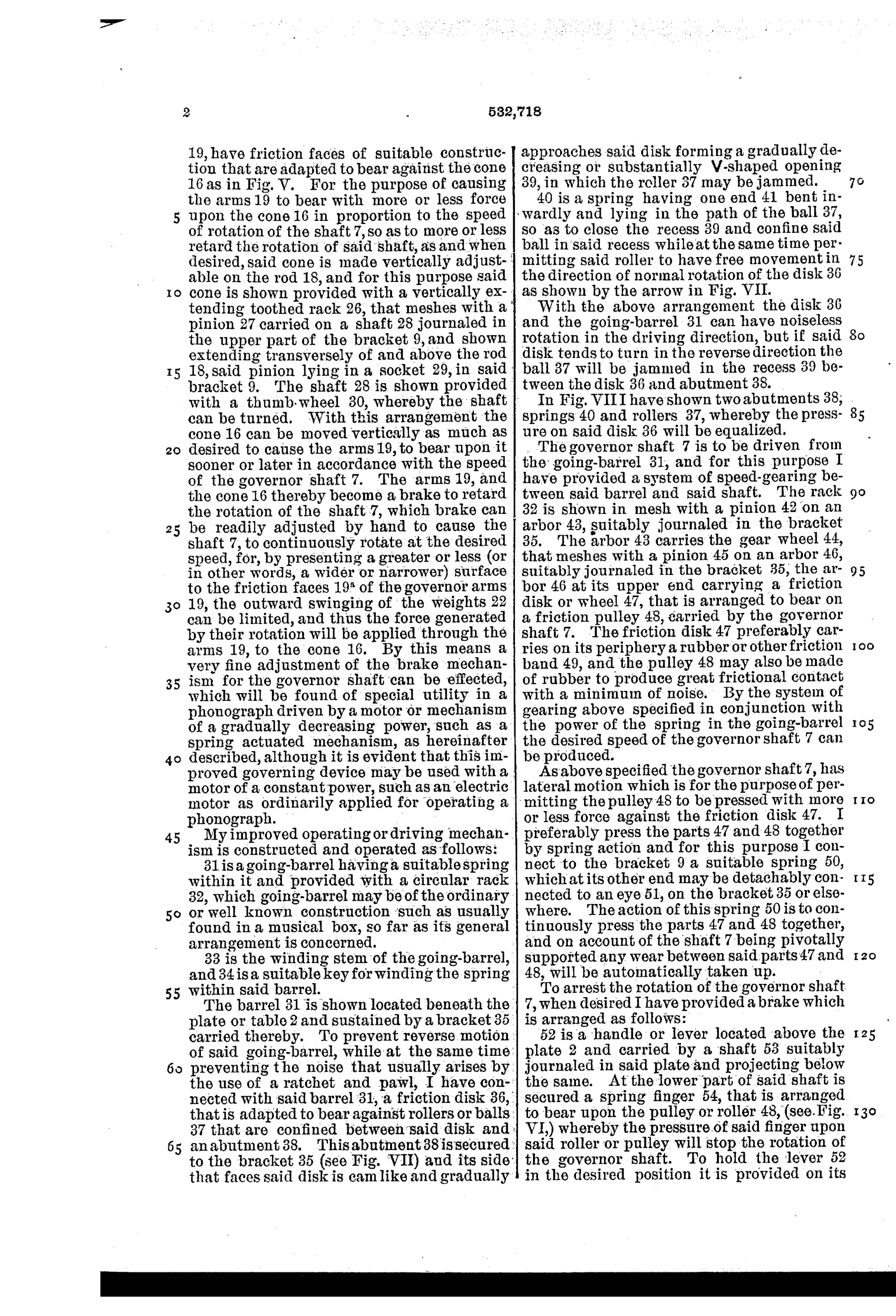
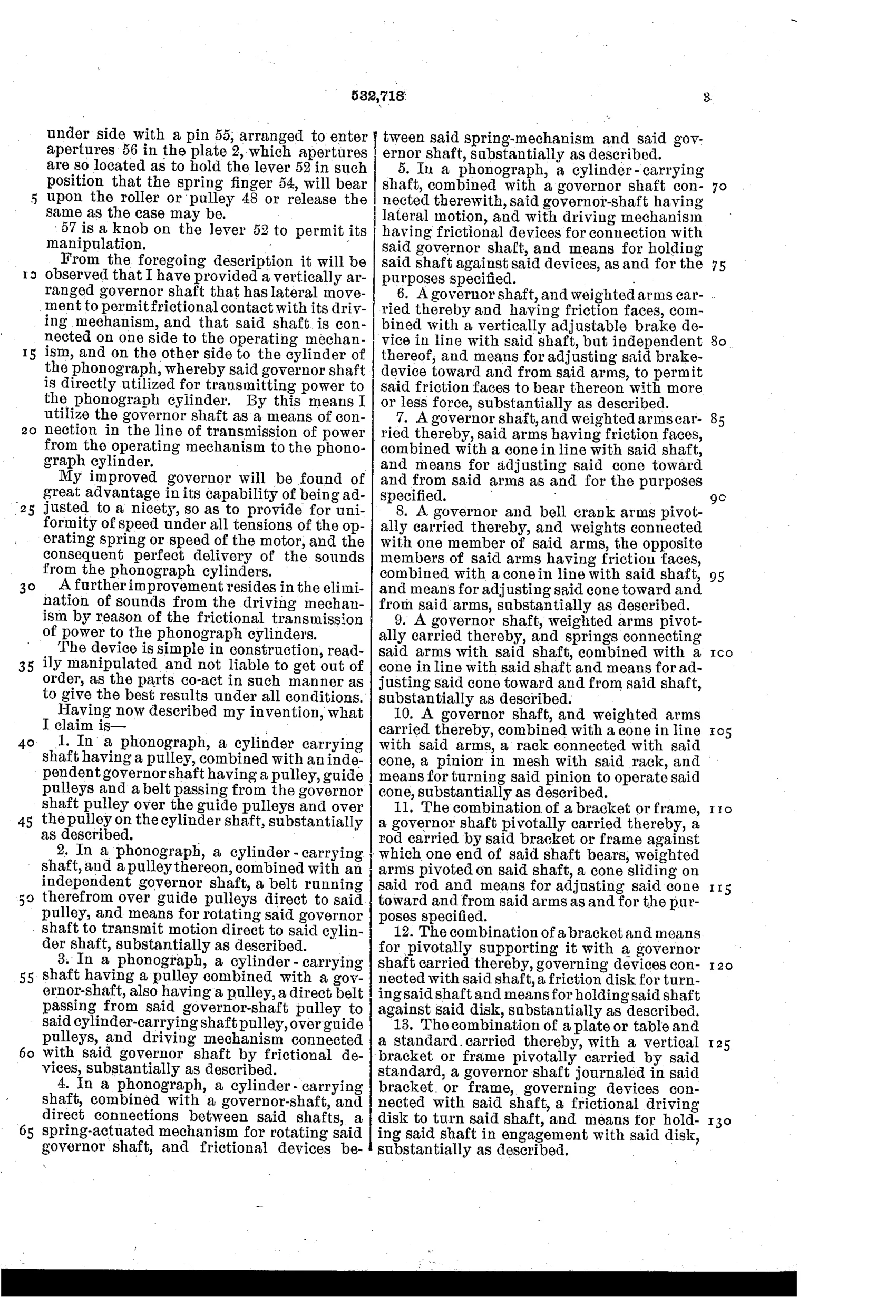
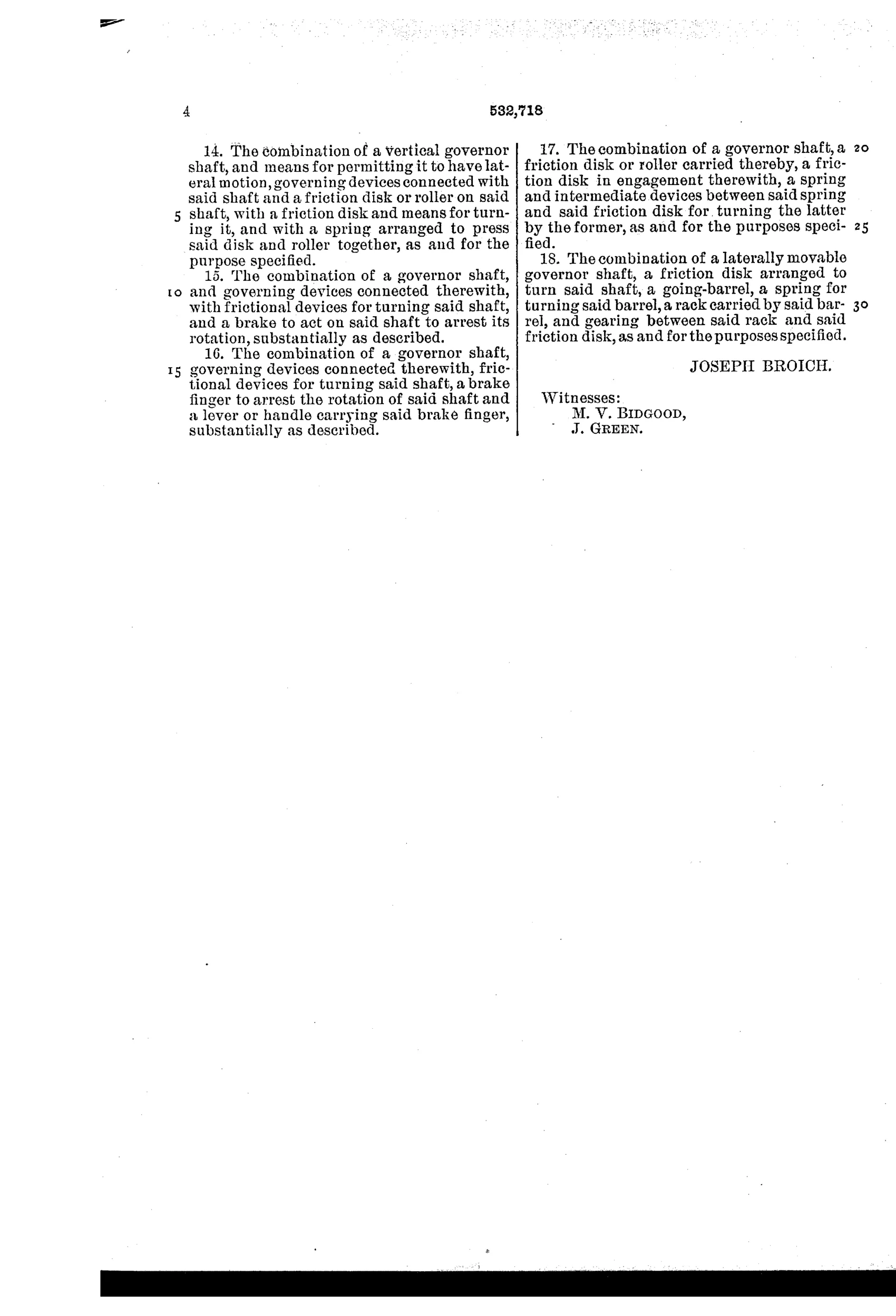
Speed-governor mechanism for a spring-driven phonograph
↻ How it works
A vertical governor shaft is belt-connected via a pulley to the phonograph cylinder's driving shaft, so the shaft directly transmits power from the spring motor to the cylinder. Weighted bell-crank arms pivoted on the governor shaft swing outward with centrifugal force as the shaft spins faster, bearing their friction faces against a vertically adjustable cone to brake the shaft and regulate speed. The cone's height is set by a rack-and-pinion turned with a thumb wheel, allowing fine adjustment of governing speed. A separate spring-loaded lever with a friction finger can be pressed against a pulley on the shaft to stop rotation entirely, while a going-barrel spring motor drives the governor shaft through a gear train and friction disk, with a ball-and-recess clutch preventing reverse rotation.
↻ What was claimed
“1. In a phonograph, a cylinder carrying shaft having a pulley, combined with an independent governor shaft having a pulley, guide pulleys and a belt passing from the governor shaft pulley over the guide pulleys and over the pulley on the cylinder shaft, substantially as described.”
In plain English: The cylinder's drive shaft has a pulley connected by a belt, running over guide pulleys, to a separate governor shaft that also has its own pulley.
↻ In the inventor’s words
“My improved governor will be found of great advantage in its capability of being adjusted to a nicety, so as to provide for uniformity of speed under all tensions of the operating spring or speed of the motor, and the consequent perfect delivery of the sounds from the phonograph cylinders.”— Joseph Broich, from the specification
Fate unknown
Out of category, so our reel-history anchors don't apply; whether Pearce ever produced Broich's governor would take phonograph-collector documentation to settle.
↻ Commentary
Let's be honest up front: this is not a fishing reel. Joseph Broich of Brooklyn patented a speed governor for a spring-driven phonograph, and it has wandered into our category by accident — probably because the drawing reads, at a glance, like every reel patent of the era: a crank, gearing, a spool-shaped cylinder, and a click-and-brake mechanism on a plate. I'm leaving the page up with this note because the mechanical kinship is real and instructive.
What Broich built is a centrifugal governor of the watchmaker's school. Weighted bell-crank arms on a fast-spinning vertical shaft fling outward as speed rises and drag their friction faces against a cone; the clever bit is that the cone rides up and down on a rack-and-pinion turned by a thumb wheel, so the operator can dial the governing speed 'to a nicety' as the spring runs down. Add the going-barrel spring motor, the ball-and-recess anti-reverse clutch, and the friction-finger stop lever, and you have a whole vocabulary shared with reel work — anti-reverse, adjustable friction drag, spring drive.
In fact, our anti-backlash obsession of 1900-1920 chased exactly this problem in miniature: a rotating drum that wants to run faster than the work being fed to it. Broich solved it with weights and a cone; reel makers would try dozens of answers. Different pond, same fish.
Commentary by Claude, The Fishing Reel Patent Archive’s resident enthusiast