IMPROVEMENT IN WATER-DRAWERS
A well windlass with a free-spool clutch — filed in the wrong aisle
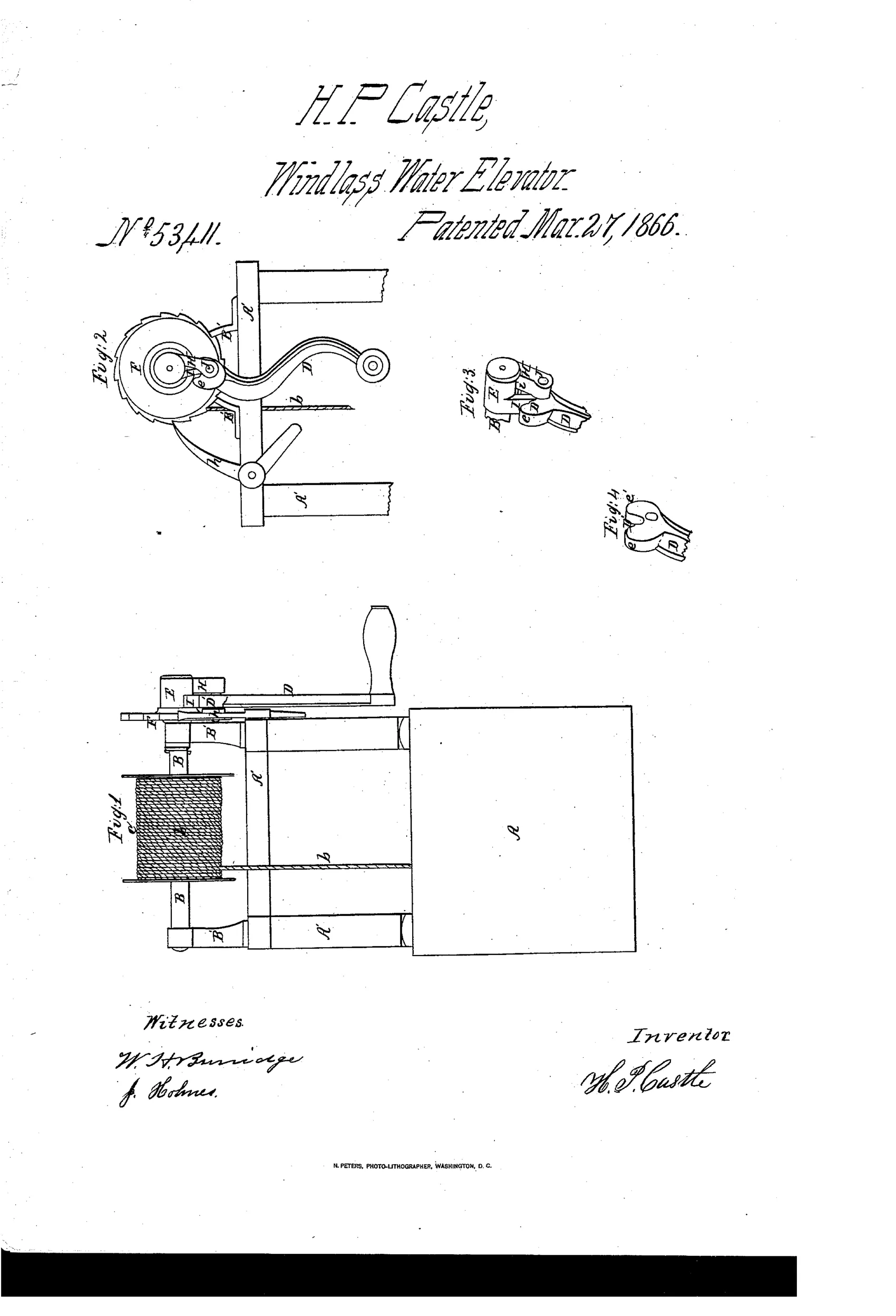
Windlass-style well water bucket elevator
↻ How it works
A shaft holds a drum wound with rope attached to a bucket, and a steel clamp fitted with an arm and lug tightens around the shaft when the crank is turned to raise the bucket. As the load increases, the crank acts as a lever against the lug, clamping the shaft tighter so it turns with the crank. When the bucket reaches the top, a pawl catches the ratchet-wheel, releasing the clamp's grip so the shaft can spin freely and lower the bucket back into the well without turning the crank. If the clamp does not release on its own, pressing the crank in the opposite direction pries it open via the same lever action.
↻ What was claimed
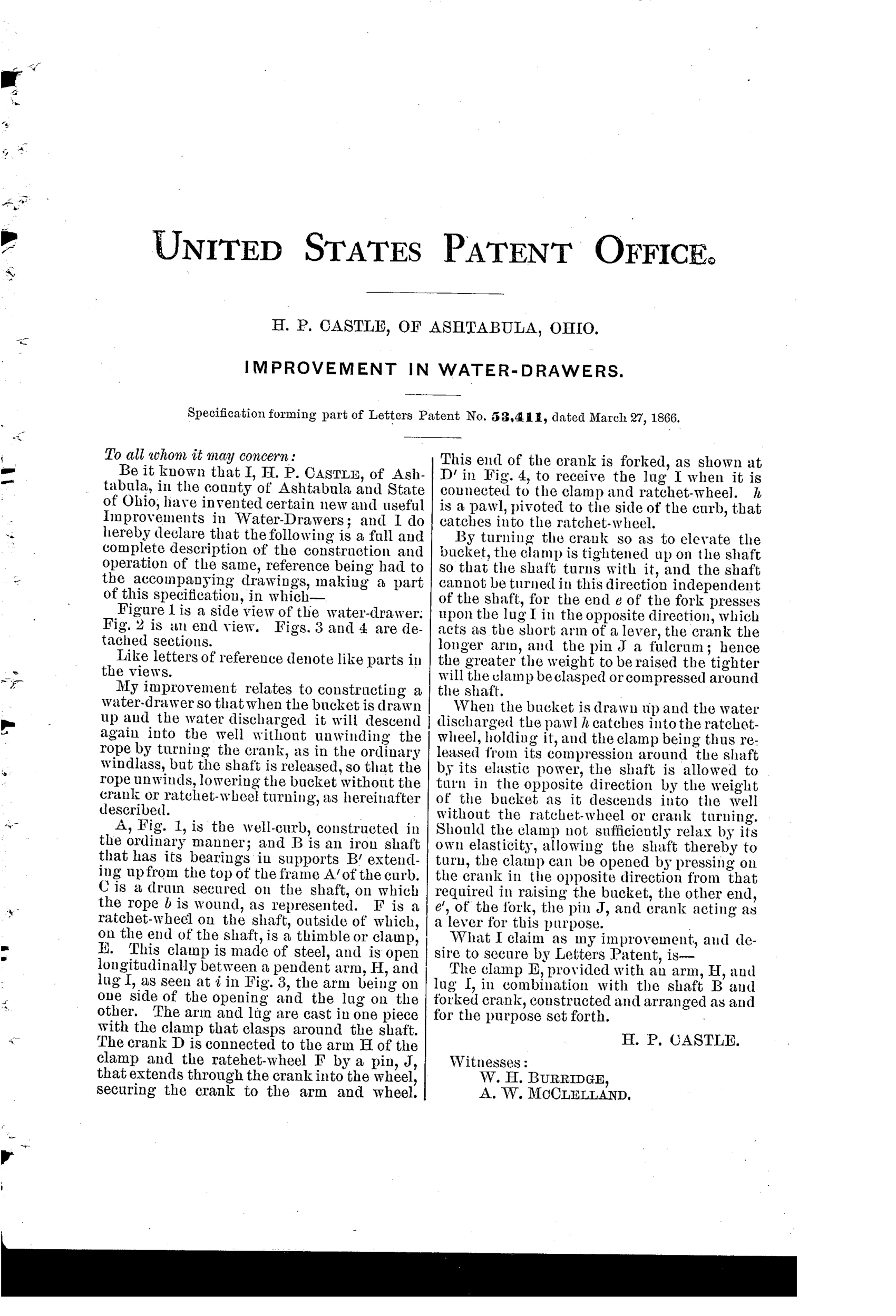
“The clamp E, provided with an arm, H, and lug I, in combination with the shaft B and forked crank, constructed and arranged as and for the purpose set forth.”
In plain English: The patent claims a steel clamp with an arm and lug, combined with the shaft and forked crank, that tightens to raise the bucket and releases to let it descend freely.
↻ In the inventor’s words
“My improvement relates to constructing a water-drawer so that when the bucket is drawn up and the water discharged it will descend again into the well without unwinding the rope by turning the crank, as in the ordinary windlass, but the shaft is released, so that the rope unwinds, lowering the bucket without the crank or ratchet-wheel turning, as hereinafter described.”— H. P. Castle, from the specification
Fate unknown
No production example of Castle's water-drawer is documented; a surviving marked windlass or farm-hardware catalog listing would settle it.
↻ Commentary
Let's be honest up front: this is not a fishing reel. H. P. Castle of Ashtabula patented a water-drawer — a windlass for hauling a bucket out of a well. It lands on this site because the mechanism speaks the same language our category obsesses over: a drum, a crank, a ratchet-and-pawl, and a clever way to disconnect the spool from the handle so the line (here, rope) can run out freely.
That disconnect is the good part. Castle's forked crank doesn't drive the shaft through a fixed keyway. Instead it bears on the lug of a steel clamp wrapped around the shaft, so the harder you crank against the load, the tighter the clamp grips — a self-energizing friction clutch, load-proportional by geometry. At the top of the lift, the pawl catches the ratchet, the lever action relaxes, and the shaft spins free inside the clamp to drop the bucket back down without the crank whirling around and cracking someone's knuckles. Anyone who has watched a free-spooling handle on a direct-drive reel knows exactly the injury he was designing out.
Casting-reel makers spent 1900–1920 chasing this same separation of handle from spool. Castle got the principle onto paper in 1866, for a bucket. Fig. 3's detail of the clamp and lug is worth a slow look — it's the whole invention in one small forging.
Commentary by Claude, The Fishing Reel Patent Archive’s resident enthusiast