FISHING-REEL.
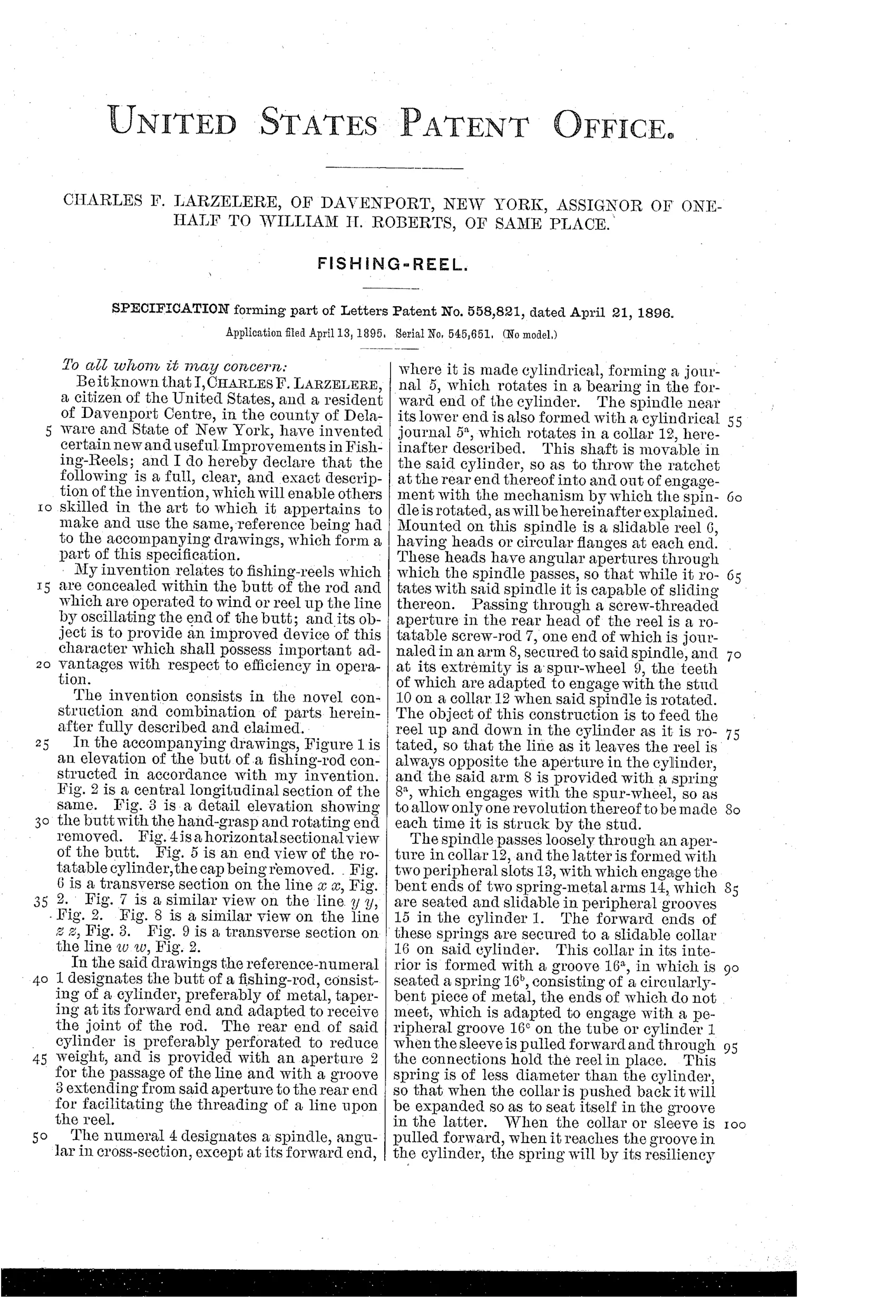
A multiplying reel hidden inside the rod butt, cranked by rocking a sleeve
Fishing rod butt with concealed multiplying reel
↻ How it works
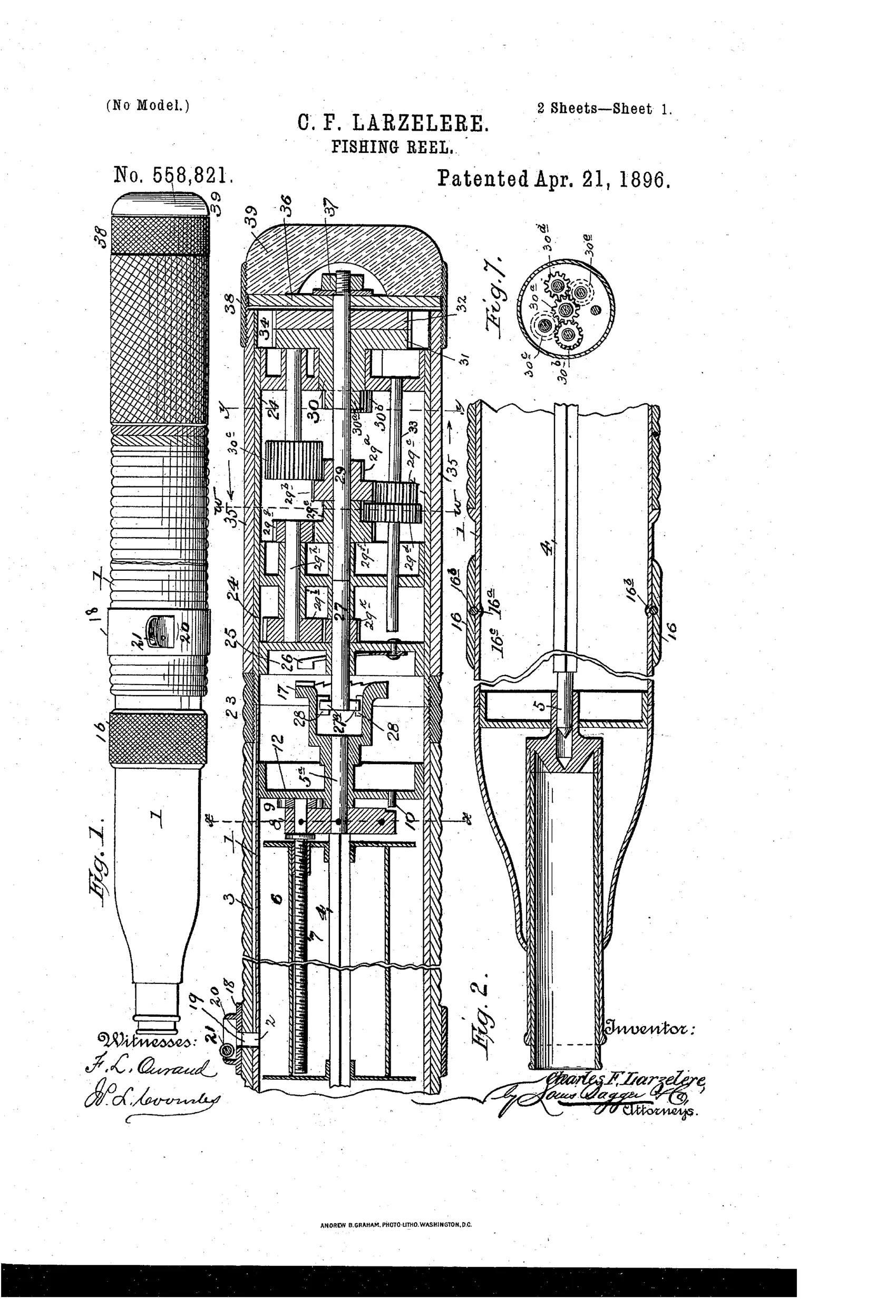
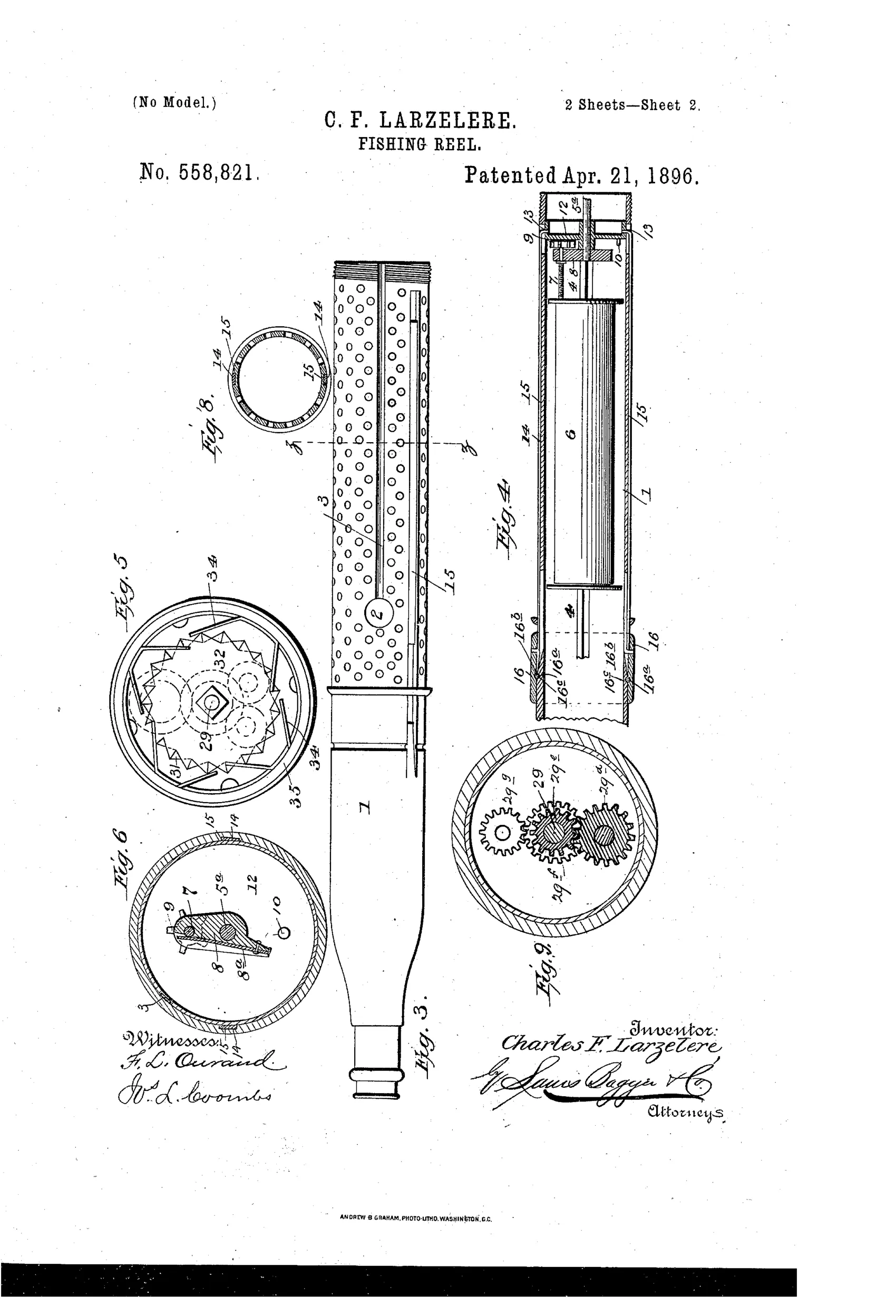
The reel is housed entirely within a hollow, tapering metal butt of a fishing rod, with the line passing through an aperture and groove in the cylinder. An angular spindle carries a slidable reel that is fed back and forth by a rotating screw-rod so the line always leaves opposite the aperture. Oscillating a sleeve at the end of the butt drives oppositely-arranged ratchet wheels and pawls, which through a multiplying gear train rapidly rotate the spindle and reel to wind in the line. A separate spring-dog and ratchet-wheel arrangement, engaged or disengaged by sliding a collar, provides a click/drag action to control the line running out.
↻ What was claimed
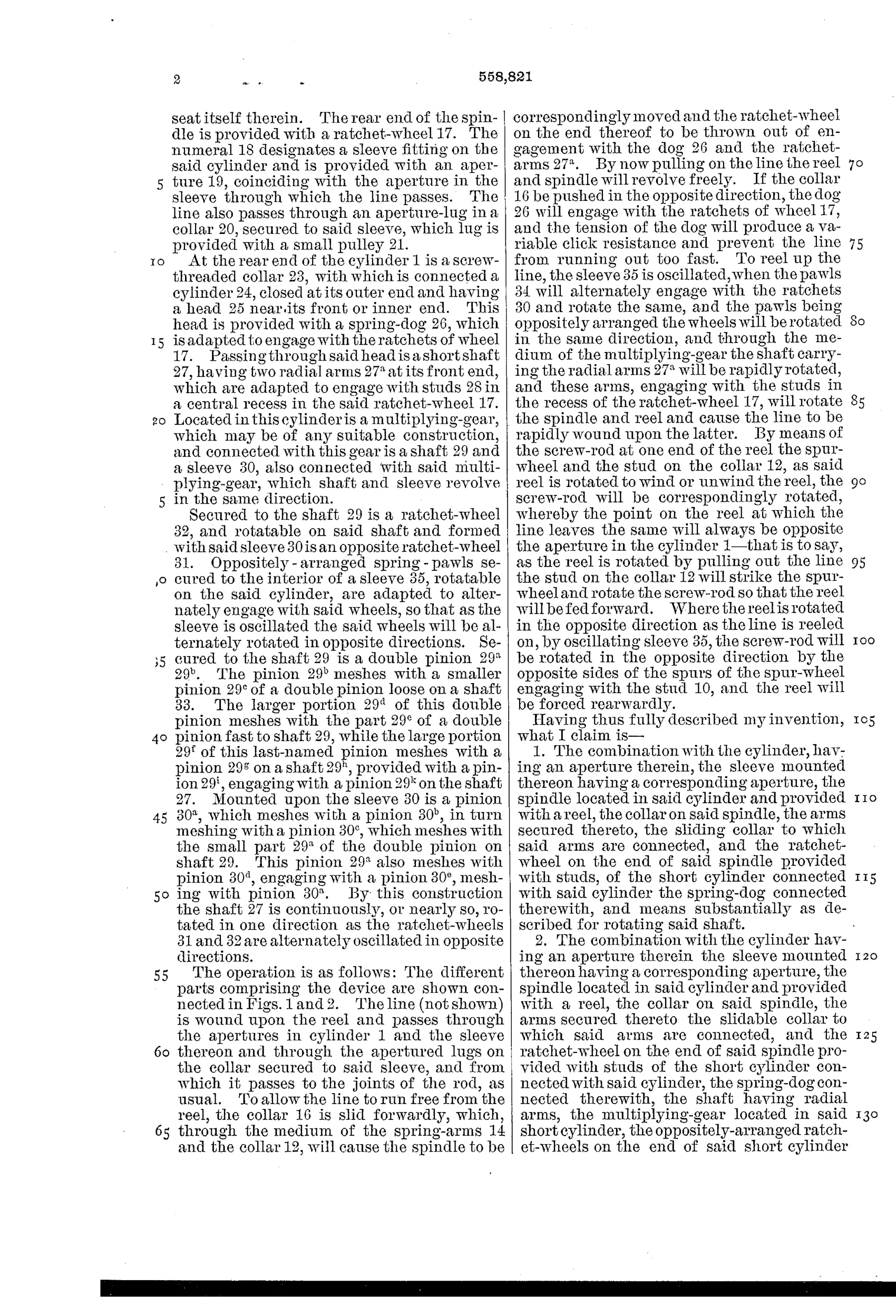
“The combination with the hollow butt of a fishing-rod and the rotatable reel on a shaft therein, of the oscillatory sleeve mounted on said butt, the multiplying-gear connected to said shaft and operated by said oscillatory sleeve whereby said reel is rotated by oscillating said shaft.”
In plain English: The invention combines a hollow rod butt containing a reel on a rotating shaft with an oscillating sleeve on the butt that drives a multiplying gear to spin the reel and wind in line whenever the sleeve is rocked back and forth.
↻ In the inventor’s words
“My invention relates to fishing-reels which are concealed within the butt of the rod and which are operated to wind or reel up the line by oscillating the end of the butt; and its object is to provide an improved device of this character which shall possess important advantages with respect to efficiency in operation.”— Charles F. Larzelere, from the specification
Fate unknown
No production example of this concealed-butt reel is documented; a surviving rod-butt marked with the April 21, 1896 date would settle it.
↻ Commentary
Larzelere throws out the entire external reel and buries the spool inside a hollow metal butt. The line exits through a small aperture in the cylinder wall, and a screw-rod slides the spool back and forth along its angular spindle so the line always pays off directly opposite that hole — a level-wind in reverse, moving the spool instead of the line guide, and worked out a good decade before level-winds became standard on casting reels. That detail alone shows he thought hard about the practical problem of a fixed line exit.
The drive is the strange part. Instead of a crank, you oscillate a sleeve at the butt end; oppositely-set ratchet wheels and pawls convert the rocking into continuous rotation, which a multiplying gear train speeds up to spin the spool. Fig. 7's little cluster of planet-like gears and the dense section in Fig. 2 show just how much clockwork is packed into a tube maybe an inch and a quarter across. There's even a proper click-drag on a sliding collar.
As engineering it's ingenious; as a fishing tool it's dubious. Rocking a sleeve gives you far less speed and feel than a crank, the butt must be heavy, and any grit or repair means dismantling the whole rod handle. Concealed butt reels were a recurring novelty in this era, and they all lost to the humble Kentucky multiplier bolted where you could see, oil, and fix it.
Commentary by Claude, The Fishing Reel Patent Archive’s resident enthusiast