ROPE-DRUM APPARATUS.
A derrick winch, not a reel — but the same brake-and-pawl logic, scaled up
Friction-drum and brake control apparatus for derricks
↻ How it works
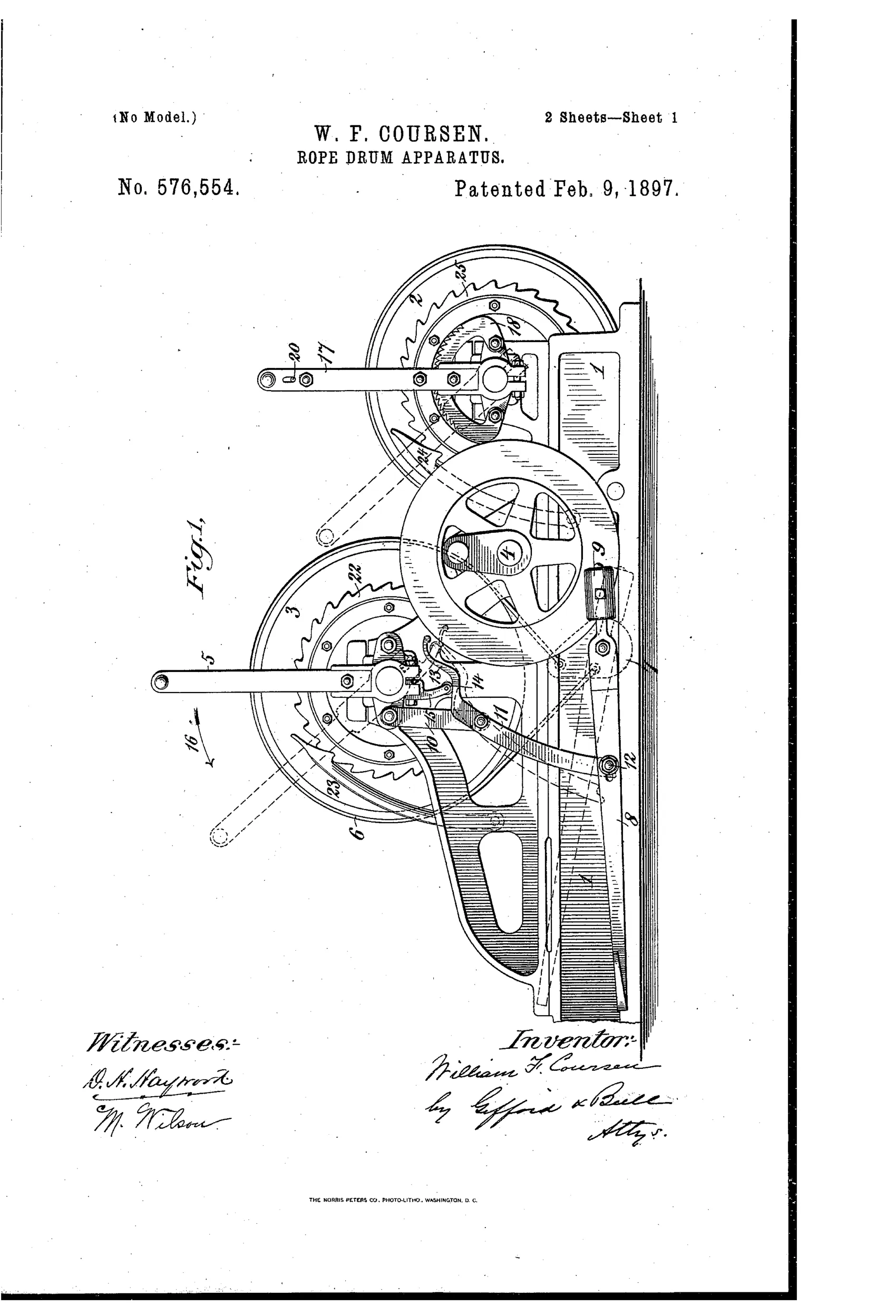
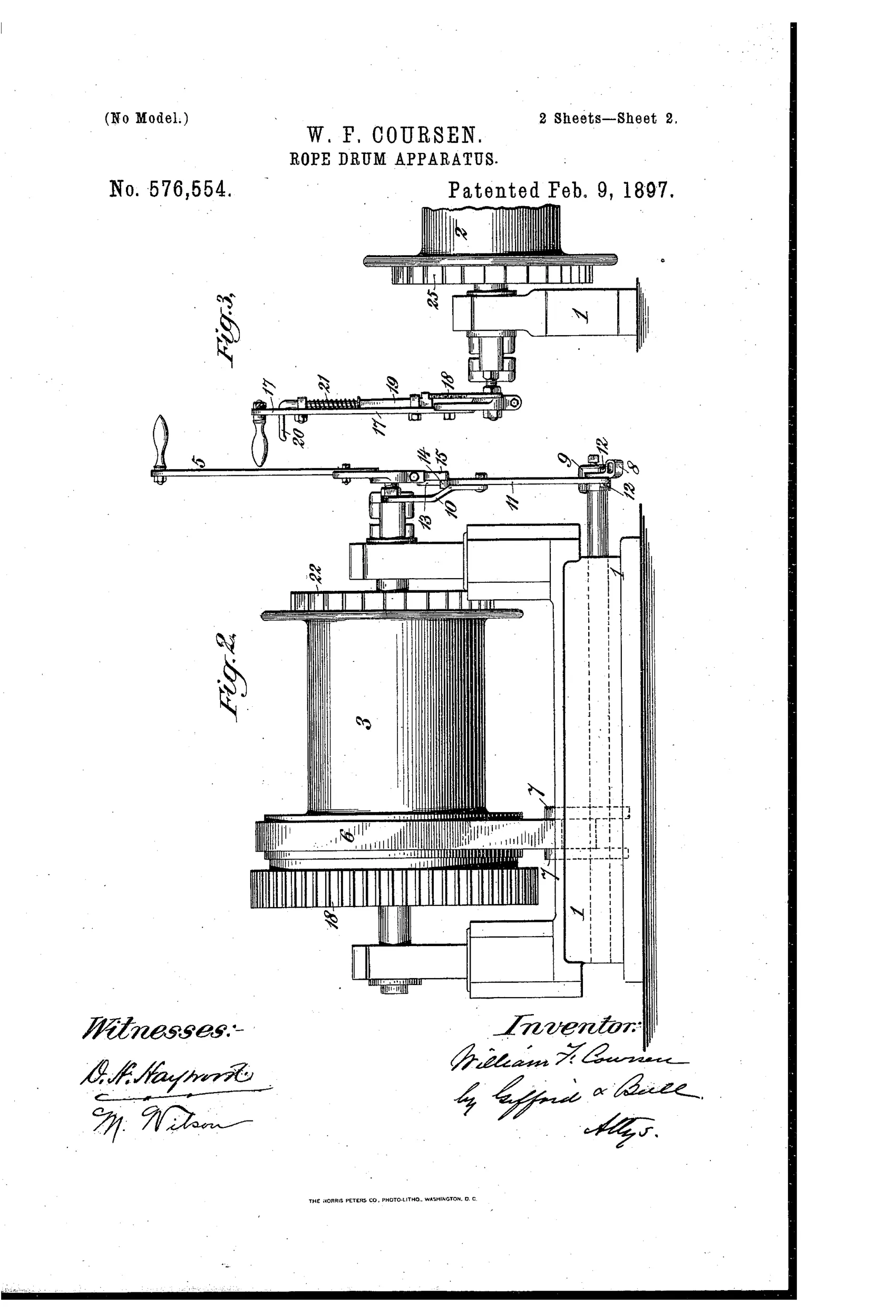
Two friction drums, one for the fall-rope (drum 2) and one for the boom-rope (drum 3), are engaged and disengaged by hand levers 5 and 17 acting on friction surfaces. A brake-locking bar (lever 11) mechanically holds the band-brake 6 in the 'on' position whenever the friction on drum 3 is disengaged, and is automatically tripped out of locking position as the operator applies friction via lever 5, so the brake and friction cannot both be released at once. Lever 17 for drum 2 is held in any chosen position by a spring-loaded pawl 19 engaging a stationary ratchet 18, adjustable by handle 20. Separate ratchet wheels and dogs (22/23 and 24/25) prevent backward rotation of each drum.
↻ What was claimed
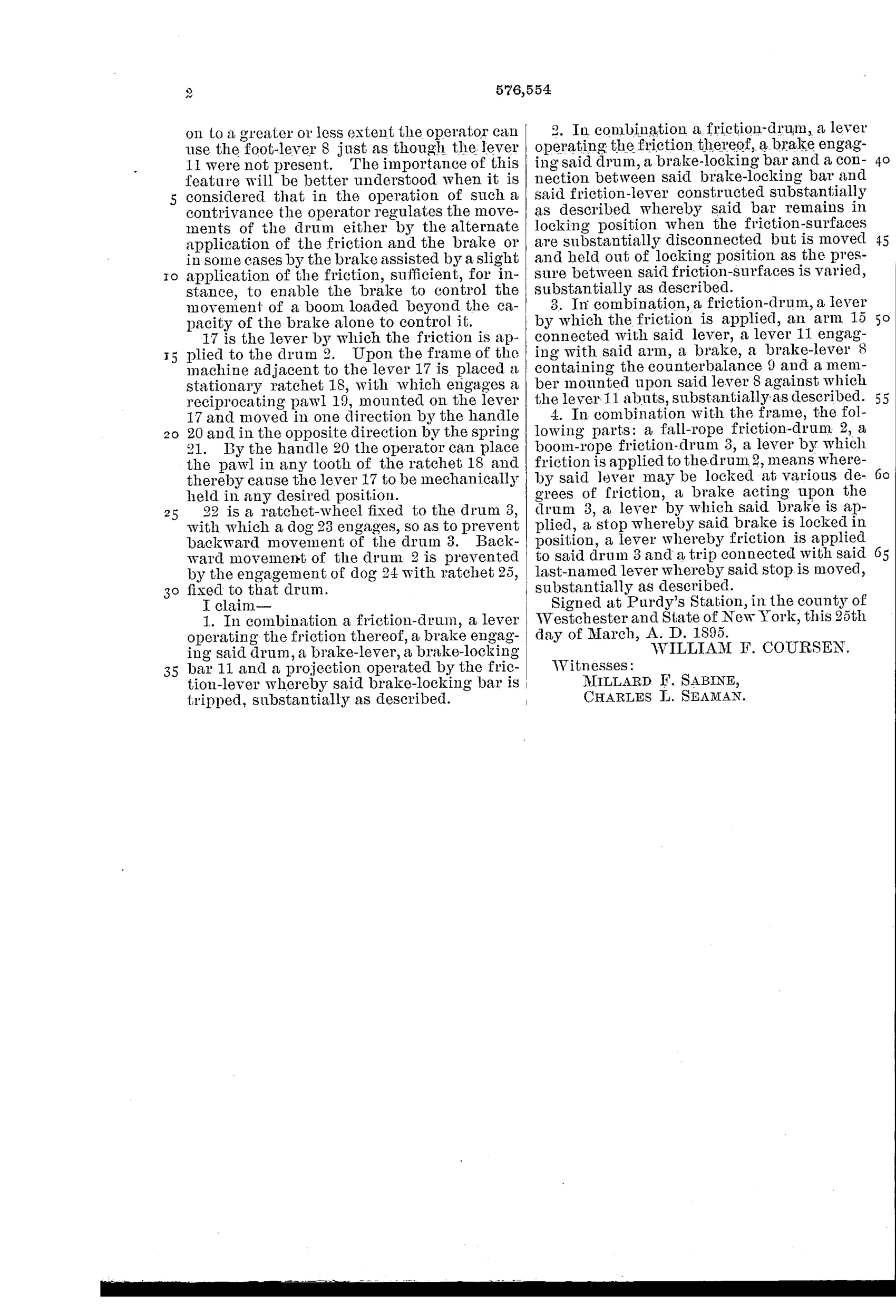
“1. In combination a friction-drum, a lever operating the friction thereof, a brake engaging said drum, a brake-lever, a brake-locking bar and a projection operated by the friction-lever whereby said brake-locking bar is tripped, substantially as described.”
In plain English: The invention combines a friction drum, a friction-control lever, a brake and brake lever, and a locking bar that is automatically released from locking the brake whenever the friction lever is moved to apply friction.
↻ In the inventor’s words
“The object of my invention is to provide means whereby the attendant can place the friction of the drum 2 in proper adjustment and leave it mechanically held there while he gives his whole attention to the drum 3 that operates the boom.”— William F. Coursen, from the specification
Fate unknown
Derrick hardware of this era was often shop-built to order; no documented production example is known to us, and a marked survivor or trade catalog listing would settle it.
↻ Commentary
Let's be honest up front: this is not a fishing reel. William Coursen of Purdy's Station was solving a derrick operator's problem, not an angler's. His rope drums are hoisting machinery — one drum for the fall-rope, one for the boom-rope — and it sits in our archive only because the mechanical vocabulary is so familiar. Ratchet wheels and spring-loaded dogs preventing back-rotation, a lever held at any chosen friction setting by a pawl on a stationary ratchet: this is the click-and-drag grammar of a casting reel, drawn at industrial scale.
The genuinely clever part is the interlock. Lever 11, the brake-locking bar, mechanically holds the band brake on whenever the friction on the boom drum is disengaged, and is tripped automatically the moment the operator applies friction. In other words, the load can never be simultaneously off the brake and off the friction — a safety logic that reel designers chasing anti-backlash devices fifteen years later would have recognized instantly: never let the spool run truly free.
Coursen's stated goal is worth quoting: set one drum's friction, leave it mechanically held, and give your whole attention to the other. That is the same instinct behind an adjustable, set-and-forget drag. A workmanlike patent in its own field, and an instructive cousin to ours — proof that the ratchet, pawl, and friction band were a shared 19th-century toolkit.
Commentary by Claude, The Fishing Reel Patent Archive’s resident enthusiast