FISHING-REEL.
A trigger-grip reel: squeeze the lever, ratchet the spool, no cranking required.
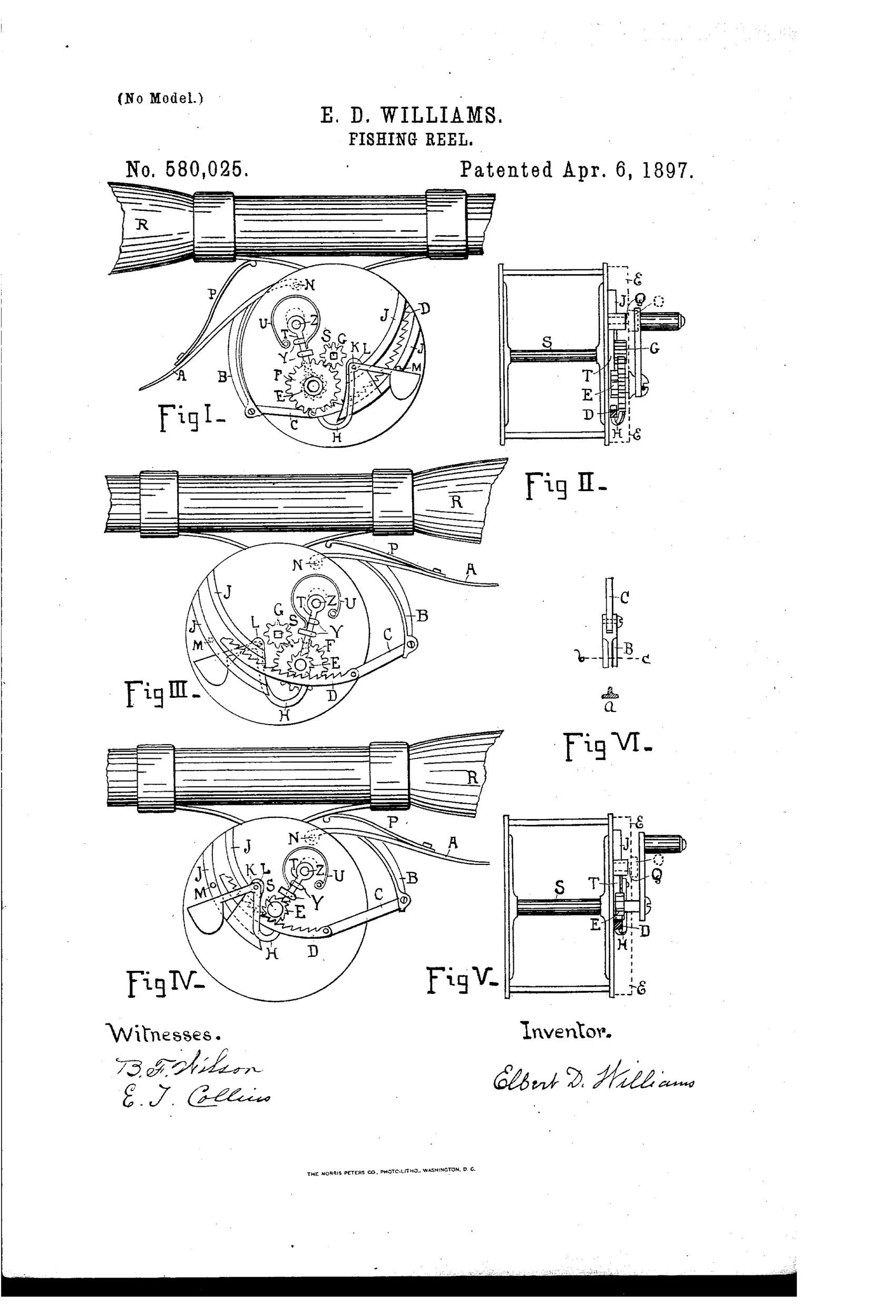
Auxiliary reciprocating lever mechanism for a fishing reel
↻ How it works
A reciprocating lever hung to the reel frame drives a toothed rack-bar into engagement with a ratchet-wheel on the spool spindle, revolving it when the lever is pressed toward the rod's handhold. A retracting spring pushes the rack-bar back over the slanting ratchet teeth when the lever is released, with a pawl preventing loss of motion. A weighted, pivoted arm holds the rack-bar in engagement with the ratchet-wheel teeth by gravity when below it, and disengages when above it. The mechanism can be added alongside a conventional crank-handle rotary reel mechanism without interfering with it, or used alone.
↻ What was claimed
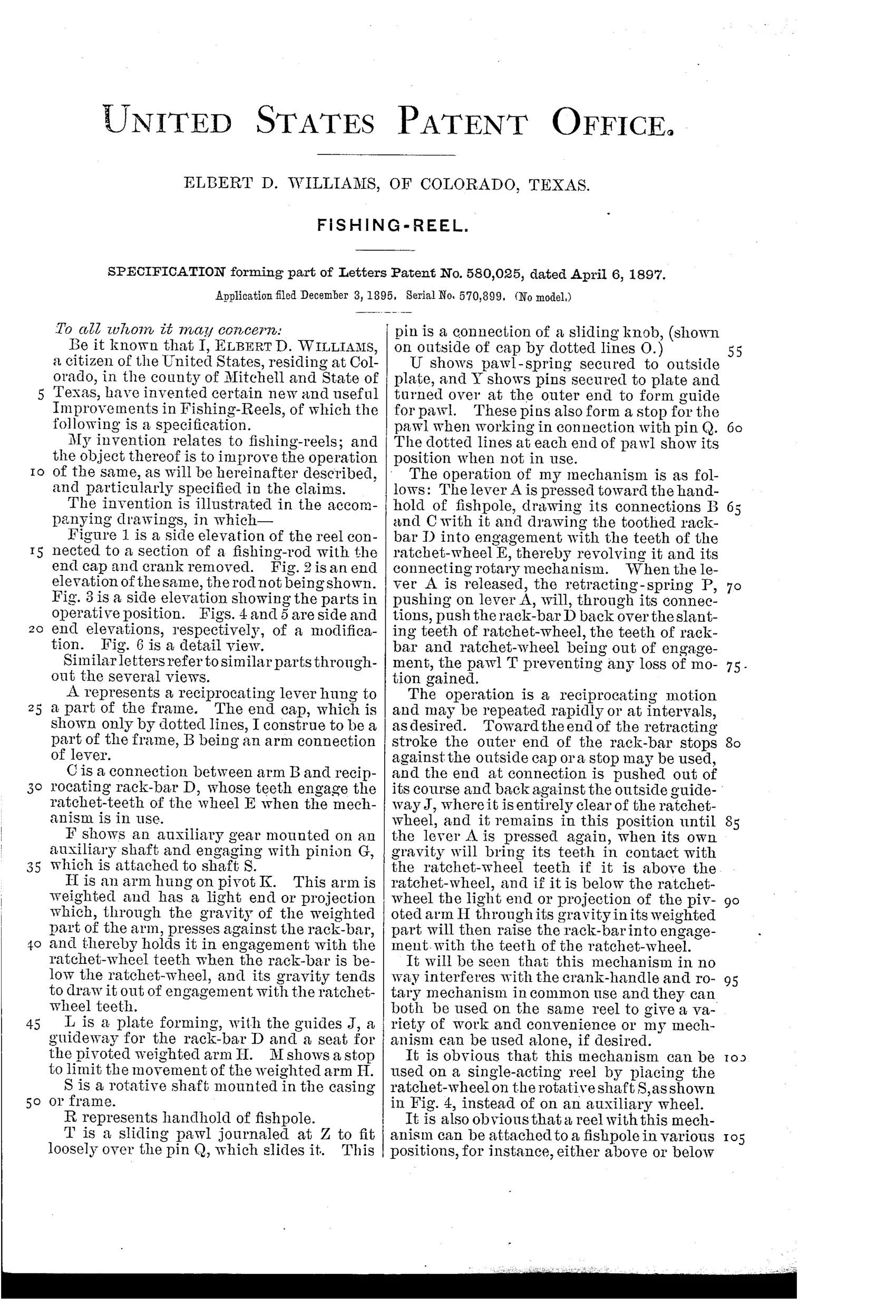
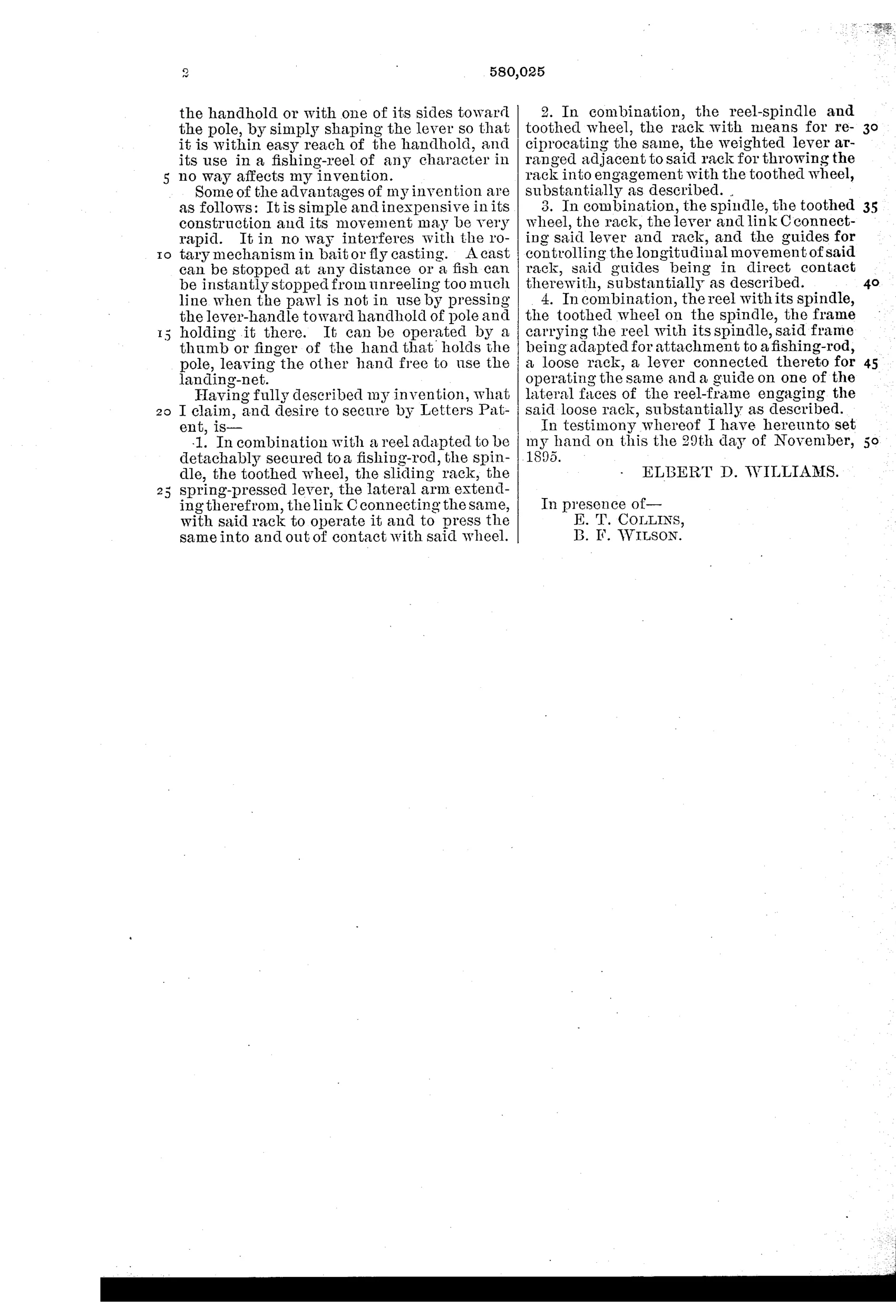
“In combination with a reel adapted to be detachably secured to a fishing-rod, the spindle, the toothed wheel, the sliding rack, the spring-pressed lever, the lateral arm extending therefrom, the link C connecting the same, with said rack to operate it and to press the same into and out of contact with said wheel.”
In plain English: A fishing reel where a spring-loaded lever, connected by a link to a sliding rack, can be pressed to engage or disengage that rack with a toothed wheel on the reel's spindle, turning the spool.
↻ In the inventor’s words
“A cast can be stopped at any distance or a fish can be instantly stopped from unreeling too much line when the pawl is not in use by pressing the lever-handle toward handhold of pole and holding it there.”— Elbert D. Williams, from the specification
Paper patent — likely never produced
No known maker produced a lever-ratchet retrieve of this type, and the mechanism's slow line recovery makes commercial manufacture implausible; no surviving example is documented.
↻ Commentary
Elbert Williams of Colorado, Texas looked at a fishing reel and decided the crank handle was optional. His idea: hang a long lever under the rod near the grip, connect it by a link to a sliding rack-bar, and let the rack's teeth ratchet a wheel on the spool spindle. Squeeze the lever toward the handhold and the spool turns; release, and a spring pushes the rack back over the slanted teeth while a pawl holds the gain. It is essentially a ratchet screwdriver grafted onto a reel, worked one-handed like a trigger.
The cleverest detail is easy to miss in the drawings: a small weighted arm holds the rack in mesh by gravity when it sits below the ratchet-wheel and lets it fall away when above — a self-acting clutch with no springs to fatigue. Williams also notes the whole apparatus can ride alongside a conventional crank without interfering, and that squeezing the lever brakes the spool mid-cast or checks a running fish. That braking claim is the more practical half of the invention.
As a retrieve, though, the arithmetic is against him. One lever stroke buys a fraction of a spool turn while Kentucky multipliers were giving four spool turns per crank turn. As anglers' fatigue goes, pumping a lever hundreds of times per retrieve is a dead end, and the trade followed the crank. A charming, honest solution to a problem the multiplying gear had already answered.
Commentary by Claude, The Fishing Reel Patent Archive’s resident enthusiast