FISHING-REEL.
Retrieve line by yanking a self-rewinding tape — the lawnmower-cord fishing reel
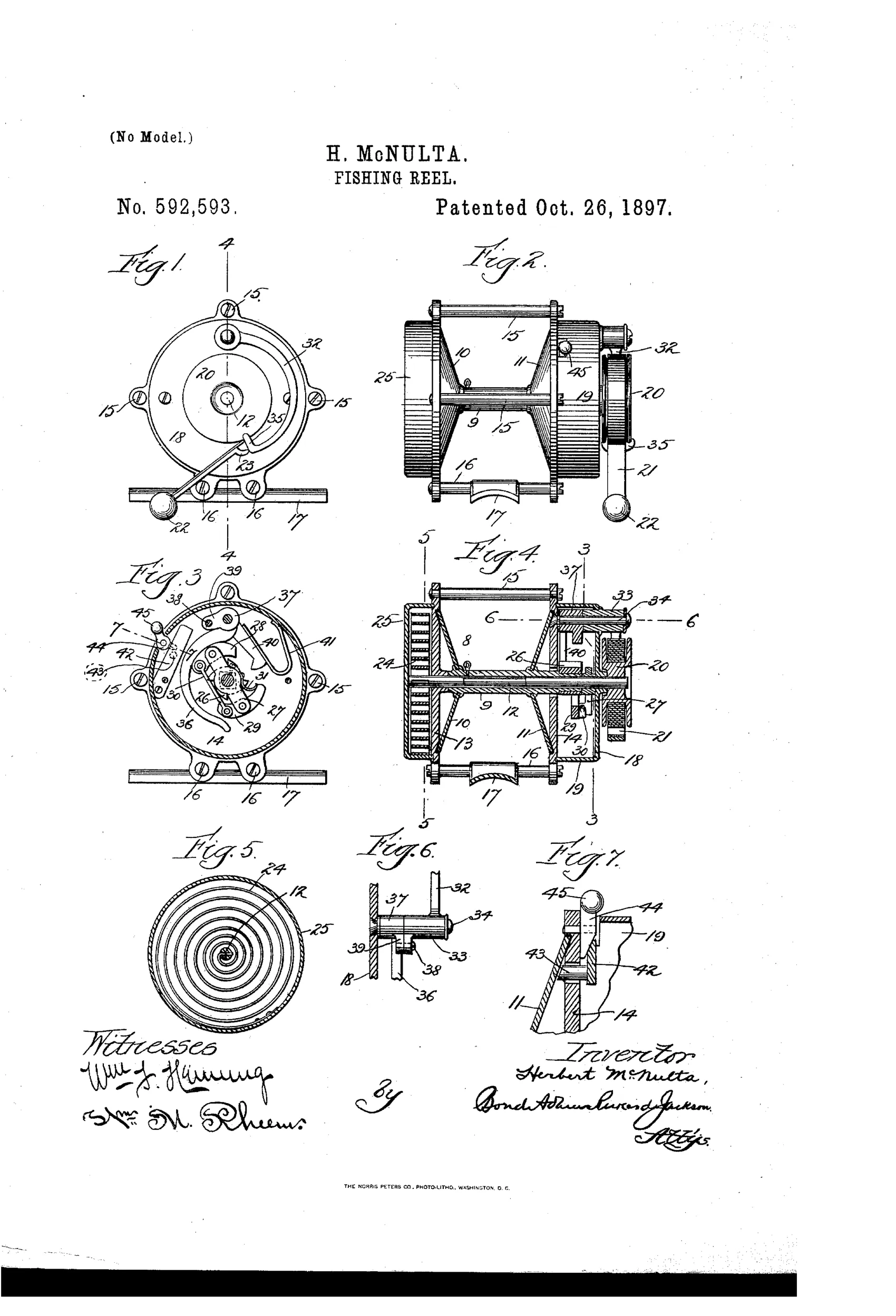
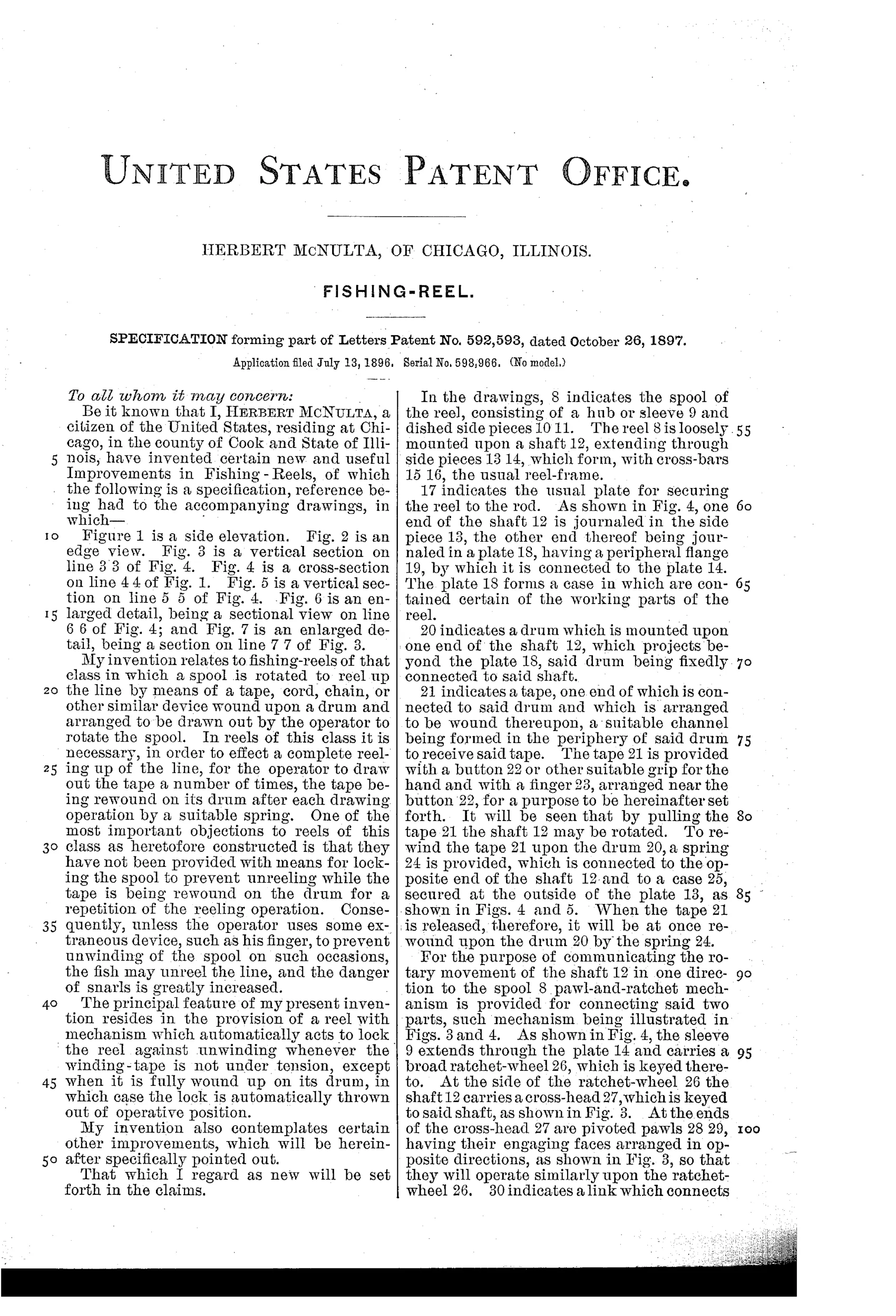
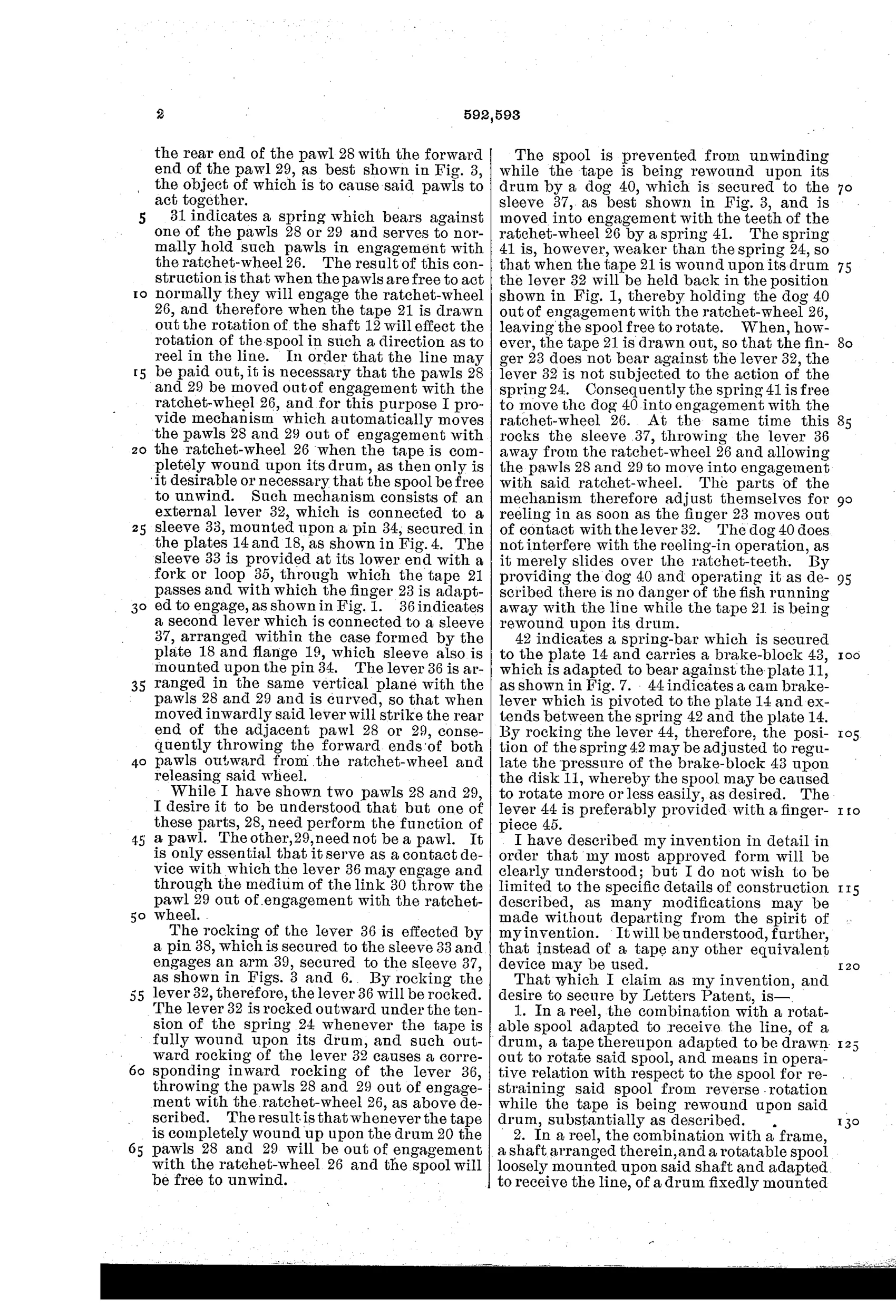
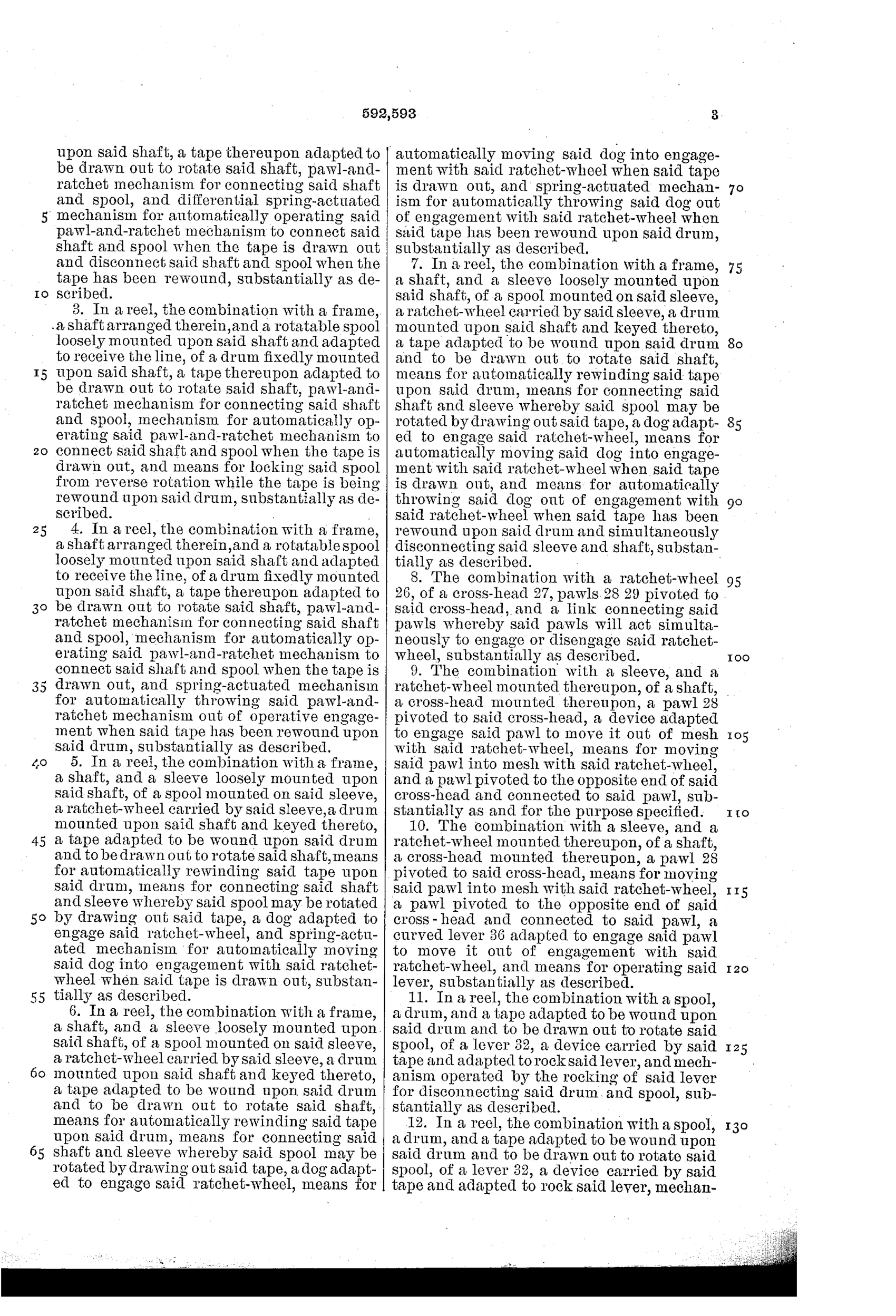
Anti-backlash fishing reel with automatic spool lock
↻ How it works
A tape or cord wound on a drum is pulled to rotate a shaft, which through a pawl-and-ratchet mechanism engages and rotates the loosely mounted line spool. A spring automatically rewinds the tape onto the drum whenever tension is released. A dog engages the ratchet-wheel to lock the spool against reverse rotation while the tape is being rewound, preventing the spool from unwinding and causing line snarls. When the tape is fully wound on its drum, levers automatically throw the dog and pawls out of engagement, freeing the spool to rotate normally for casting and fish-pulling line out.
↻ What was claimed
“In a reel, the combination with a rotatable spool adapted to receive the line, of a drum, a tape thereupon adapted to be drawn out to rotate said spool, and means in operative relation with respect to the spool for restraining said spool from reverse rotation while the tape is being rewound upon said drum, substantially as described.”
In plain English: The reel combines a spool, a tape-wound drum that rotates the spool when pulled, and a mechanism that locks the spool against unwinding while the tape rewinds itself.
↻ In the inventor’s words
“One of the most important objections to reels of this class as heretofore constructed is that they have not been provided with means for locking the spool to prevent unreeling while the tape is being rewound on the drum for a repetition of the reeling operation.”— Herbert McNulta, from the specification
Fate unknown
No production McNulta tape reel is documented in the collector literature; a marked surviving example would settle it, but the complexity suggests it likely stayed on paper.
↻ Commentary
Herbert McNulta of Chicago dispensed with the crank almost entirely. His reel retrieves line the way you start a lawnmower: pull a tape wound on a spring-loaded drum, and pawls transmit that pull to the line spool. Release, the spring rewinds the tape, and you pull again. It's the same one-way ratchet logic as a modern pull-start, applied to landing a fish stroke by stroke.
His actual claim, and it's a fair one, addresses the flaw in earlier tape reels: while the tape rewinds, an unrestrained spool will happily spin backward and dump line into a snarl. So McNulta adds a dog that locks the spool against reverse rotation during rewind, plus levers that automatically throw everything out of engagement once the tape is home — freeing the spool for casting or for a running fish. Fig. 3 shows how busy the back plate gets: pawls, ratchet wheel, trip levers, all in a space Kentucky makers filled with two gears.
The timing matters. This is 1897, a decade before the anti-backlash mania, and it belongs to a small, mostly forgotten family of automatic and tape-wind experiments that ran parallel to the crank-reel mainstream. Automatic fly reels eventually succeeded with a simpler spring-motor approach; the pull-tape idea, requiring a second hand and rhythmic yanking mid-fight, was probably its own worst enemy. Clever mechanism, awkward fishing.
Commentary by Claude, The Fishing Reel Patent Archive’s resident enthusiast