AUTOMATIC FISHING-REEL.
A clockwork reel from Tacoma, wound with a key like a pocket watch
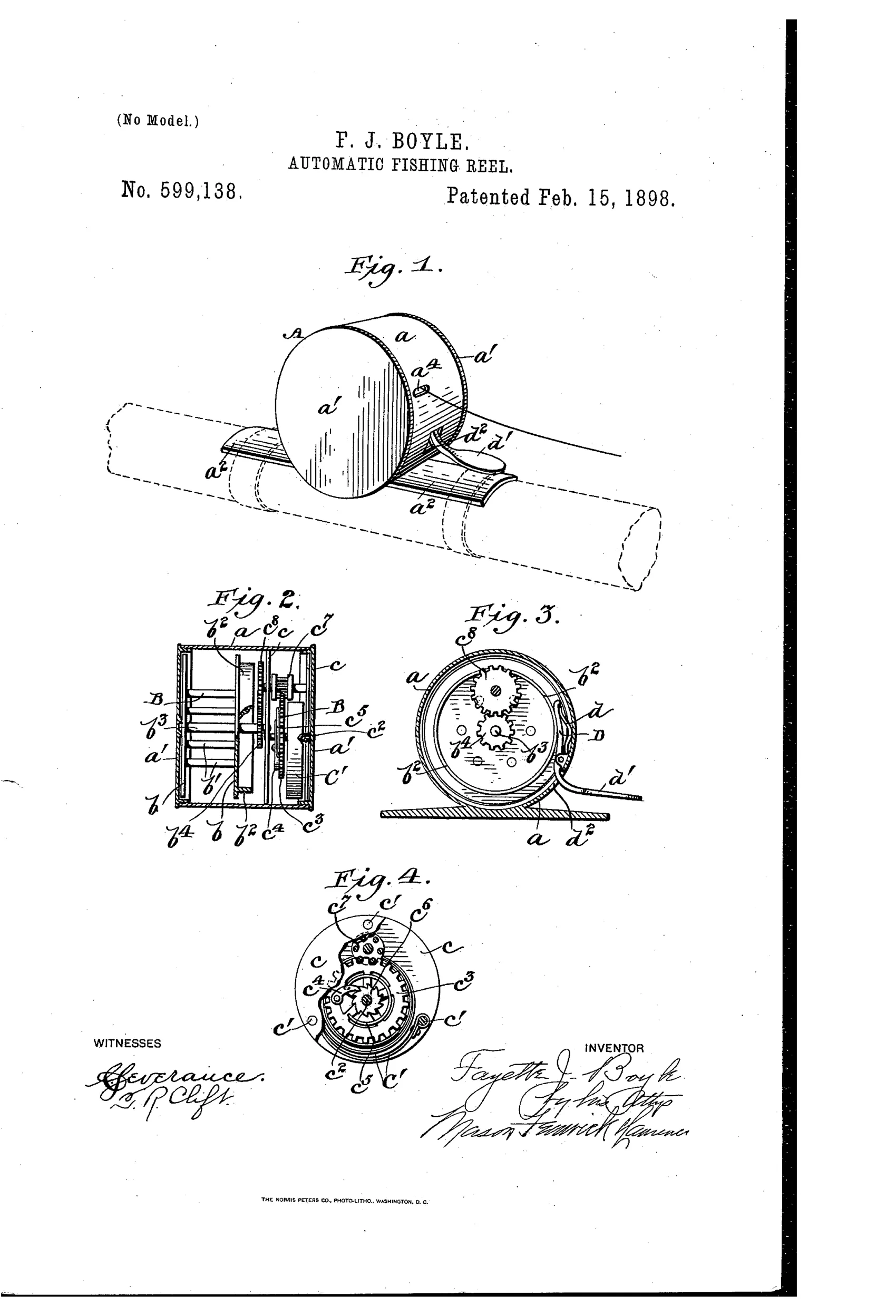
Spring-driven automatic fishing reel with brake control
↻ How it works
A coiled clock-spring housed between two internal plates drives a gear train that turns the winding spool via a pinion and gear-wheel arrangement. A ratchet and dog secured to the spring shaft hold tension after winding with a key through an aperture in the end cap. A pivoted brake bar bears against an annular flange on the spool, pressed by a spring, and is released or engaged by a thumb-operated lever protruding through the casing to regulate spool rotation speed.
↻ What was claimed
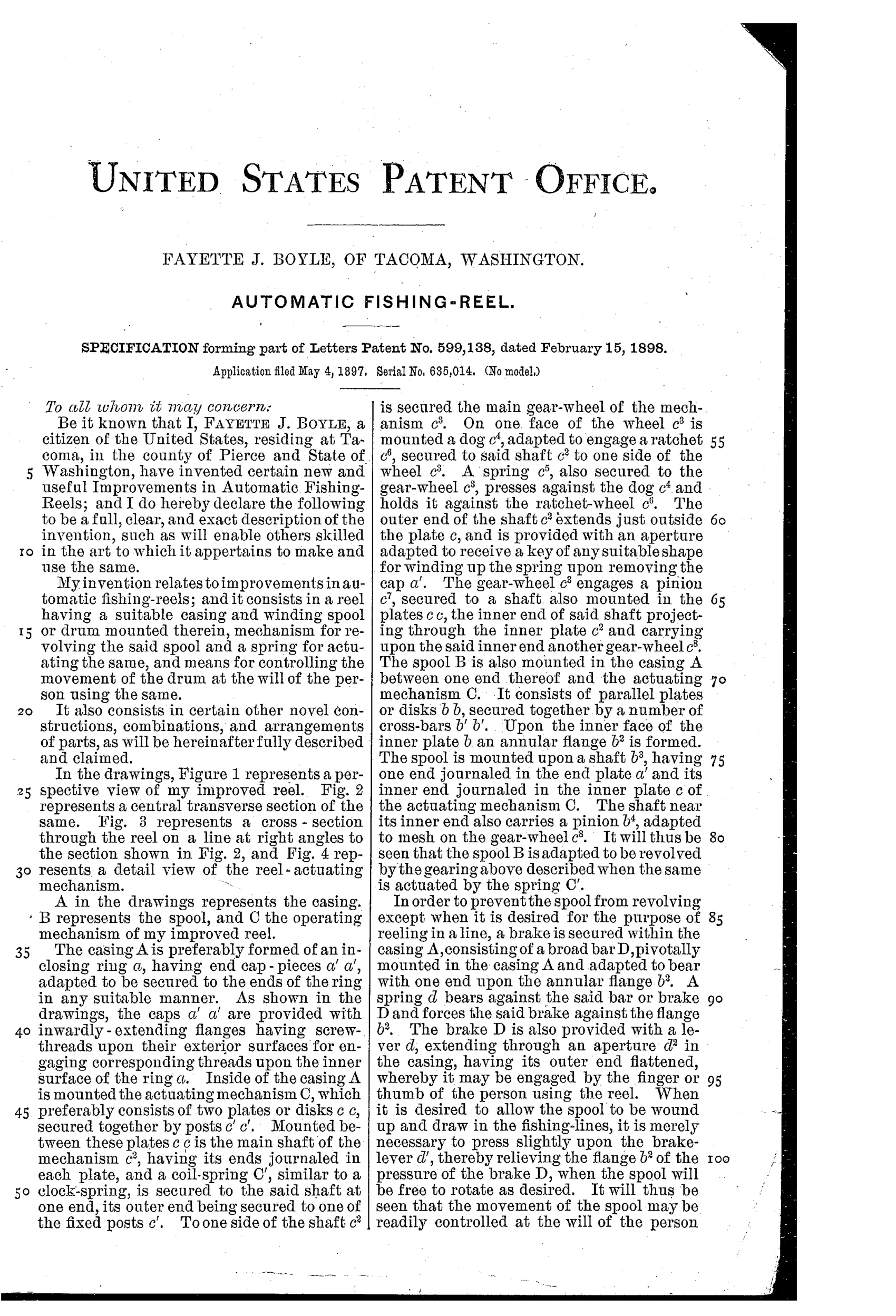
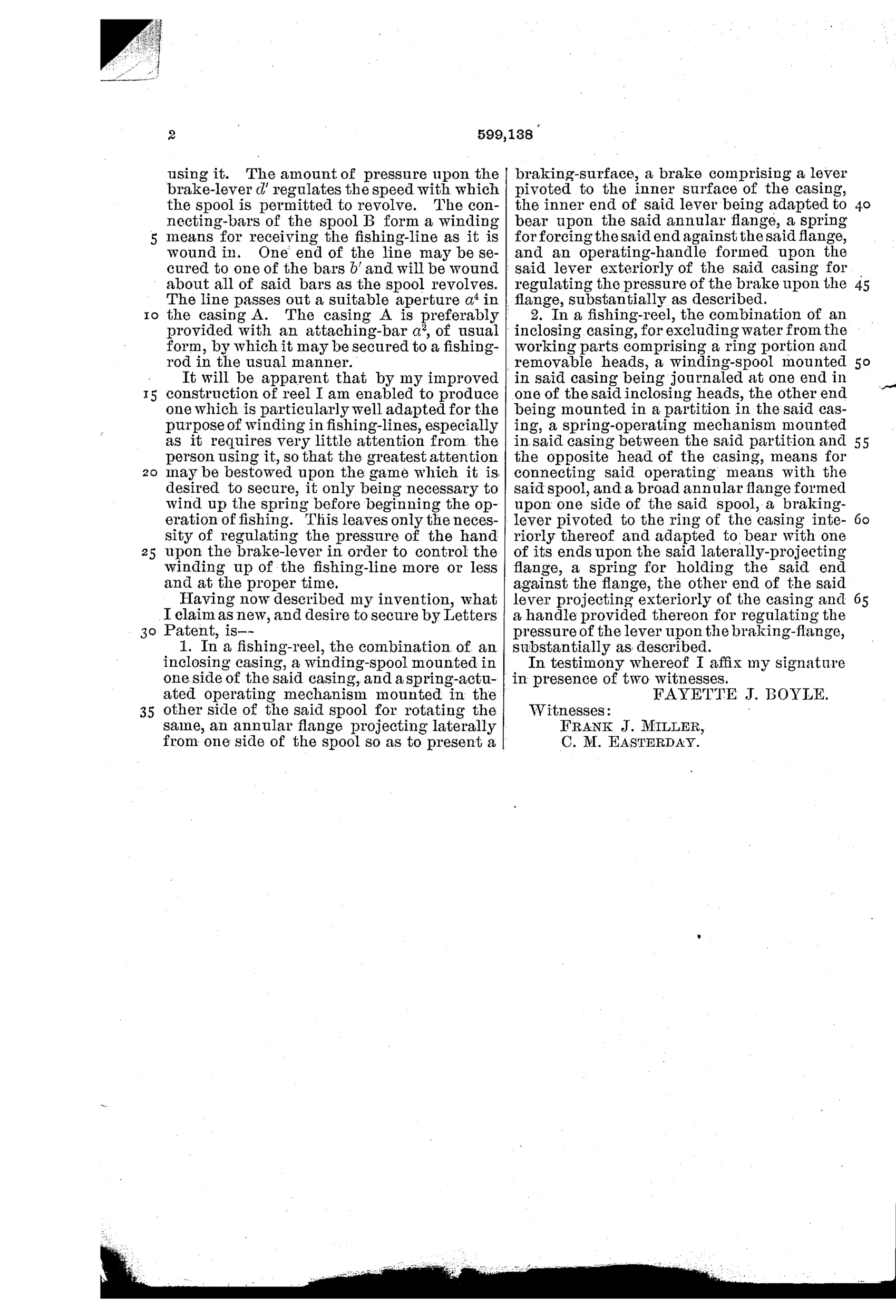
“1. In a fishing-reel, the combination of an inclosing casing, a winding-spool mounted in one side of the said casing, and a spring-actuated operating mechanism mounted in the other side of the said spool for rotating the same, an annular flange projecting laterally from one side of the spool so as to present a braking-surface, a brake comprising a lever pivoted to the inner surface of the casing, the inner end of said lever being adapted to bear upon the said annular flange, a spring for forcing the said end against the said flange, and an operating-handle formed upon the said lever exteriorly of the said casing for regulating the pressure of the brake upon the flange, substantially as described.”
In plain English: The reel has a spring-wound spool with a side flange that a spring-pressed, thumb-operated lever presses against to brake its speed.
↻ In the inventor’s words
“This leaves only the necessity of regulating the pressure of the hand upon the brake-lever in order to control the winding up of the fishing-line more or less and at the proper time.”— Fayette J. Boyle, from the specification
Fate unknown
No production example under Boyle's name is documented; a marked specimen or trade-catalog listing would settle it.
↻ Commentary
Automatic reels — spring-driven spools that retrieve line for you — were a genuine current in the 1890s, with the Yawman & Erbe automatic (Rochester, 1880s) already proving the fly-fishing market existed. Boyle's entry from Tacoma follows the clockwork logic literally: a coiled mainspring between internal plates, wound with a key through the end cap, held by ratchet and dog, driving the spool through a gear train. Fig. 2 shows how much of the casing this eats — the spring and gears occupy one full side, the line spool the other, which explains the fat drum shape in Fig. 1 squatting on the rod.
The part worth attention is the brake, which is what the first claim actually protects. Instead of Yawman & Erbe's approach, Boyle gives the spool an annular flange and presses a pivoted, spring-loaded lever against it, with a thumb tab poking through the casing. The spring keeps the brake engaged at rest — so the reel doesn't run away — and your thumb modulates release. That's the right instinct: an automatic reel lives or dies by how finely you can meter the retrieve.
The weaknesses are equally clockwork-honest. Key winding is fussy on the water, spring capacity limits how much line you can recover per wind, and there's no crank fallback shown. It reads as an earnest refinement in a niche already claimed by better-capitalized eastern makers.
Commentary by Claude, The Fishing Reel Patent Archive’s resident enthusiast