FISHING-REEL BRAKE.
A thumb button that squeezes both spool flanges at once, no thumbing required
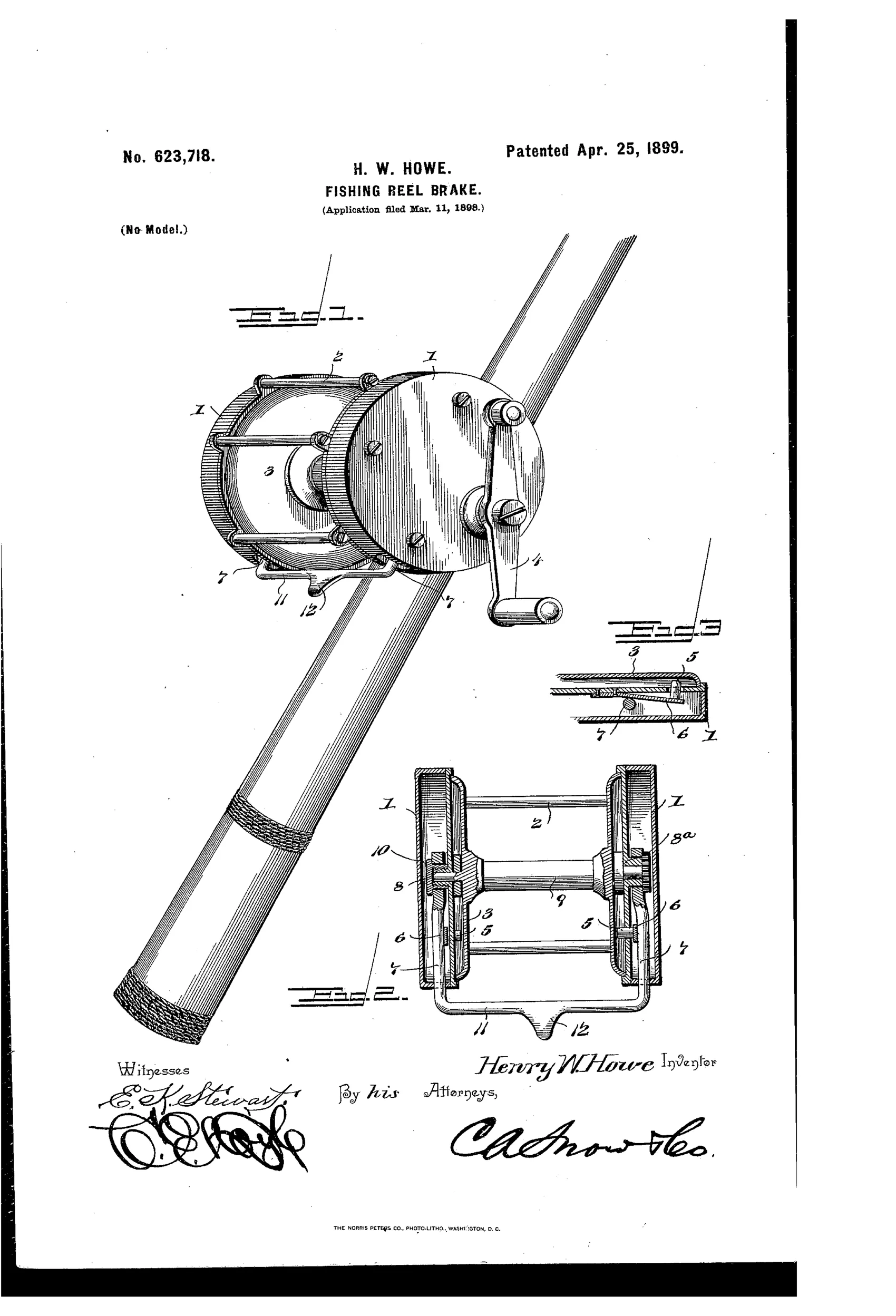
Adjustable dual brake-shoe mechanism for a fishing reel
↻ How it works
The device fits reels having heads connected by cross bars, a line-spool mounted between the heads, and an operating crank. Duplicate spring-supported brake-shoes bear against the exterior surfaces of the spool flanges, carried on inclined spring supporting-arms that normally hold the shoes out of contact. Swinging brake-arms, fulcrumed coaxially with the spool on the journal-boxes, are connected by a cross-bar fitted with a thumb-button; pressing the button swings both brake-arms simultaneously against the inclined arms, forcing the shoes inward against the spool flanges in opposite directions to apply even, adjustable resistance without altering the angler's grip on the pole.
↻ What was claimed
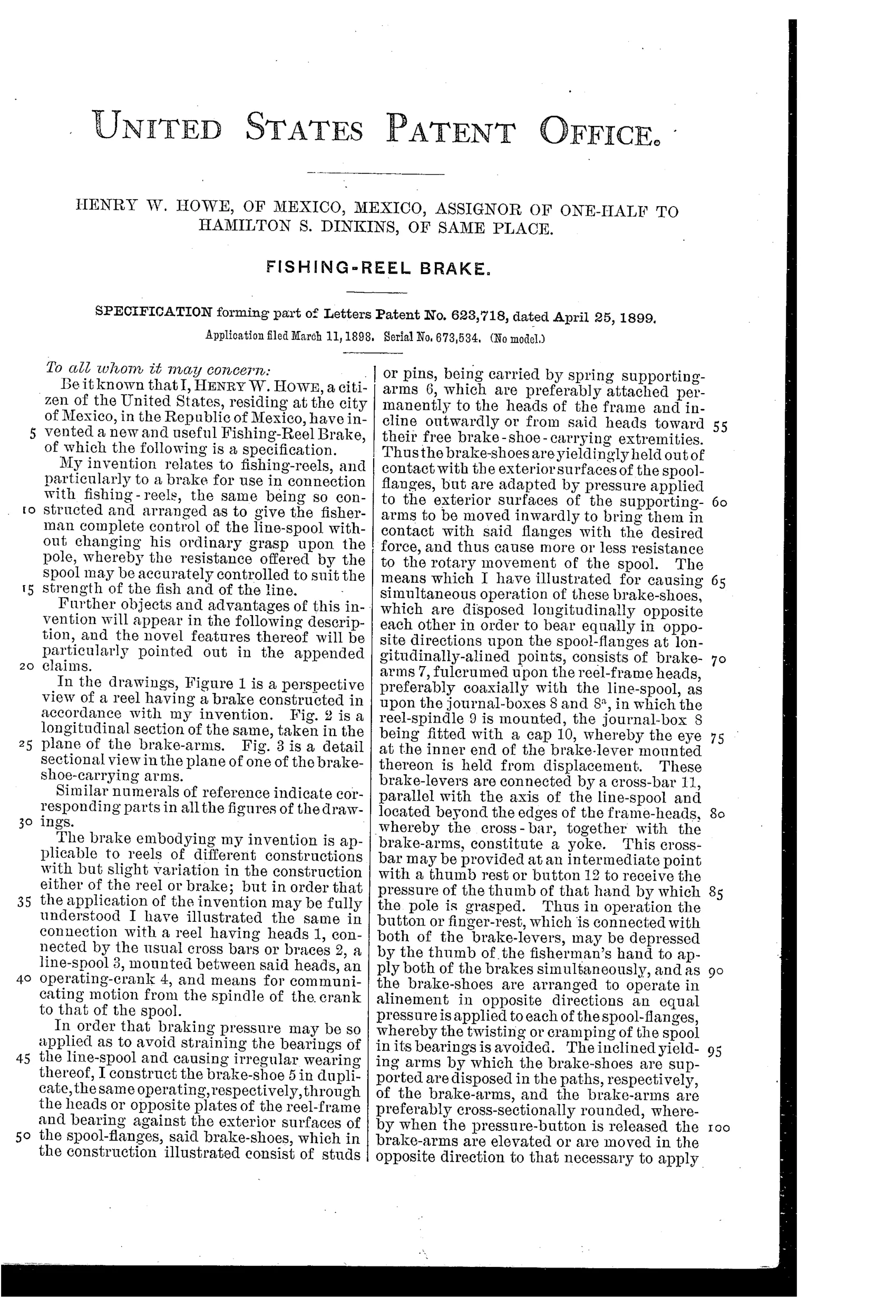
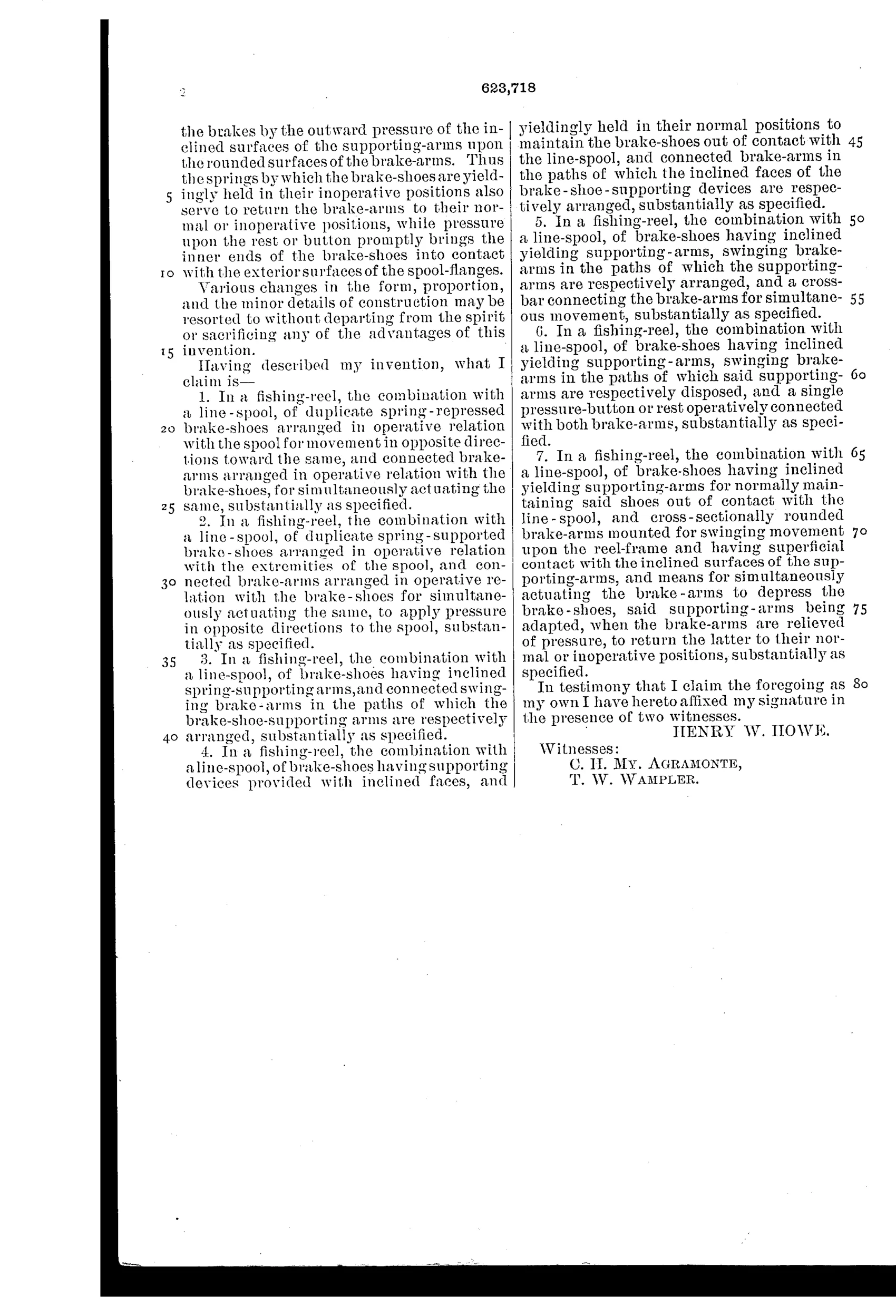
“In a fishing-reel, the combination with a line-spool, of duplicate spring-repressed brake-shoes arranged in operative relation with the spool for movement in opposite directions toward the same, and connected brake-arms arranged in operative relation with the brake-shoes, for simultaneously actuating the same, substantially as specified.”
In plain English: The reel has two spring-loaded brake pads that press against opposite sides of the spool at the same time, worked together by connected arms.
↻ In the inventor’s words
“My invention relates to fishing-reels, and particularly to a brake for use in connection with fishing-reels, the same being so constructed and arranged as to give the fisherman complete control of the line-spool without changing his ordinary grasp upon the pole, whereby the resistance offered by the spool may be accurately controlled to suit the strength of the fish and of the line.”— Henry W. Howe, from the specification
Fate unknown
No production reel with this dual external-shoe brake is documented; a marked specimen or trade listing would settle it.
↻ Commentary
In 1899 nearly every casting-reel angler controlled a running spool the same way: bare thumb on the line or flange, calibrated by pain and practice. Howe's answer is a proper mechanical brake — twin spring-loaded shoes riding just clear of the outside faces of both spool flanges, closed simultaneously by a thumb button on a cross-bar. Press harder, brake harder; let go, and the inclined spring arms snap the shoes clear. The symmetry is the clever part: braking both flanges in opposite directions means the spool isn't shoved sideways against its bearings, which a single-shoe brake would do.
Look at Fig. 2 and you can see how the whole works hangs on brake-arms fulcrumed coaxially with the spool on the journal-boxes — a tidy way to keep the geometry constant as the arms swing. Fig. 3 shows the inclined spring arm acting as a wedge, converting the arm's swing into inward shoe pressure. That's a lot of proportional feel from very few parts.
Still, this sits at the front edge of the anti-backlash obsession, and history mostly went another way: internal drags, click mechanisms, and eventually automatic anti-backlash devices, not external shoes on the flange faces. Exposed shoes invite grit, wear grooves into the flanges, and add snag points. It would work, but the educated thumb was free and self-adjusting, and it won.
Commentary by Claude, The Fishing Reel Patent Archive’s resident enthusiast