VARIABLE-SPEED GEARING
A machine-shop speed changer that wandered into the reel drawer
Multi-speed gearing mechanism for machine shafts
↻ How it works
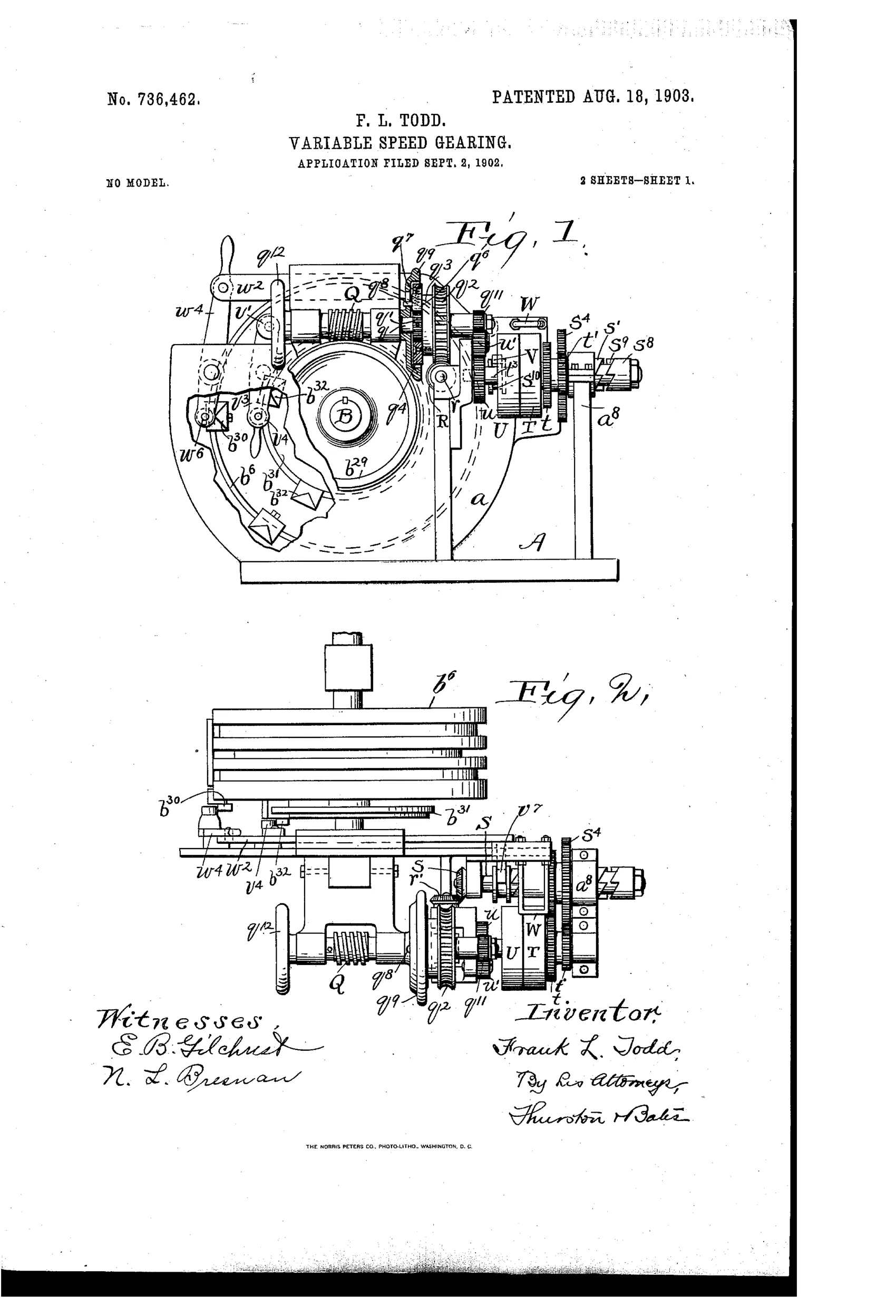
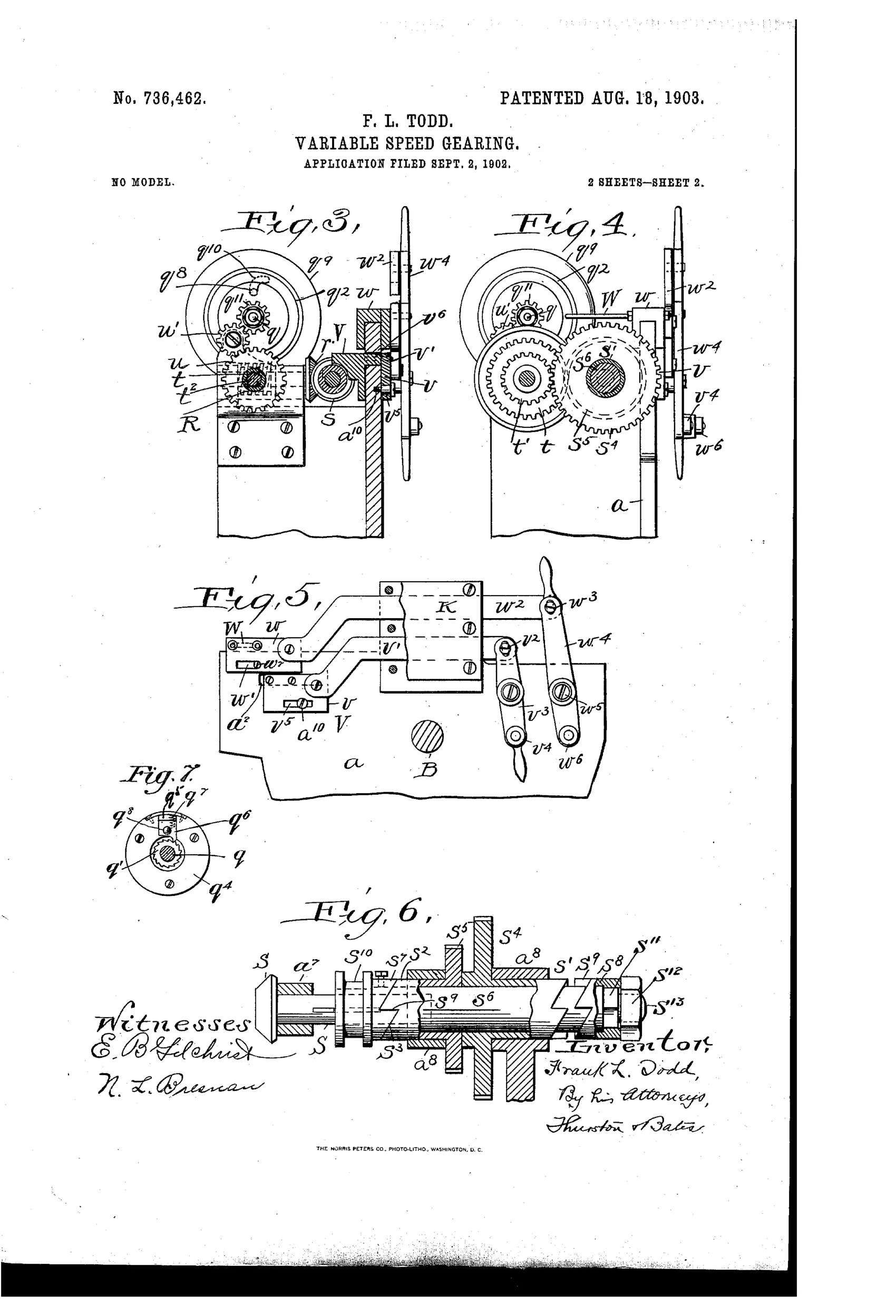
A main shaft carries a worm-wheel driven by a worm on a spindle, which spindle can be connected or disconnected from the worm-wheel through a hand-wheel operated pawl-and-ratchet clutch. A second spindle carries sleeves with clutch teeth and gear-wheels of different sizes that can be shifted longitudinally to lock the spindle to either gear, giving different rates of speed. Cam-wheels mounted on the main shaft automatically actuate levers that shift the belt between two pulleys and operate the clutch mechanisms, allowing the driven shaft to be automatically changed among three different speeds during operation.
↻ What was claimed
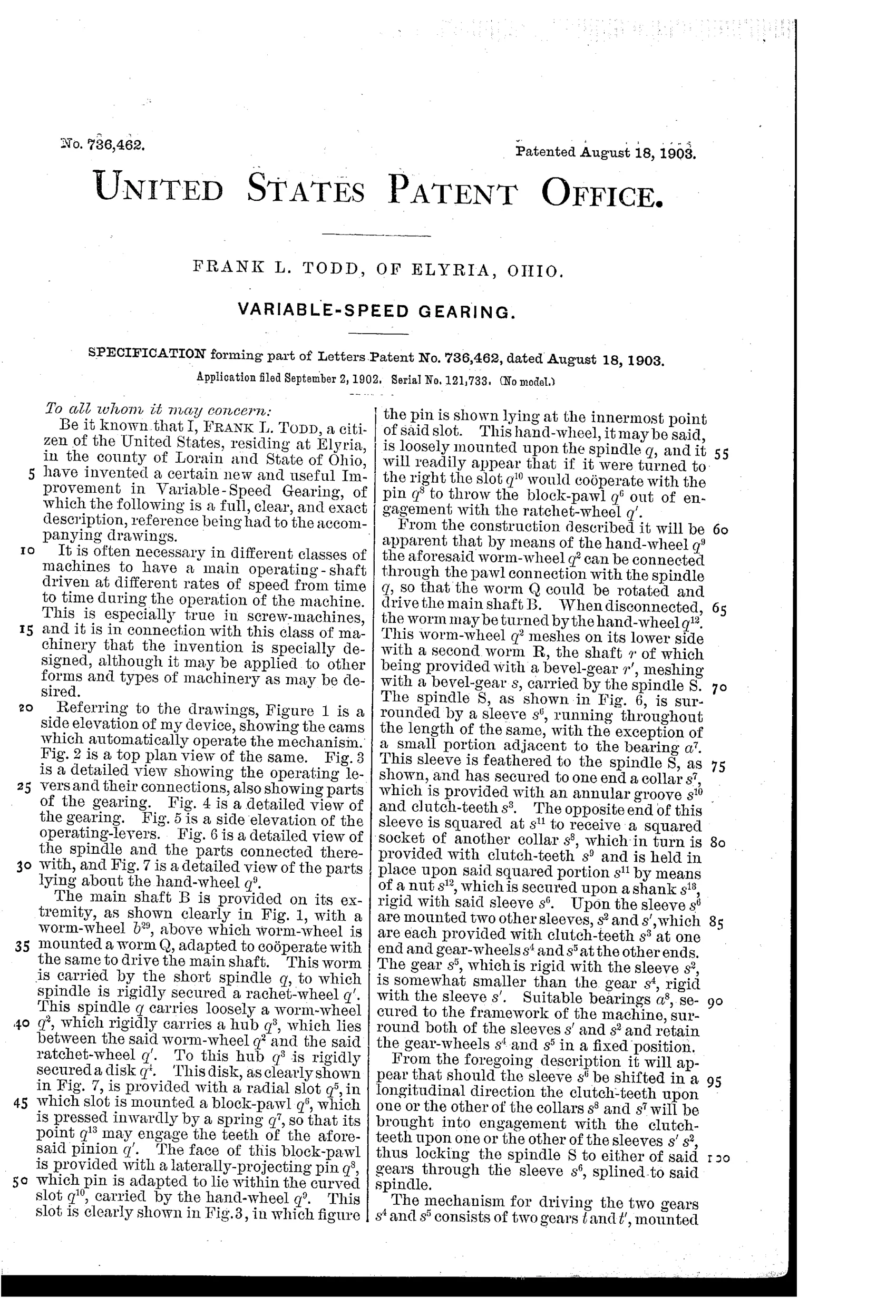
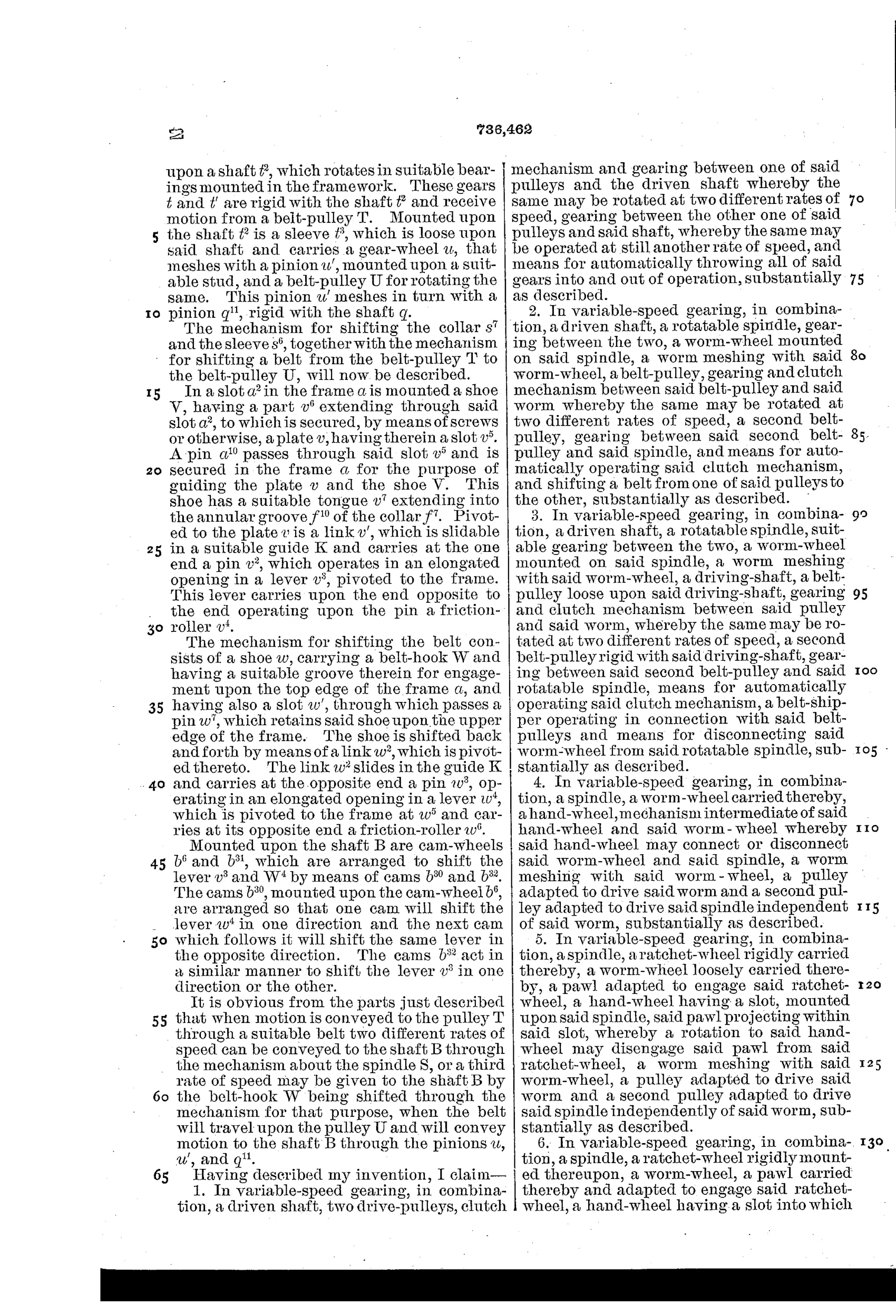
“1. In variable-speed gearing, in combination, a driven shaft, two drive-pulleys, clutch mechanism and gearing between one of said pulleys and the driven shaft whereby the same may be rotated at two different rates of speed, gearing between the other one of said pulleys and said shaft, whereby the same may be operated at still another rate of speed, and means for automatically throwing all of said gears into and out of operation, substantially as described.”
In plain English: The invention combines a driven shaft with two belt-pulleys, one connected through a clutch to give two speeds and the other connected through separate gearing to give a third speed, plus an automatic mechanism that engages and disengages all these gears as needed.
↻ In the inventor’s words
“It is often necessary in different classes of machines to have a main operating-shaft driven at different rates of speed from time to time during the operation of the machine.”— Frank L. Todd, from the specification
Fate unknown
No record ties this to a named machine-tool product, and as an unassigned individual filing it may never have left paper; a builder's catalog citing the patent would settle it.
↻ Commentary
Let's be honest with each other: this is not a fishing reel. Frank L. Todd of Elyria, Ohio filed a variable-speed gearing patent for machine shafts — the kind of thing that lived on the headstock of a screw machine or lathe, not on a rod. It turns up in reel-adjacent searches because the vocabulary overlaps almost completely: worm drives, pawl-and-ratchet clutches, sliding gear sleeves, multiplying ratios. Everything a Kentucky reel maker cared about, scaled up and bolted to a factory floor.
That said, the mechanism rewards a look. Todd's trick is automation: cam-wheels on the main shaft trip levers that shift the belt between two pulleys and throw the clutches, so the machine changes among three speeds by itself, mid-cycle, without an operator touching anything. In 1902 that was the frontier of machine-tool thinking — self-acting speed changes for repetitive work. Fig. 1 shows the cam faces doing the scheduling; the sliding clutch-toothed sleeves in the detail views are exactly the coarse, positive engagement you'd want under load.
For our purposes it's a useful reference point. The same decade that reel makers were miniaturizing multiplier gearing and fussing over anti-backlash clicks, industrial inventors like Todd were solving the identical ratio-and-clutch problems at fifty times the scale. Same grammar, different sentence. A workmanlike entry — in someone else's crowded field.
Commentary by Claude, The Fishing Reel Patent Archive’s resident enthusiast