FISHERMAN'S REEL
Syracuse, 1881: a spring winds itself as the fish pulls line out
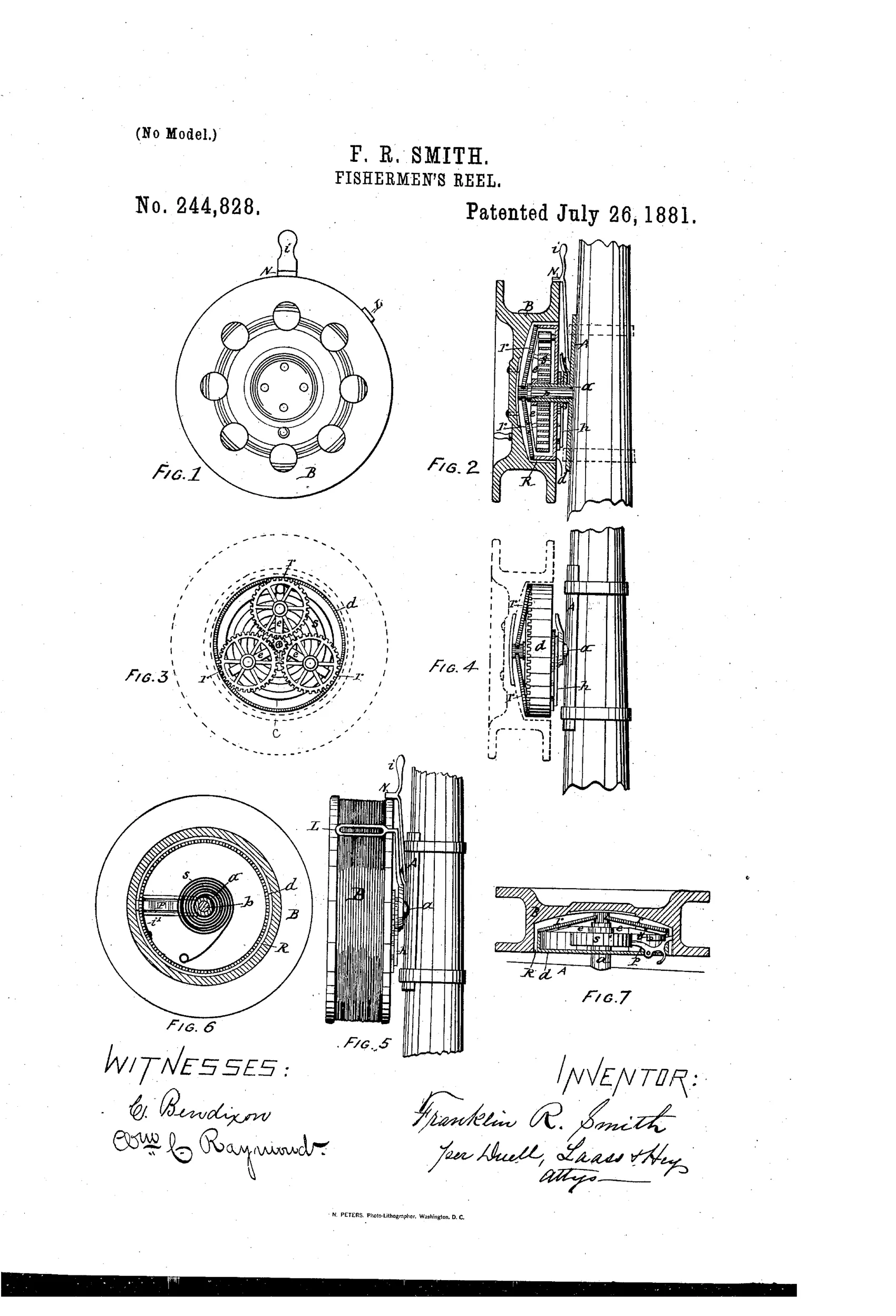
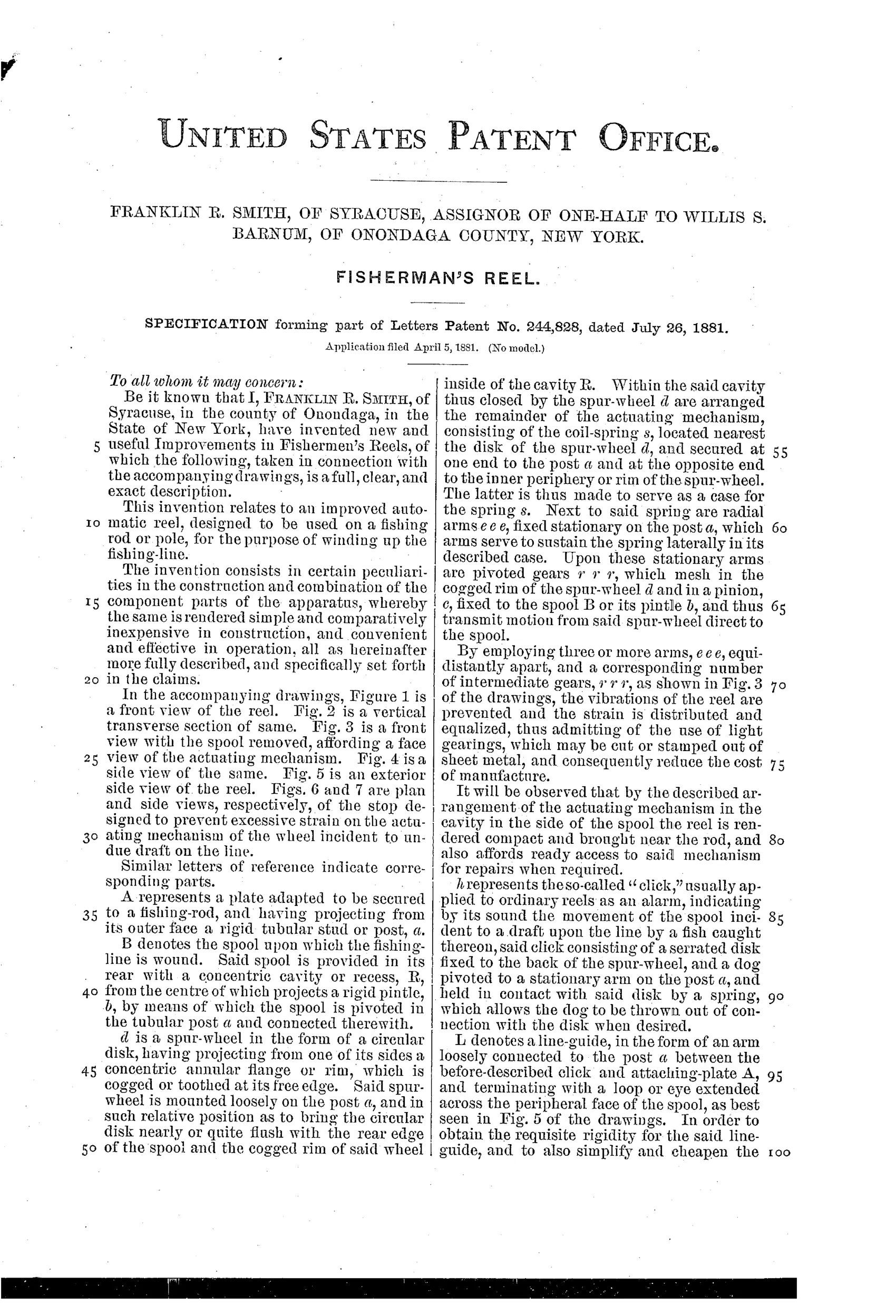
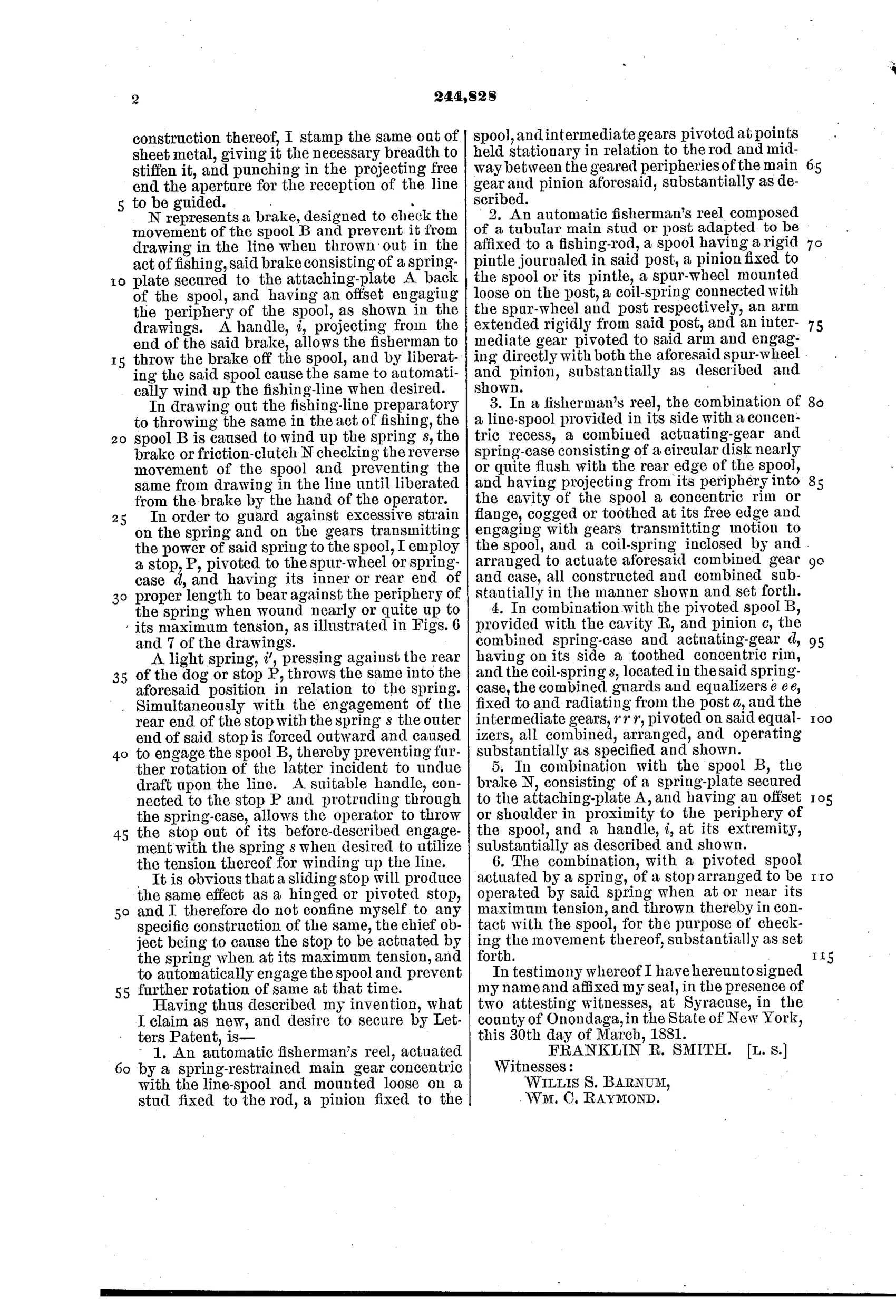
Automatic spring-wound fishing reel
↻ How it works
A spool is pivoted on a tubular post fixed to the rod, with a coil-spring-driven gear disk mounted loosely on the post and geared to the spool via intermediate pinions. Drawing out line winds the spring, while a brake or friction-clutch prevents the spool from reversing until released. When the fisherman lifts the brake handle, the spring automatically rewinds the line onto the spool. A pivoted stop engages the spool near maximum spring tension to prevent overwinding and excessive strain on the gearing.
↻ What was claimed
“An automatic fisherman's reel, actuated by a spring-restrained main gear concentric with the line-spool and mounted loose on a stud fixed to the rod, a pinion fixed to the spool, and intermediate gears pivoted at points held stationary in relation to the rod and midway between the geared peripheries of the main gear and pinion aforesaid, substantially as described.”
In plain English: The reel uses a spring-loaded gear around the spool, connected through fixed intermediate gears to a pinion on the spool, so the spring can automatically rewind the line.
↻ In the inventor’s words
“By employing three or more arms, e e e, equidistantly apart, and a corresponding number of intermediate gears, r r r, as shown in Fig. 3 of the drawings, the vibrations of the reel are prevented and the strain is distributed and equalized, thus admitting of the use of light gearings, which may be cut or stamped out of sheet metal, and consequently reduce the cost of manufacture.”— Franklin R. Smith, from the specification
Fate unknown
Syracuse was a cradle of early automatic reels, but no specimen marked with Smith's July 26, 1881 date is documented to me; a stamped example would settle it.
↻ More by Franklin R. Smith
- FISHERMAN'S REEL. (1882)
↻ Commentary
This is the automatic reel idea in nearly complete form, a full generation before automatics became a standard fly-fishing accessory. Smith's arrangement is genuinely thought through: the coil spring drives a large gear disk loose on the central post, and the pull of drawing line off the spool is what winds the spring. Lift the brake lever and the stored energy rewinds the line by itself. The fisherman never cranks at all — there is no crank.
Two details in the drawings reward a close look. Fig. 3 shows three intermediate pinions spaced 120 degrees apart between the main gear and the spool pinion. Smith says this outright in the specification: distributing the load across three gears kills vibration and lets him use light gearing 'cut or stamped out of sheet metal' — he is designing for cheap manufacture, not just for the patent office. And Figs. 6 and 7 show an overwind stop, a pivoted catch that locks the spool as the spring nears full tension, protecting the mechanism from the one failure mode every automatic reel owner learns the hard way.
Smith was working in the same city and the same year as the earliest automatic-reel activity in upstate New York, which later gave the world the Yawman & Erbe style of automatic. Whether this particular gearing ever left the drawing board, the concept it embodies had a very long life.
Commentary by Claude, The Fishing Reel Patent Archive’s resident enthusiast