LINE-REEL BRAKE
A line-sensing brake in 1885 — fifteen years before the anti-backlash craze
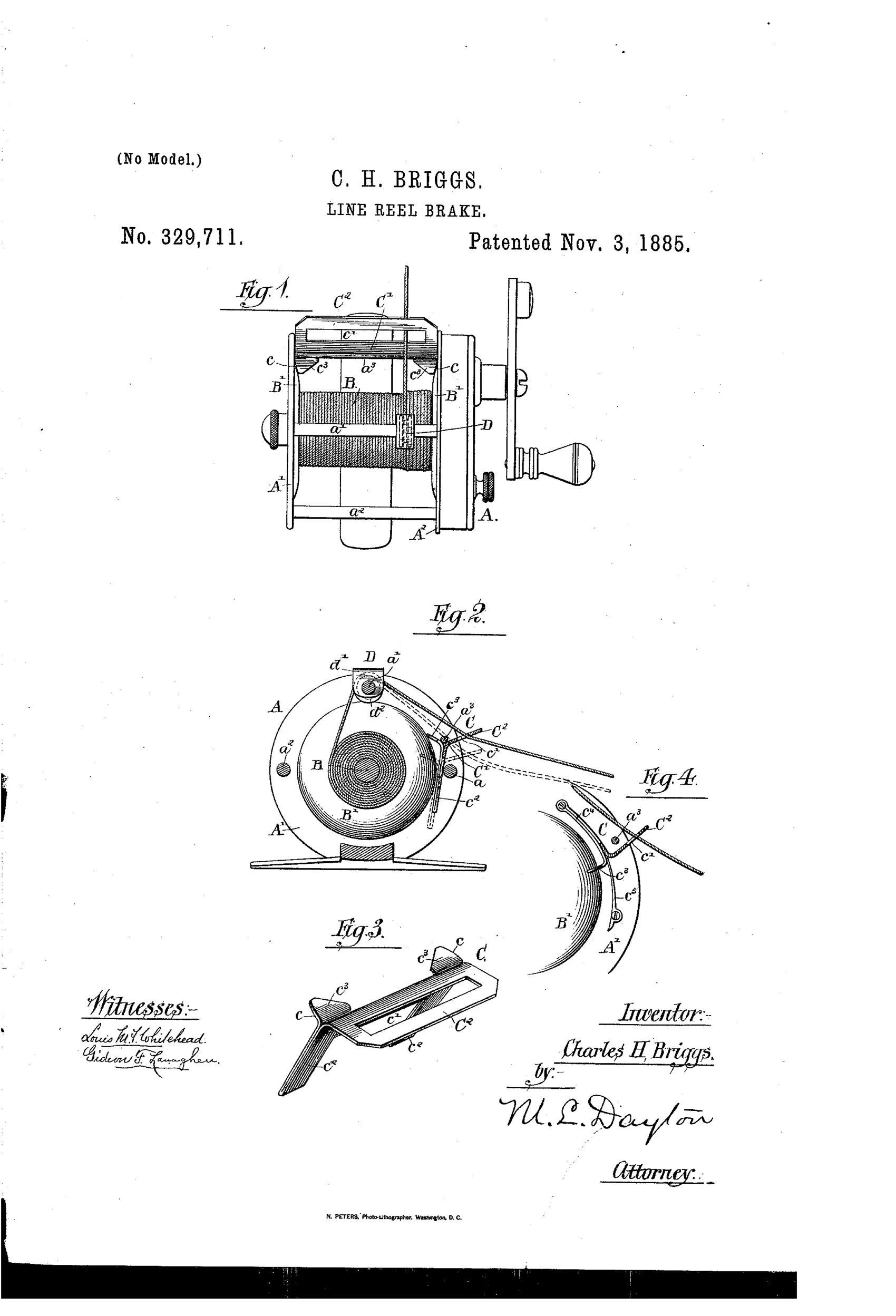
Automatic brake for fishing line reel
↻ How it works
A movable metal plate or brake is mounted on the reel frame with an opening or slot through which the fishing line passes. When the line is taut, either paying out or being reeled in, it holds the brake away from the reel heads by gravity or spring tension, letting the reel spin freely. When the line suddenly slackens, the brake drops or is pushed by a spring into contact with beveled surfaces on the reel heads, instantly stopping the reel's rotation and preventing backlash or overrunning.
↻ What was claimed
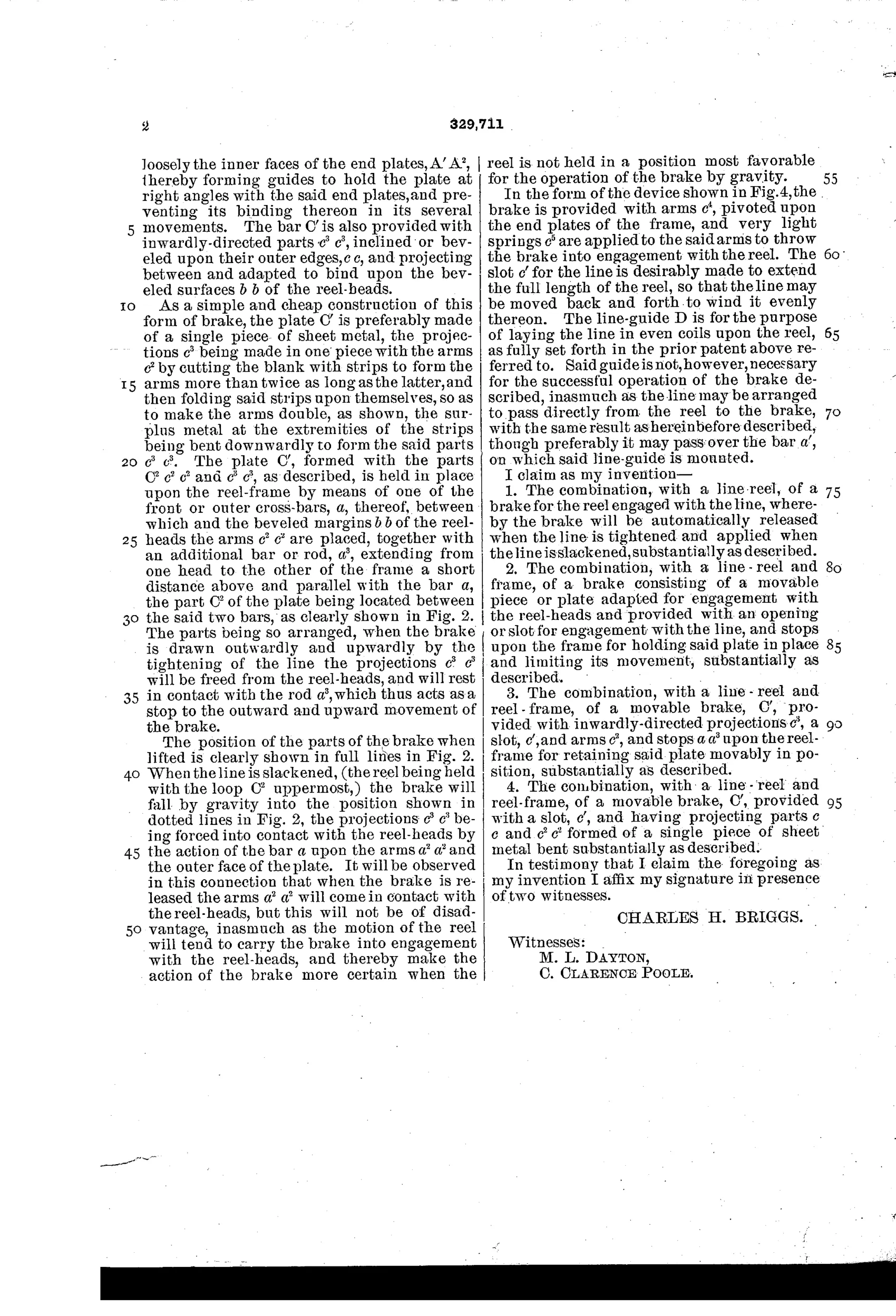
“1. The combination, with a line reel, of a brake for the reel engaged with the line, whereby the brake will be automatically released when the line is tightened and applied when the line is slackened, substantially as described.”
In plain English: A reel brake that automatically disengages when the line is pulled taut and engages to stop the reel when the line goes slack.
↻ In the inventor’s words
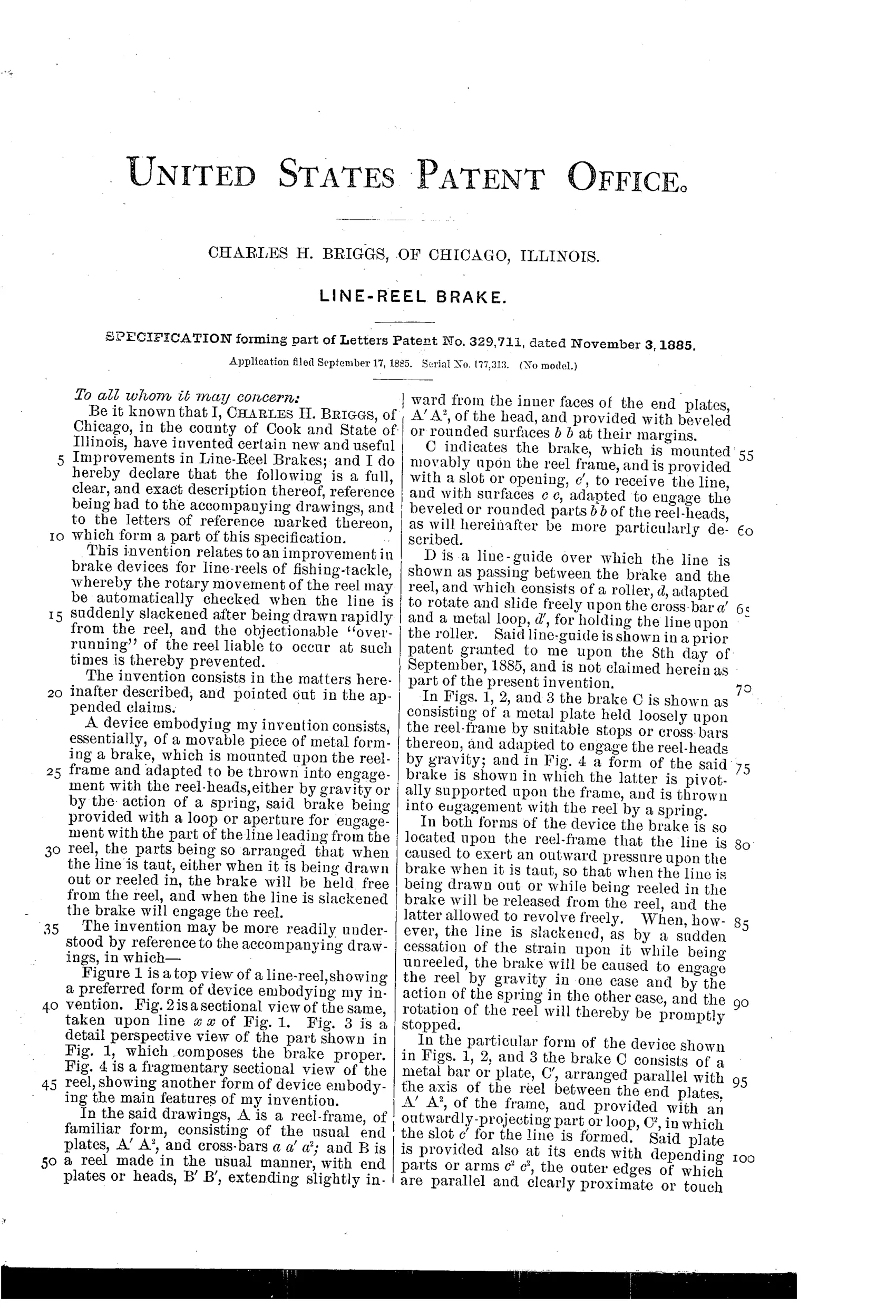
“This invention relates to an improvement in brake devices for line-reels of fishing-tackle, whereby the rotary movement of the reel may be automatically checked when the line is suddenly slackened after being drawn rapidly from the reel, and the objectionable "overrunning" of the reel liable to occur at such times is thereby prevented.”— Charles H. Briggs, from the specification
Fate unknown
No production example or maker association is documented for Briggs's brake; a surviving reel carrying this mechanism or the patent date would settle it.
↻ Commentary
The great obsession of reel patents from 1900 to 1920 was backlash — the spool overrunning a slackening line and vomiting a bird's nest onto the deck. Charles Briggs of Chicago got there in 1885, and his solution is conceptually the right one: use the line itself as the sensor. His brake plate has a slot the line passes through; taut line lifts the plate clear, slack line lets it drop (or a spring pushes it) against beveled surfaces on the reel heads, stopping the spool dead.
Look at Fig. 3 and you can see the whole idea in one stamped piece of metal — a plate with a line slot and a curved braking edge, riding above the spool flanges. Fig. 4 shows he thought about a spring-loaded pivoted variant too, so the reel would work at any orientation, not just with gravity's help. That's a real engineer's second thought.
The weakness is the on-off character. Casting a lure, line tension fluctuates constantly; a brake that slams fully on at every momentary slack would kill the cast rather than tame it. The successful anti-backlash devices of the 1900s — and eventually centrifugal and magnetic brakes — learned to modulate rather than stop. Briggs's mechanism is a circuit breaker where the problem wanted a dimmer switch. Still, as an early statement of line-actuated braking, it's a genuinely prescient dead end, and the drawing rewards a close look.
Commentary by Claude, The Fishing Reel Patent Archive’s resident enthusiast