FISHING-REEL ATTACHMENT.
A trigger under the rod tames the reel, sparing the angler's burned thumb
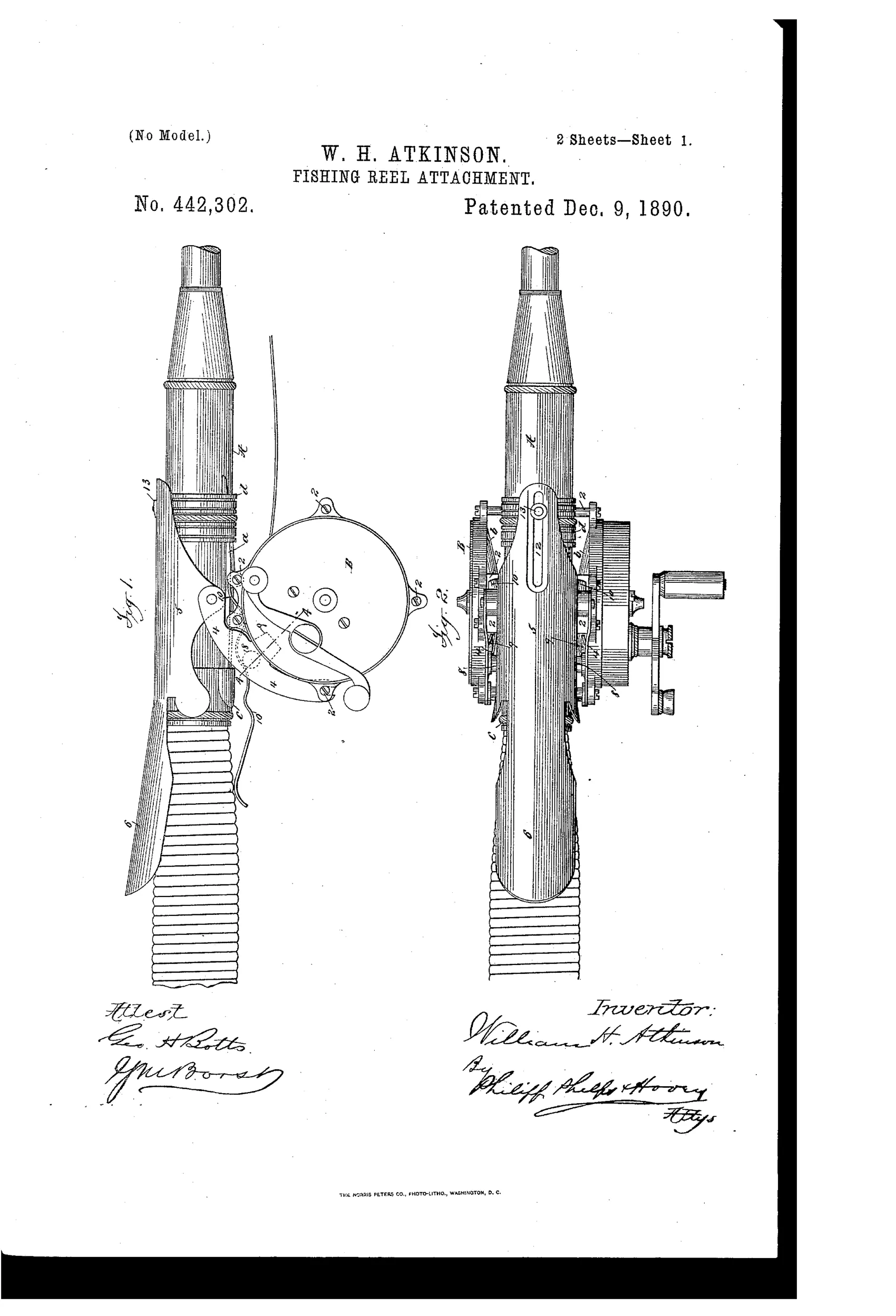
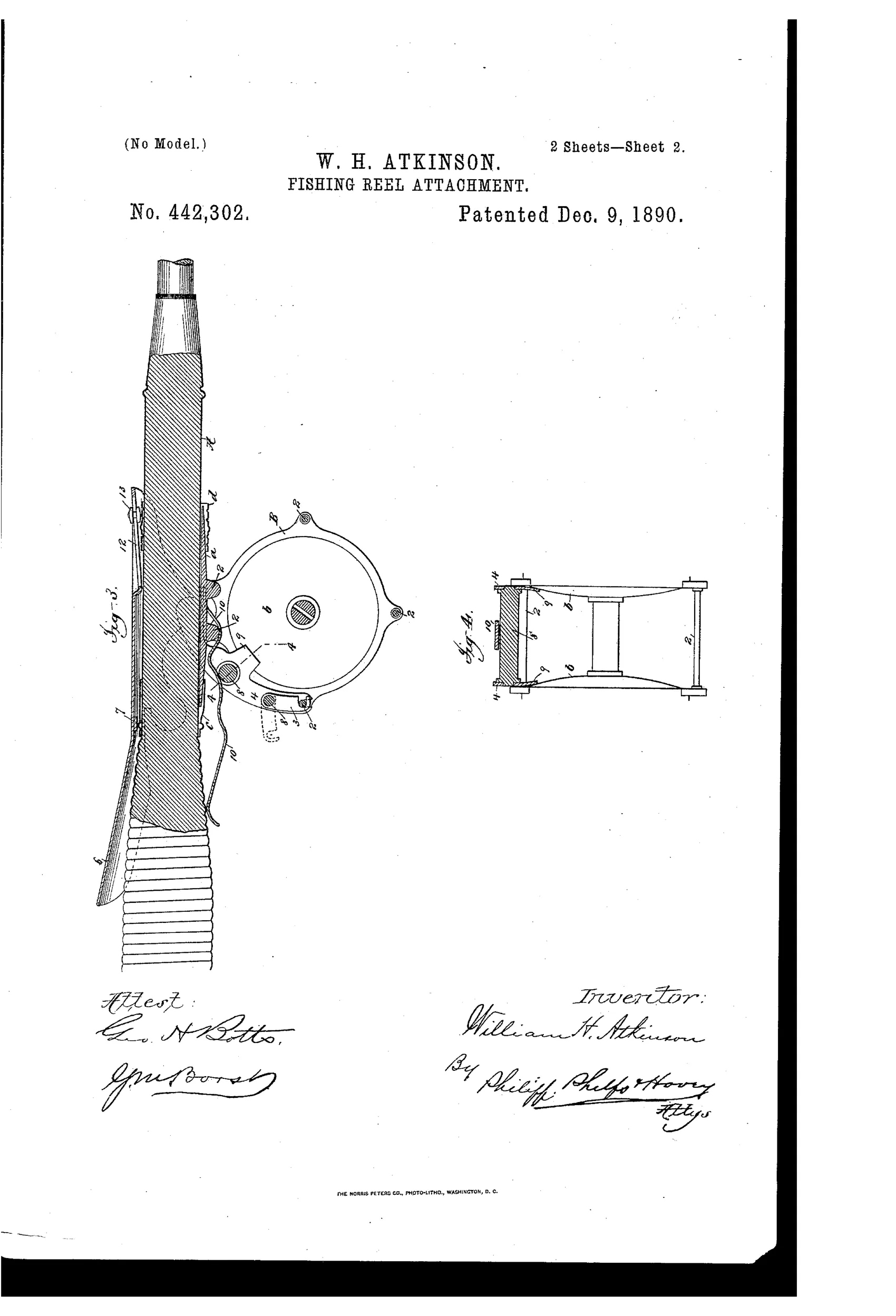
Adjustable friction brake attachment for fishing reels.
↻ How it works
A pair of curved arms hinge to the reel's tie-rod and press laterally against the convex ends of the spool to create drag. A leaf spring normally forces the arms inward to apply friction, while a pivoting lever fulcrumed against the rod lets the user's thumb or finger reduce or remove that pressure at will. A finger-piece on the lever's rearward end controls the brake continuously, and a slotted button-and-slot mechanism can lock the lever up to disengage the brake permanently.
↻ What was claimed
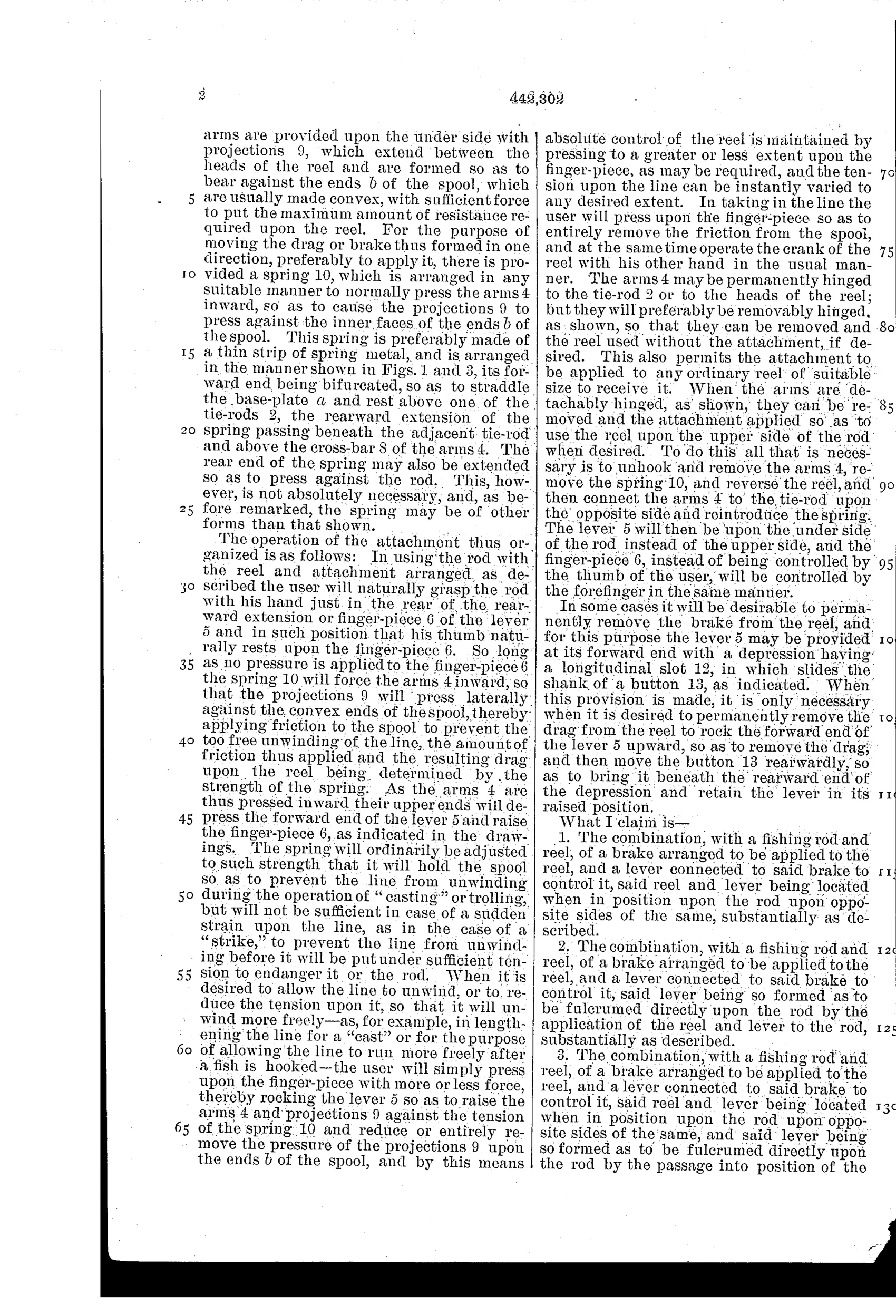
“1. The combination, with a fishing rod and reel, of a brake arranged to be applied to the reel, and a lever connected to said brake to control it, said reel and lever being located when in position upon the rod upon opposite sides of the same, substantially as described.”
In plain English: The invention combines a fishing rod and reel with a brake and a controlling lever, with the reel and lever mounted on opposite sides of the rod.
↻ In the inventor’s words
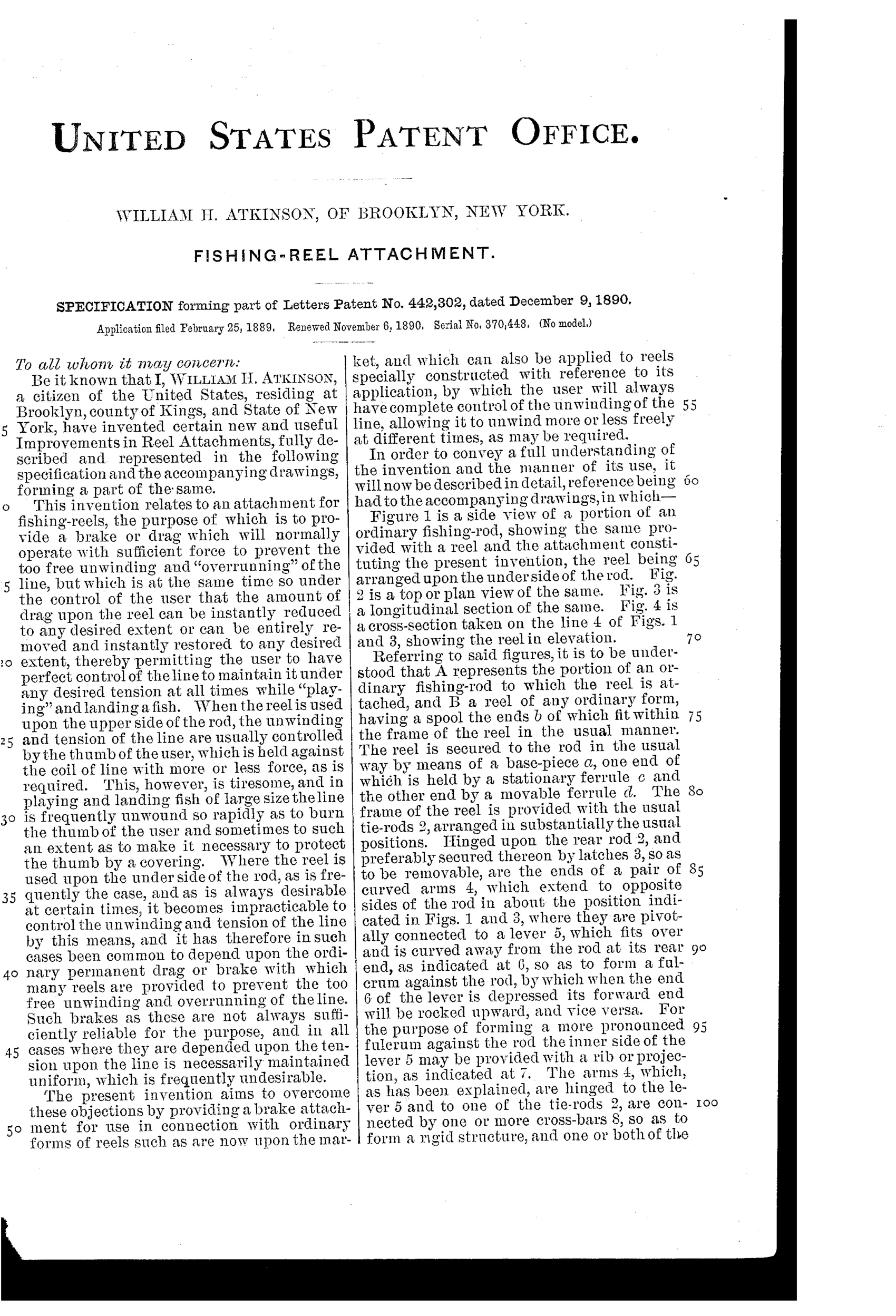
“This, however, is tiresome, and in playing and landing fish of large size the line is frequently unwound so rapidly as to burn the thumb of the user and sometimes to such an extent as to make it necessary to protect the thumb by a covering.”— William H. Atkinson, from the specification
Fate unknown
No manufactured example of this attachment is documented; a surviving specimen or trade-catalog listing would settle it.
↻ More by William H. Atkinson
- FISHING-REEL. (1891)
↻ Commentary
Atkinson names the problem in plain language: thumbing a running spool on a big fish burns skin, sometimes badly enough that anglers wrapped their thumbs in leather. His answer is to move the braking job from flesh to metal — a pair of curved arms hinged on the reel's tie-rod that press against the convex ends of the spool, squeezed inward by a leaf spring so the drag is always on unless you say otherwise.
The clever part is the control. A lever fulcrumed against the rod runs to the opposite side from the reel, so the drawing reads almost like a gunstock: reel below, finger-piece above, the hand gripping both. Squeeze to release the brake and let line run; relax and the spring reapplies drag automatically. That fail-safe logic — drag on by default — is sound thinking for a fighting brake, and the slotted button that locks the lever up gives you a free-spool setting for casting.
Where it sits in the story is early. This is 1890, a decade before the anti-backlash boom, and Atkinson is attacking the same friction problem from the fish-fighting end rather than the casting end. As an add-on attachment rather than an integrated mechanism, though, it faces the usual fate of bolt-on hardware: fiddly to fit different reels, extra weight on the rod, and easily undercut once makers built adjustable drags into the reel itself. Honest engineering, likely a dead end.
Commentary by Claude, The Fishing Reel Patent Archive’s resident enthusiast