FISHING ROD AND REEL.
Two chain-linked bobbins hide in the rod butt, wound by one pumping finger
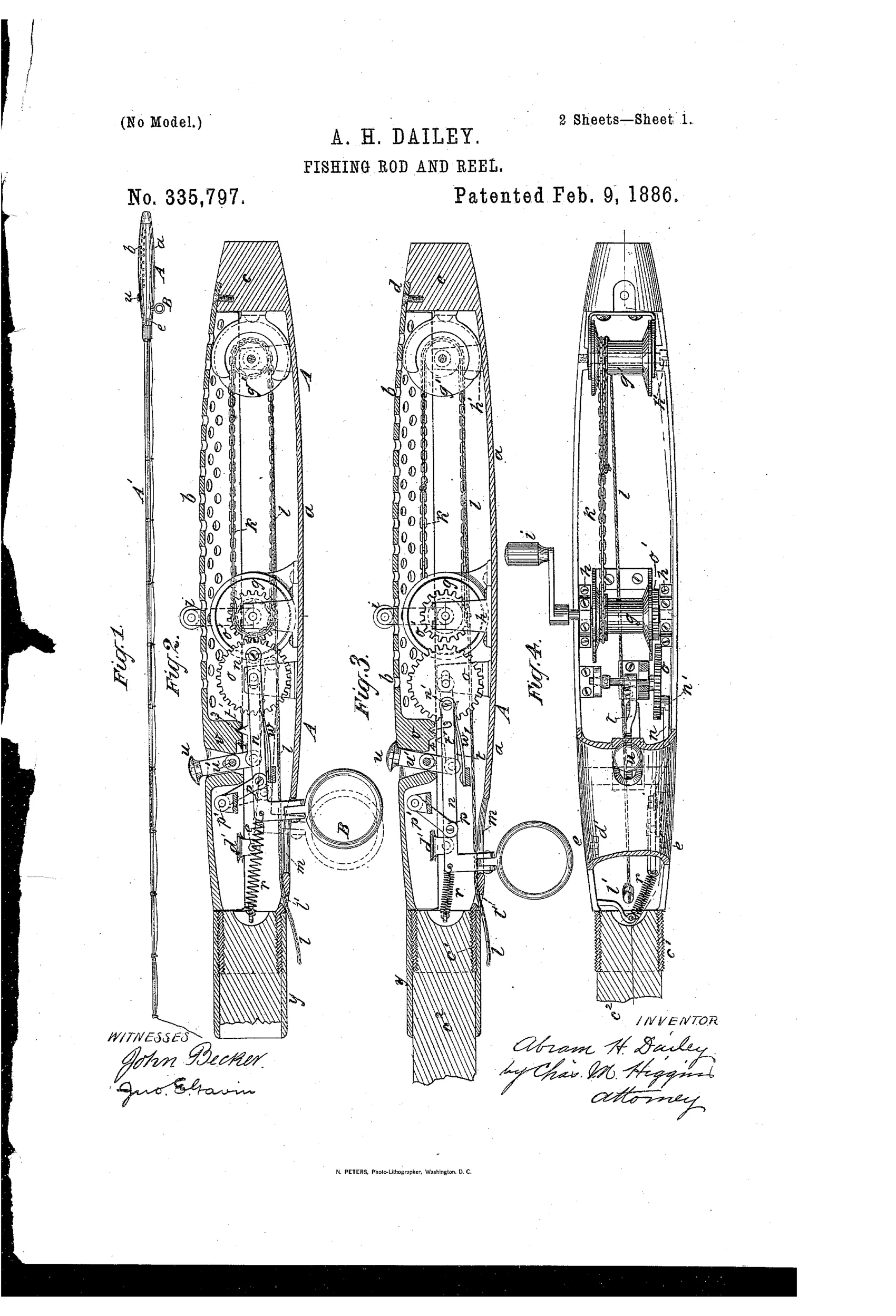
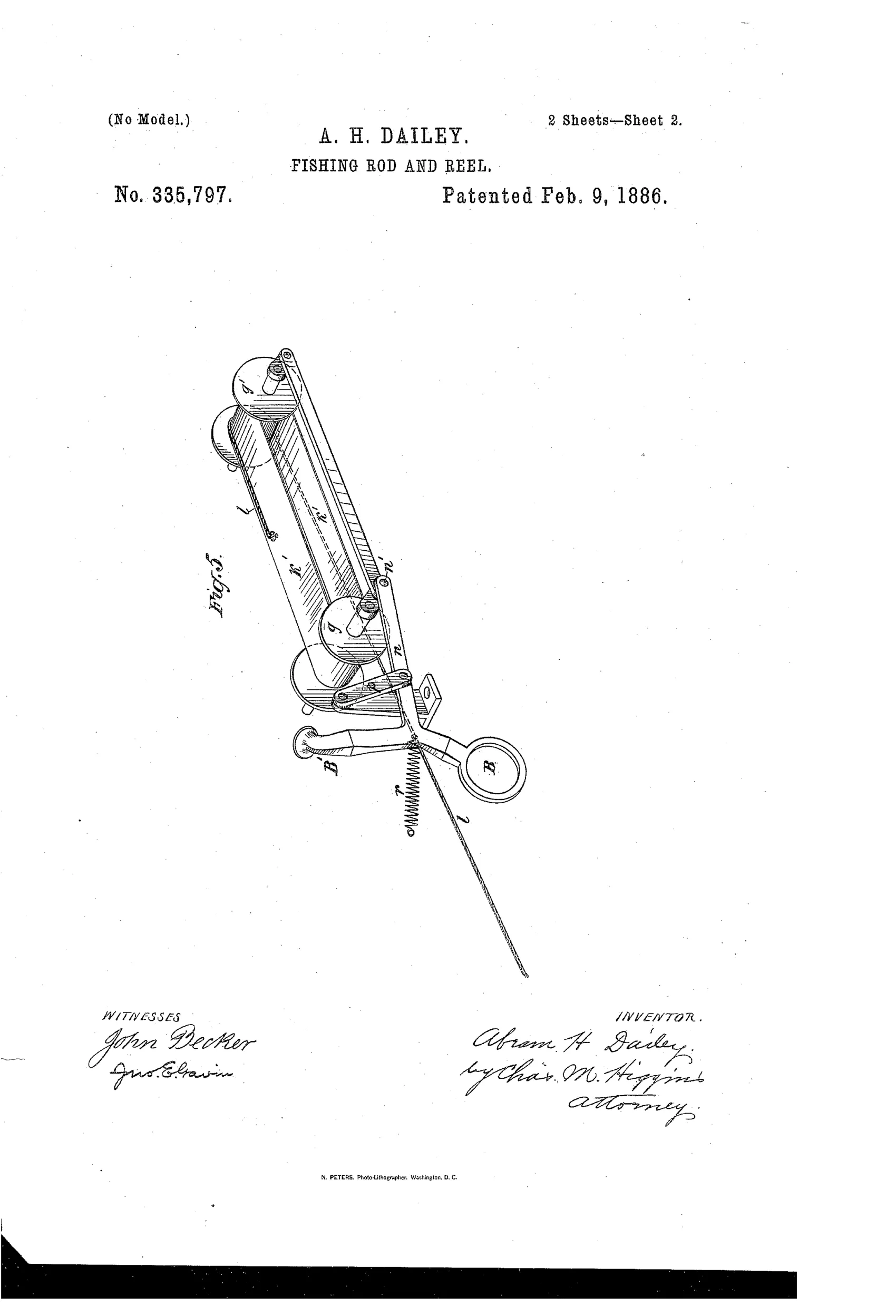
Fishing rod with reel built into hollow butt
↻ How it works
The reel is composed of two separated bobbins connected by an endless chain or band, so the line winds skein-like about both drums when rotated. A finger ring on a reciprocating bar, linked through multiplying gearing to a pinion on the reel bobbin, converts back-and-forth digital motion into rotary motion of the reel. A spring returns the bar and ring forward after each pull, allowing smooth continuous rotation from a single finger without releasing the grip on the rod butt. A thumb-operated stop lever can shift the multiplying wheel out of gear to let the line run free, and locks in either position via a spring catch and notches.
↻ What was claimed
“The combination, with a rotary fish-line reel, of a digital reciprocating device adapted to be manipulated by the thumb or finger without removing the grasp of the hand on the pole, with a suitable mechanical connection between the digital reciprocating device and the reel for converting the reciprocating motion of one into rotary motion of the other, substantially as herein set forth.”
In plain English: A fishing reel operated by a finger- or thumb-worked reciprocating ring, connected through mechanism that turns that back-and-forth motion into the reel's spinning motion, all without the angler letting go of the rod.
↻ In the inventor’s words
“It will therefore be seen that if the crank i is rotated both bobbins will be revolved, and the endless chain k will travel with them, and thus wind the line in the manner of a skein around the bobbins.”— Abram H. Dailey, from the specification
Paper patent — likely never produced
No production example or maker adoption is known, and the concealed chain-and-bobbin mechanism would have been costly and fragile to build; a surviving specimen would be a real find.
↻ Patented the same day
- FISH-LINE REEL. — Abram H. Dailey
- REEL FOR FISHING-RODS. — Elisha J. Martin
↻ More by Abram H. Dailey
- FISH-LINE REEL. (1886)
↻ Commentary
Most reel patents of the 1880s argue about gears and clicks on a familiar side-mounted spool. Abram Dailey threw the whole architecture out. His line doesn't wind on a spool at all — it wraps skein-fashion around two separated bobbins joined by an endless chain, the whole works buried inside a hollow, cigar-shaped butt. Figures 2 through 4 show how much machinery he packed in there: two drums, the chain, a multiplying gear train, a spring-returned reciprocating bar, and a thumb lever to throw the gearing out of mesh for free-running line.
The operating idea is the genuinely interesting part. Instead of cranking a handle, you hook one finger through a ring on the side of the butt and pump it back and forth; the gearing converts each pull into rotation, and a spring resets the ring. Dailey's stated goal — retrieve line without ever releasing your grip on the rod — is a real ergonomic problem, and one-handed operation resurfaces in trigger-wind reels decades later.
But the execution is fighting physics. Skein-winding around two drums means every foot of retrieved line flexes around two bends; wet line, sand, and slack would foul that chain drive quickly, and the reciprocating stroke limits retrieve speed no matter what the multiplication. It's a thoughtful dead end: right question, wrong machinery.
Commentary by Claude, The Fishing Reel Patent Archive’s resident enthusiast