FISHING-REEL.
Herman Martin's spring-wound automatic — the Ilion patent behind a reel dynasty
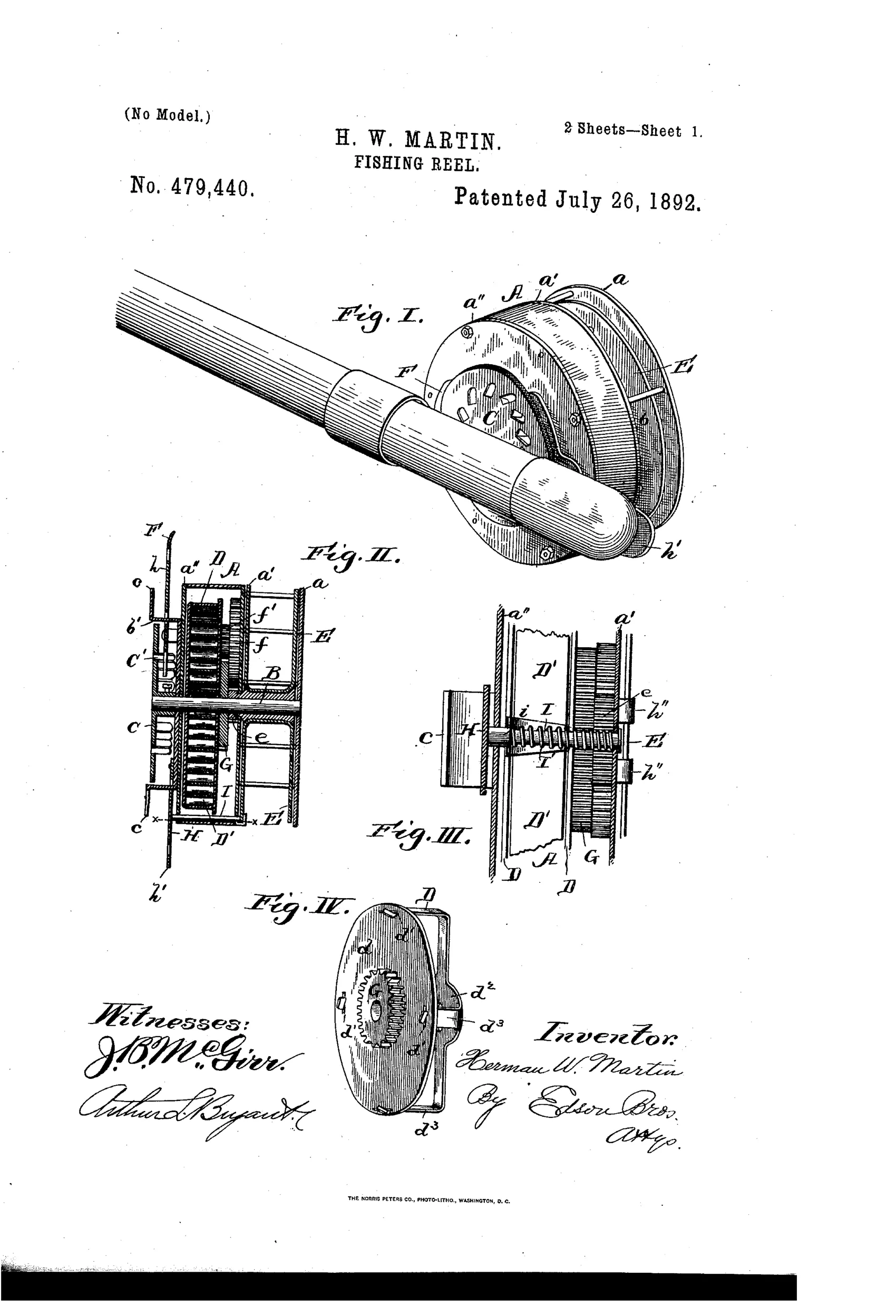
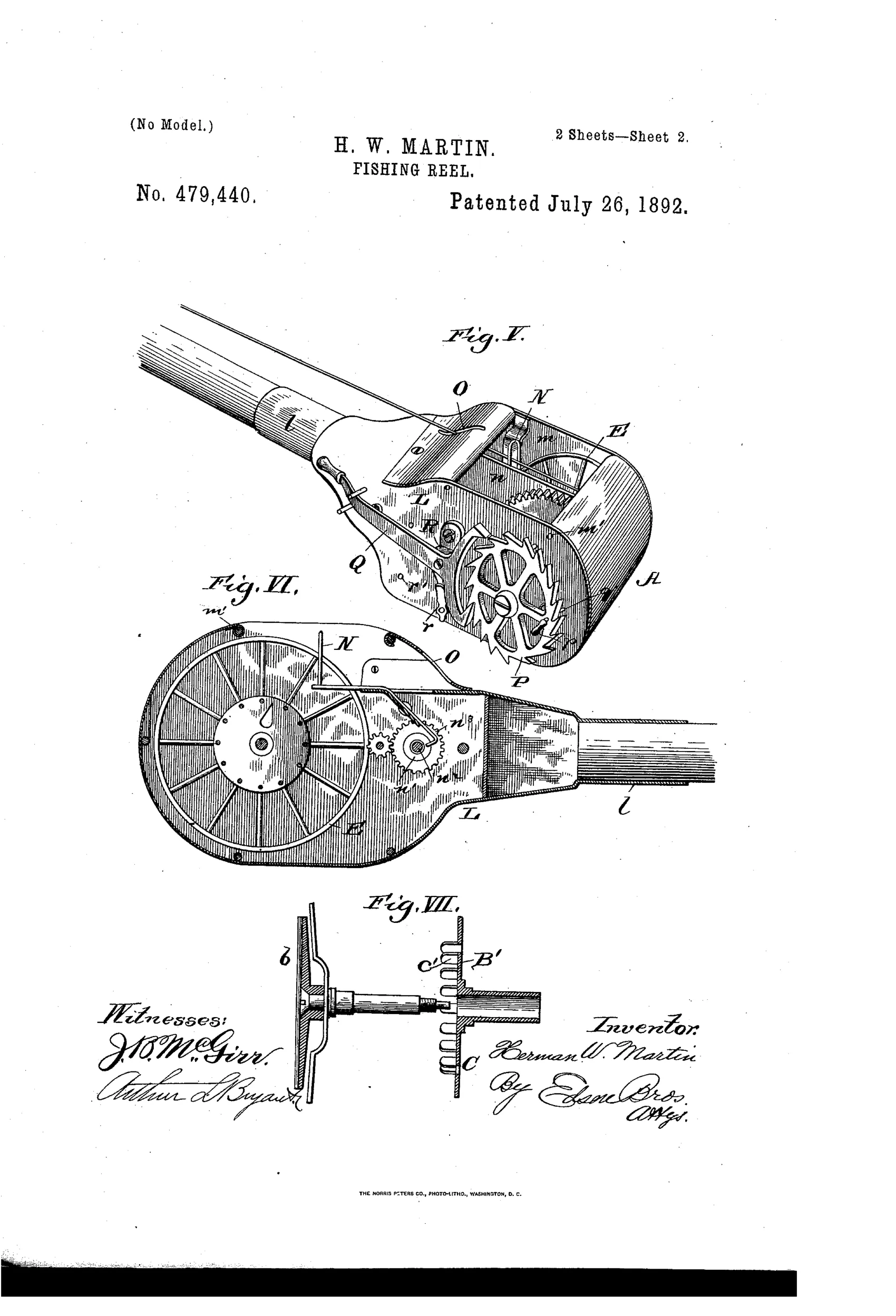
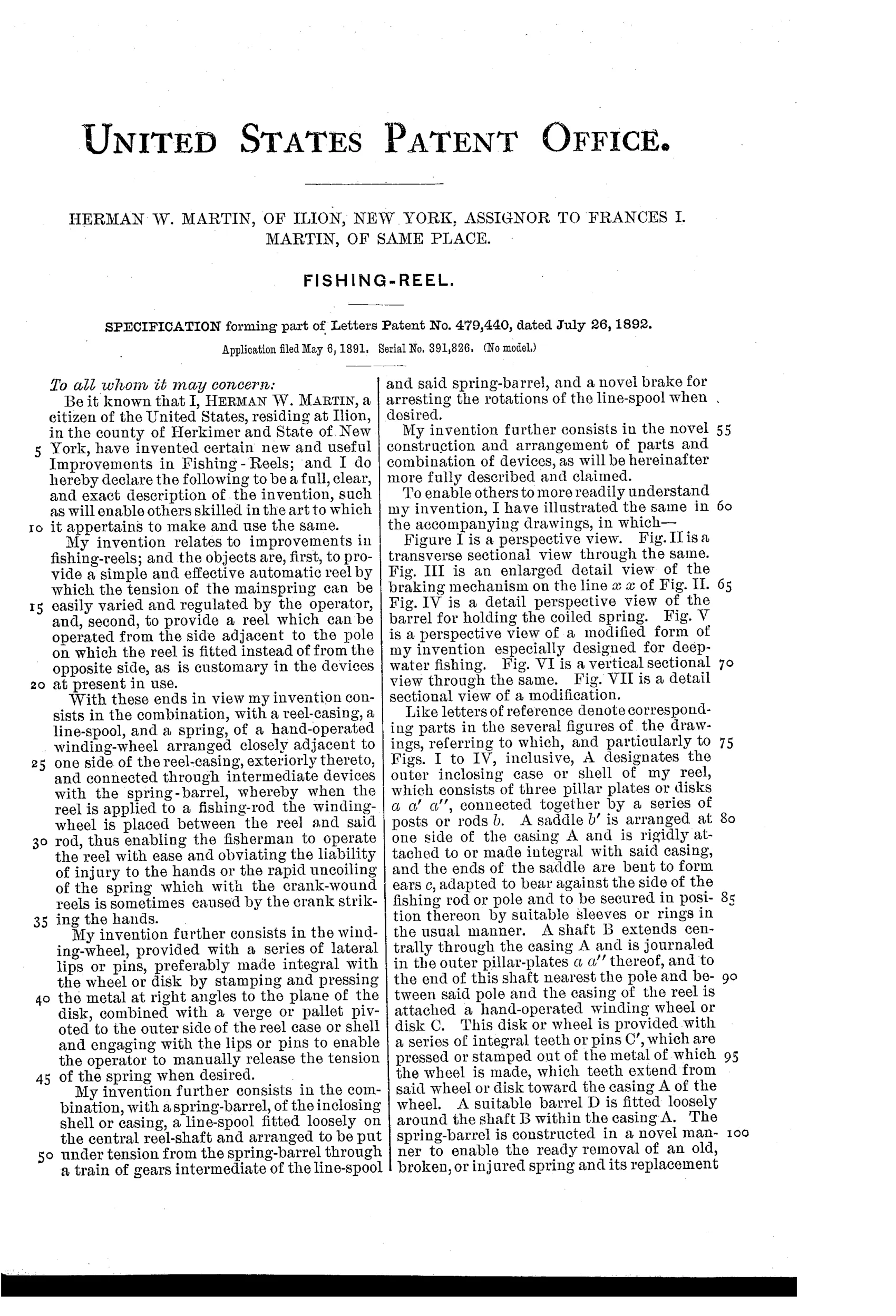
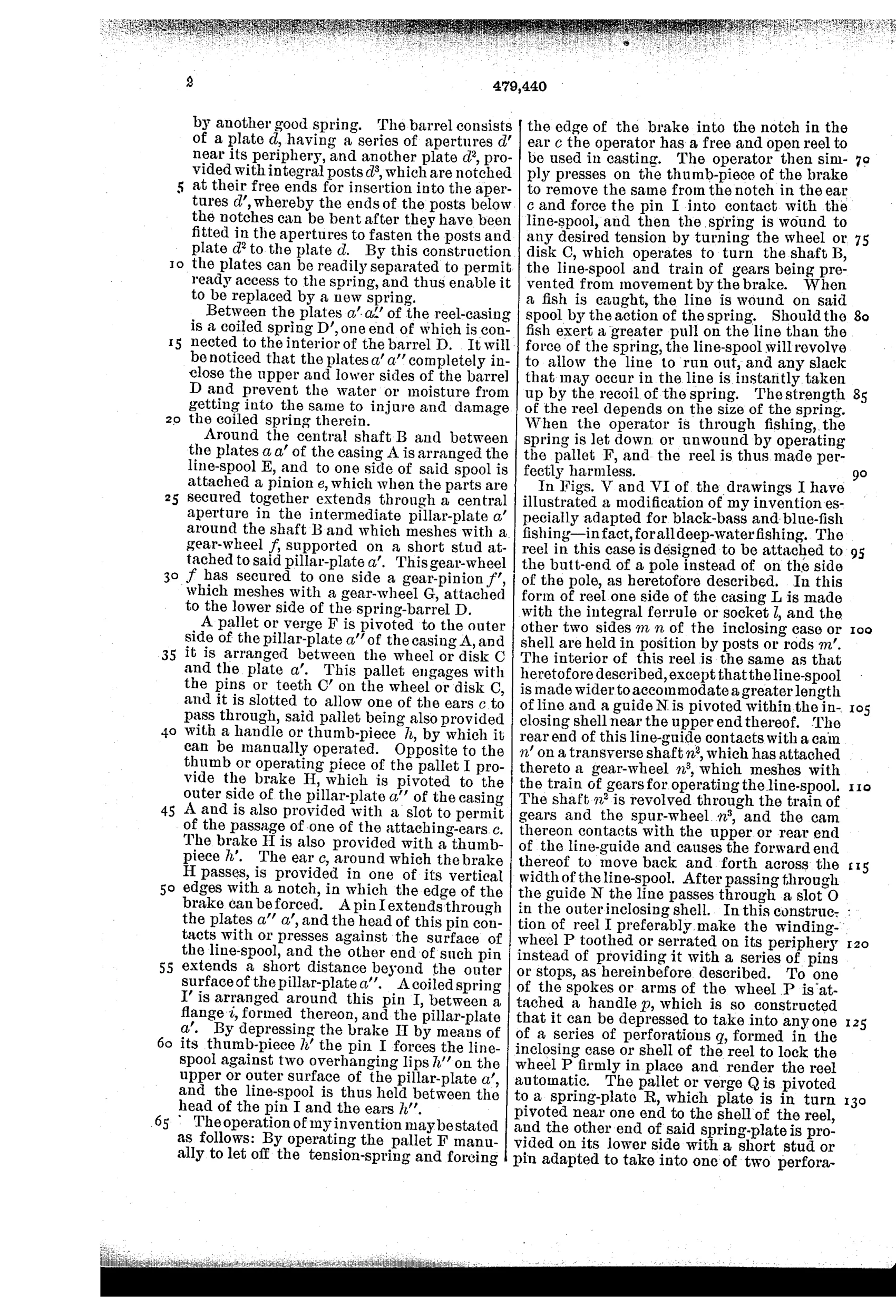
Automatic spring-powered fishing reel with side winder
↻ How it works
A coiled mainspring in a removable barrel is wound by a hand-operated winding-wheel mounted on the pole side of the reel casing, separate from the line-spool. The winding-wheel connects through a train of gears to the spring-barrel, which in turn tensions the line-spool through intermediate gearing, allowing the spring to automatically take up slack line when a fish pulls less than the spring tension. A pivoted pallet or verge engages pins or teeth on the winding-wheel to let the operator manually release spring tension, while a separate spring-loaded brake pin can be pressed against the line-spool to lock it during casting. A deep-water fishing modification adds a line-guide operated by a cam and gear train to distribute line evenly across a wider spool.
↻ What was claimed
“In a fishing-reel, the combination, with an inclosing shell, of a shaft journaled therein, a spring-barrel having a coiled spring therein, a line-spool arranged within the inclosing shell, a train of gears intermediate of the spring-barrel and the line-spool, and a winding wheel or disk attached to one end of the shaft and arranged closely adjacent to said reel, substantially as shown and described, for the purpose specified.”
In plain English: The reel combines a casing, a spring-loaded barrel, a line-spool, connecting gears, and an external winding wheel mounted right next to the reel on the pole side.
↻ In the inventor’s words
“When the operator is through fishing, the spring is let down or unwound by operating the pallet F, and the reel is thus made perfectly harmless.”— Herman W. Martin, from the specification
Manufactured and sold
Herman W. Martin's automatic-reel patents underlie the Martin Reel Company of upstate New York, whose spring-driven automatics were manufactured in quantity and survive widely.
↻ More by Herman W. Martin
- FISHING-REEL. (1895)
- FISHING-REEL (1897)
- FISHING-REEL. (1897)
↻ Commentary
This is an automatic reel: crank a spoked winding-wheel on the pole side of the casing, load a coiled mainspring in its removable barrel, and the spring keeps steady tension on the line-spool through a gear train. Slack line gets taken up on its own the moment a fish stops pulling harder than the spring. The winding-wheel is deliberately separated from the line-spool — you charge the spring like winding a clock, then fish. That clockwork DNA is right there in the pallet-and-verge escapement Martin uses to let tension down, and in his wonderfully sober line about unwinding the spring so the reel is 'made perfectly harmless.'
Look closely at Fig. II and you'll see the whole watchmaker's logic in section: spring-barrel, intermediate gears, and a separate spring-loaded brake pin that locks the spool for casting — because an automatic reel with no brake would eat your line the instant you let go. The deep-water variant adds a cam-driven line-guide, an early stab at level-wind thinking a decade before that became the industry's obsession.
Martin was working in Ilion, New York, and his automatic-reel patents are the foundation of the Martin Reel Company, which made automatic fly reels for over a century. Automatics never displaced the crank reel, but as a lineage this patent is anything but a dead end — it's a starting gun.
Commentary by Claude, The Fishing Reel Patent Archive’s resident enthusiast