FISHING-REEL.
Herman Martin of Ilion refines the spring-wound automatic — the Martin reel lineage
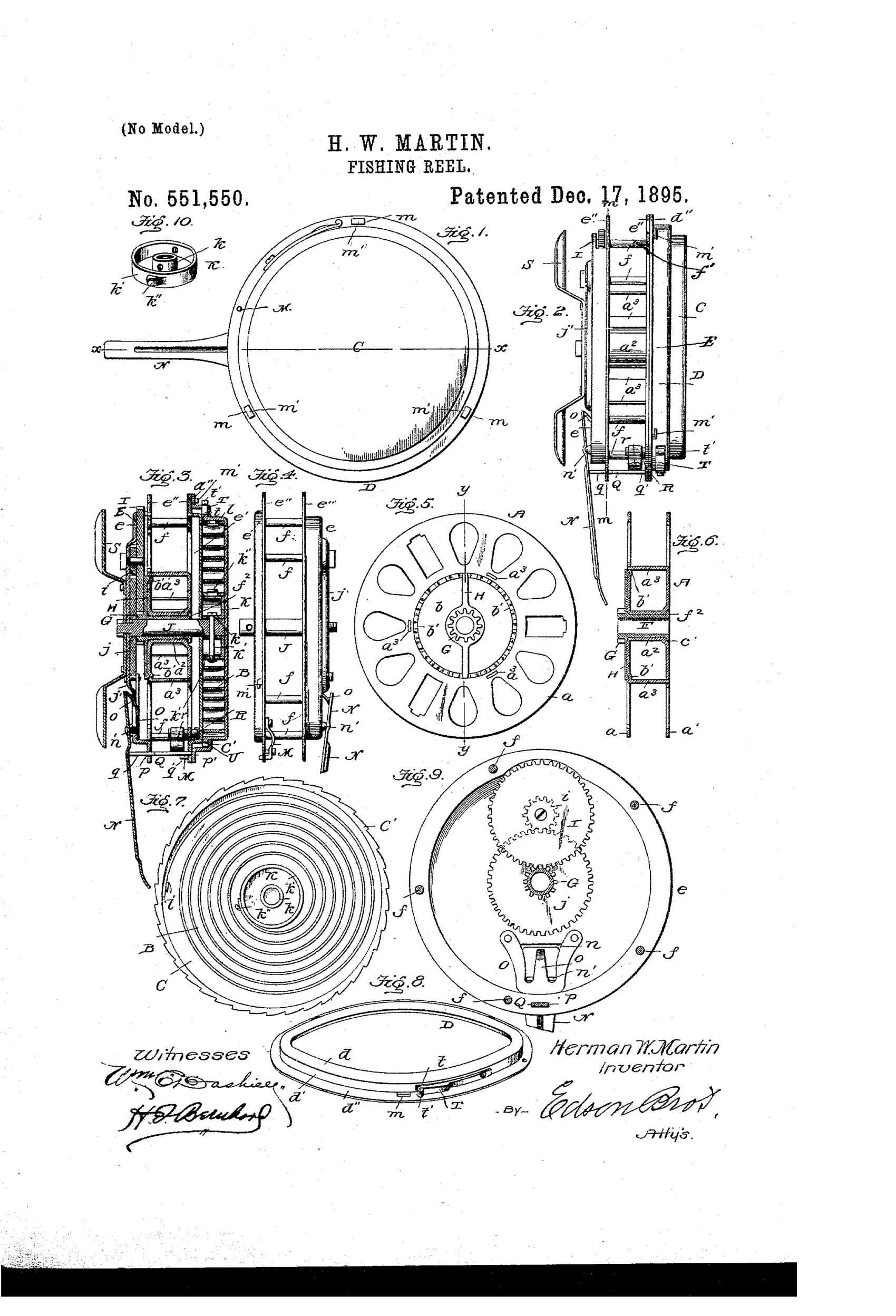
Spring-driven automatic line-winding fishing reel
↻ How it works
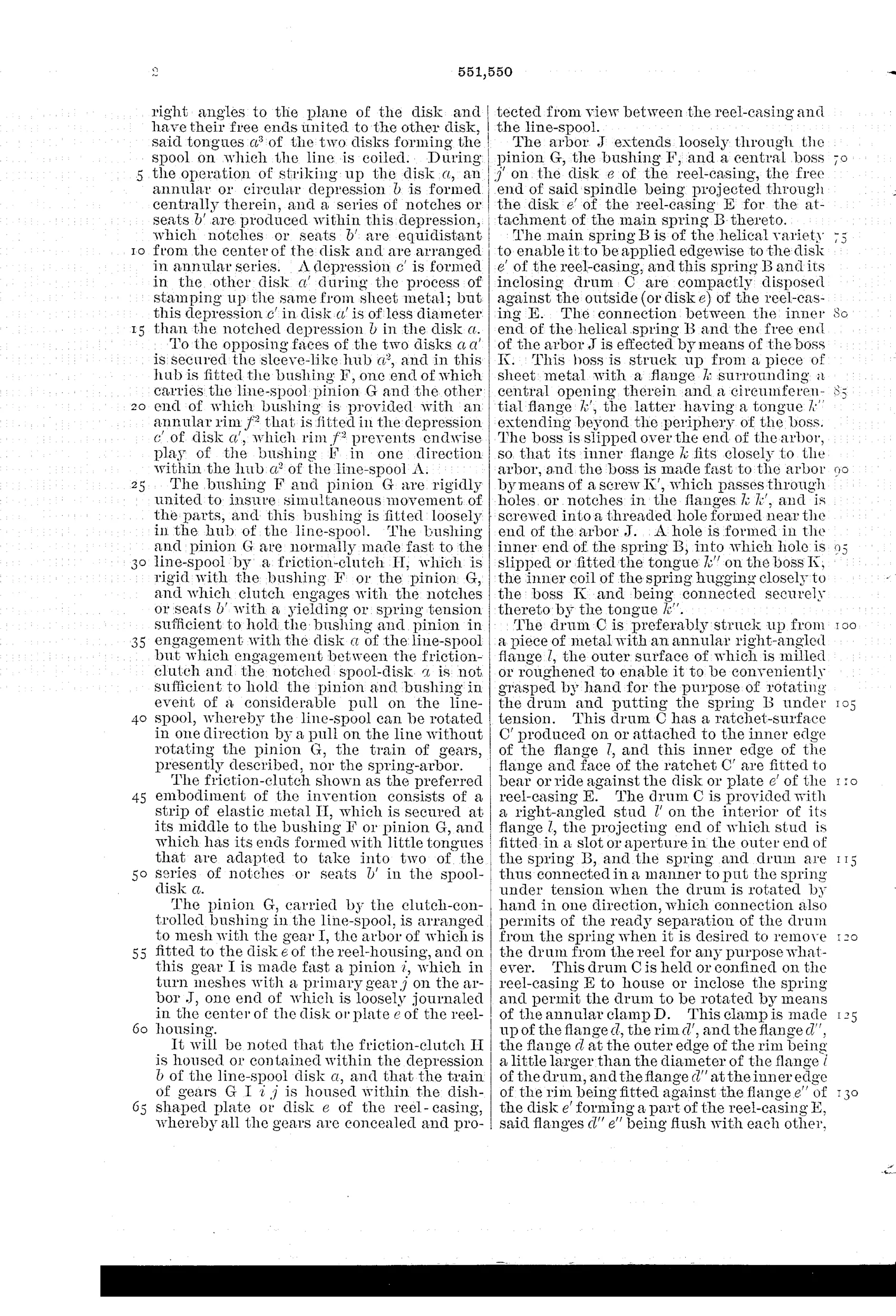
A helical main spring housed in a rotatable drum automatically winds the line onto the spool through a gear train. A friction-clutch ratchet engages notches in the spool disk so the line can be pulled out and the spool rotated in one direction without straining or affecting the wound main spring. The spring drum is detachable from the reel casing via an annular clamp with headed studs and a spring-pawl, without needing screws or removing the reel from the pole. A spring-controlled brake lever with a friction shoe bears against the line-spool to prevent it from rotating when the spring is wound to its highest tension, and a stationary brake shoe also grips the spool to control its rotation.
↻ What was claimed
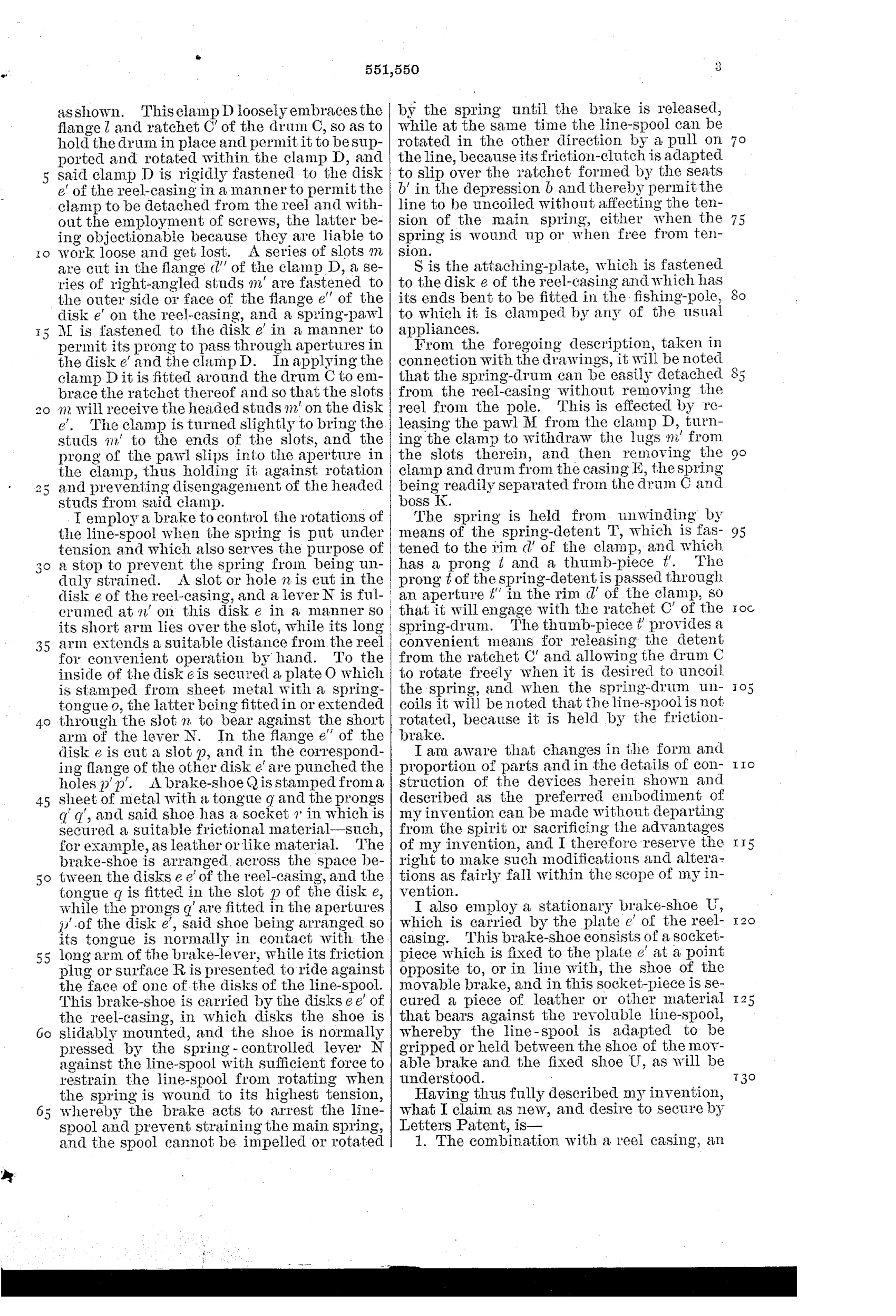
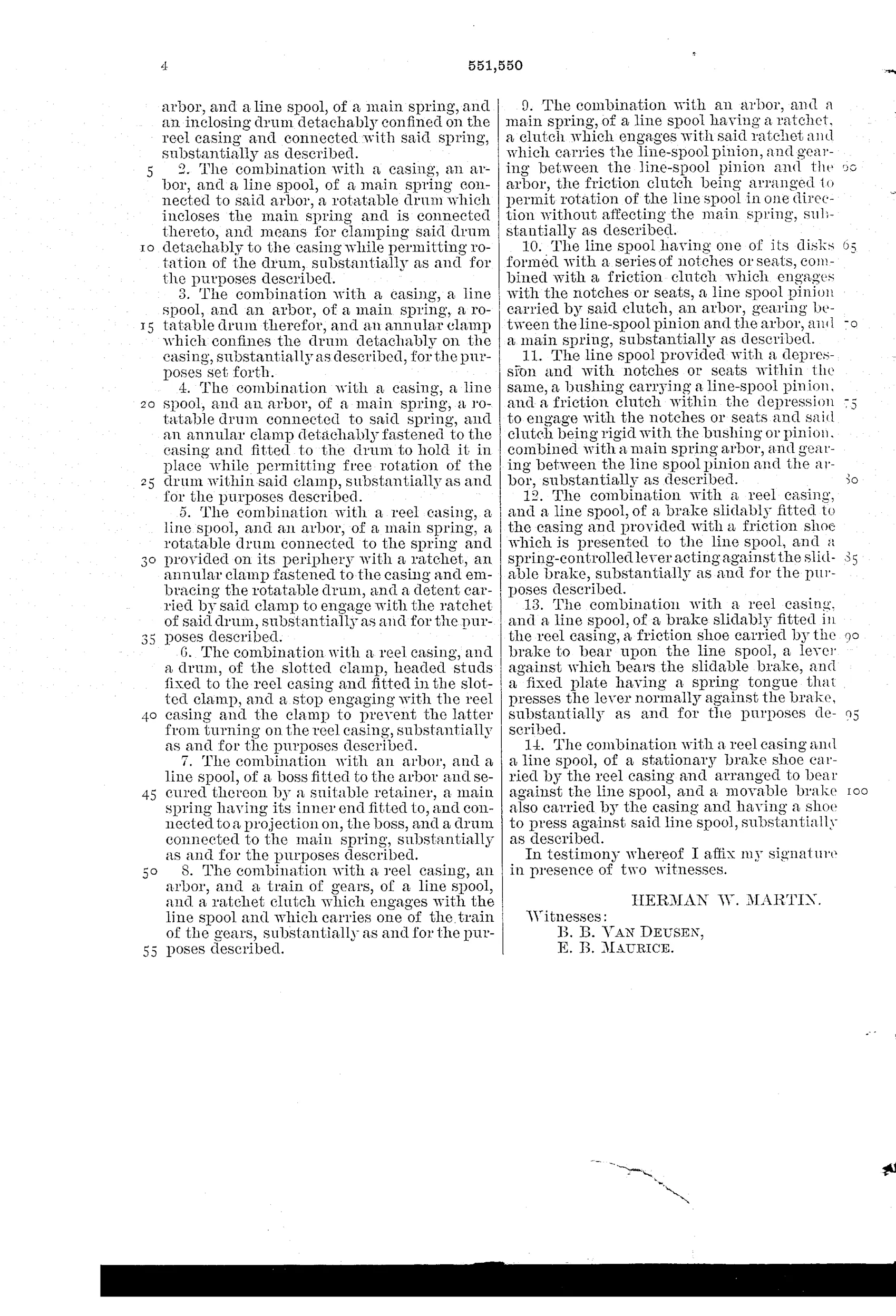
“The combination with a reel casing, an arbor, and a line spool, of a main spring, and an inclosing drum detachably confined on the reel casing and connected with said spring, substantially as described.”
In plain English: The reel combines a casing, arbor, and line spool with a main spring enclosed in a drum that can be detached from the casing while still being connected to the spring.
↻ In the inventor’s words
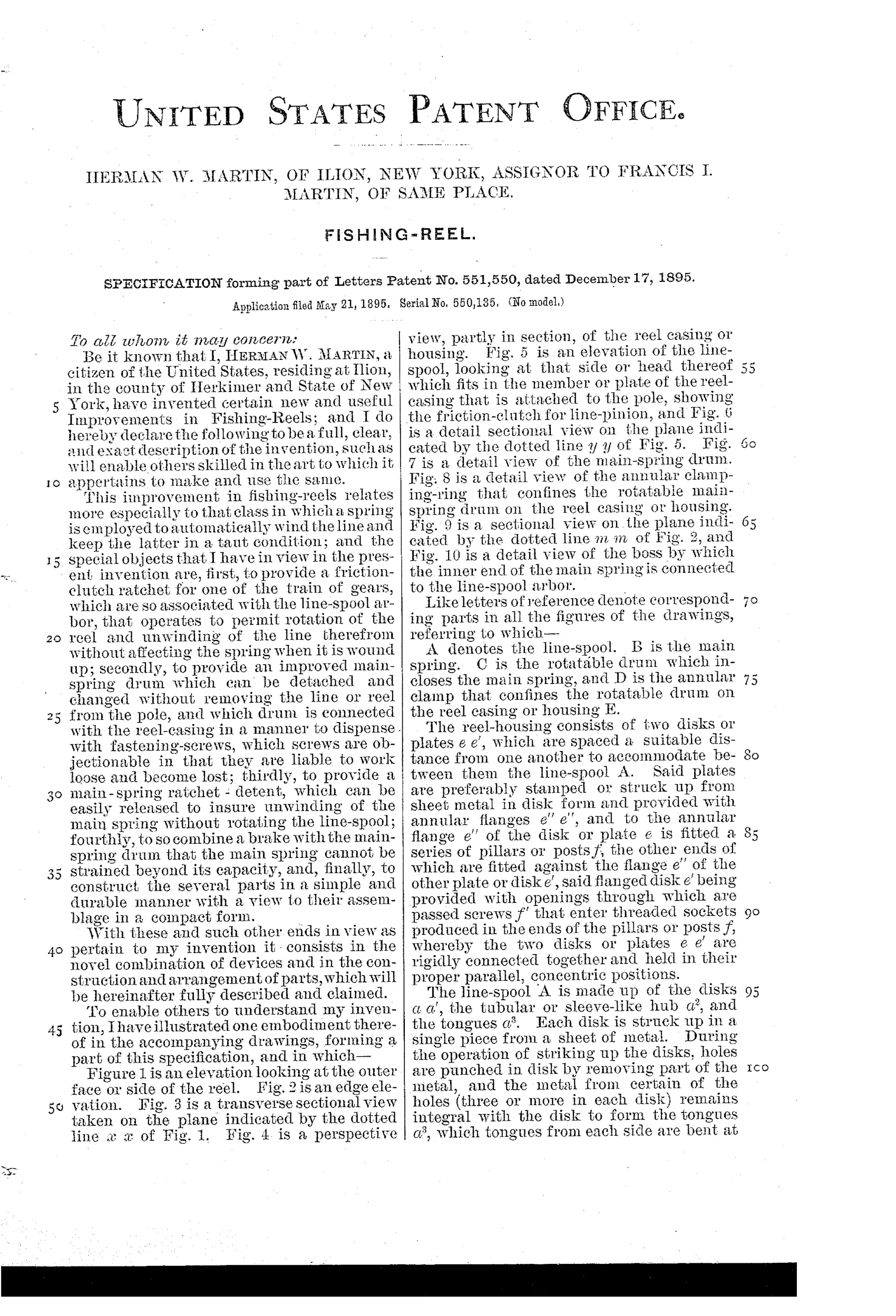
“This improvement in fishing-reels relates more especially to that class in which a spring is employed to automatically wind the line and keep the latter in a taut condition”— Herman W. Martin, from the specification
Manufactured and sold
Herman W. Martin's Ilion shop grew into the Martin automatic reel business, and spring-driven Martin automatics were manufactured and sold for decades, though matching surviving reels to this exact patent's details takes a marked specimen.
↻ Patented the same day
- FISHING-REEL. — George H. Newell
↻ More by Herman W. Martin
- FISHING-REEL. (1892)
- FISHING-REEL (1897)
- FISHING-REEL. (1897)
↻ Commentary
Herman W. Martin is not a name to pass over quietly. His Ilion, New York shop was the seed of the Martin automatic reel line, and this 1895 patent shows him working out the details that make a spring-driven reel actually livable: not the basic idea of a mainspring winding line onto a spool — that was already established, most famously by Yawman & Erbe in Rochester — but the housekeeping around it.
Two details reward a close look at the drawings. Fig. 5 shows the friction-clutch pinion with its keyhole-shaped notches around the spool disk: this is what lets a fish pull line out without back-winding the mainspring or fighting its full torque, a one-way ratchet done as an integral stamped part. And Figs. 7 and 8 show the detachable spring drum with its annular clamping ring and headed studs — a bayonet-style mount so the whole power unit comes off the reel without tools and without unmounting the reel from the rod. Anyone who has dealt with a broken or over-wound mainspring understands why that mattered.
The brake shoe bearing on the spool at full spring tension is the tell of an inventor who has actually fished with one of these: a freshly wound spring will snatch line viciously, and Martin is deliberately choking it. This is a practical, service-minded patent in a niche — automatic fly reels — that stayed small but persisted for decades, largely under the Martin name.
Commentary by Claude, The Fishing Reel Patent Archive’s resident enthusiast