FISHING-REEL.
Herman Martin of Ilion patents the spring works behind the automatic reel
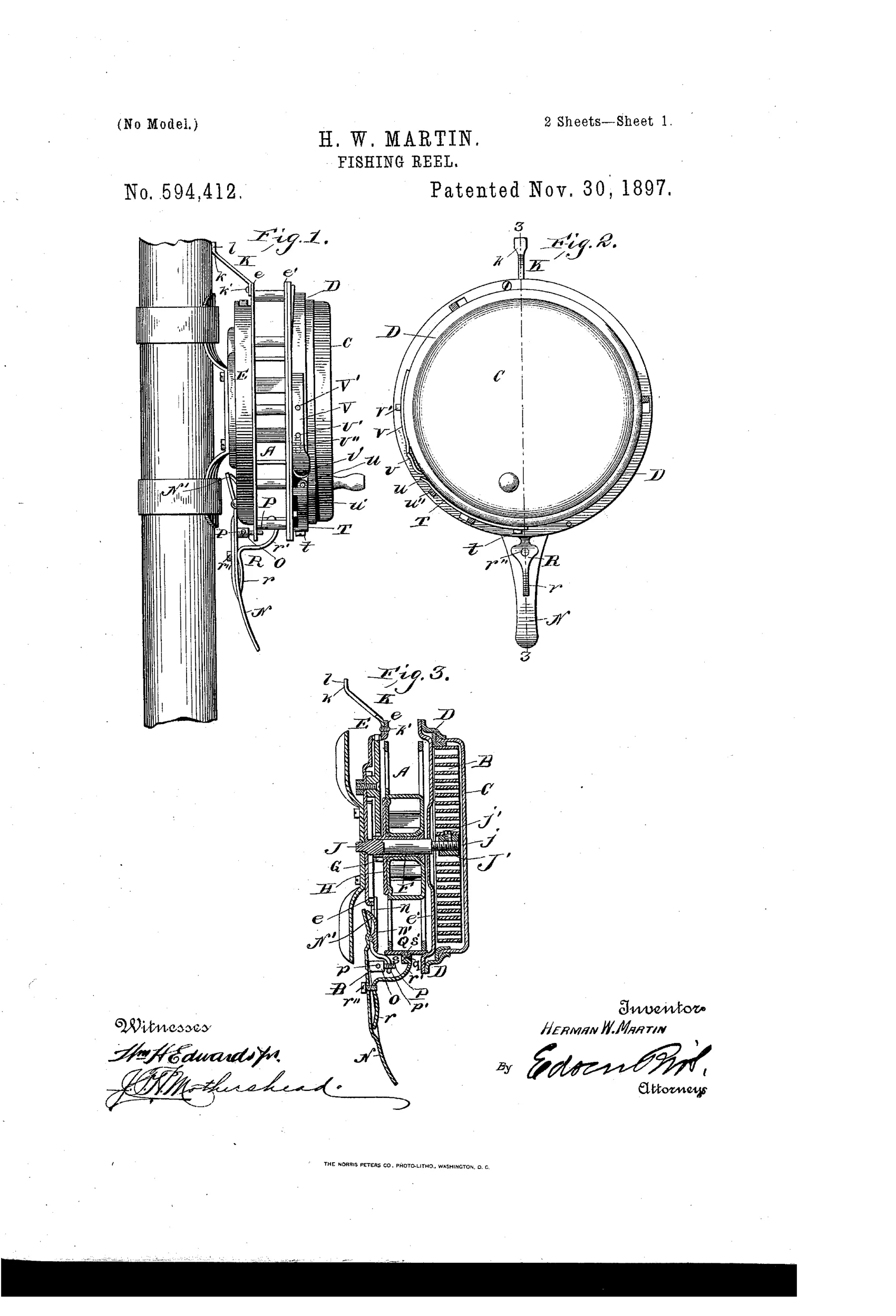
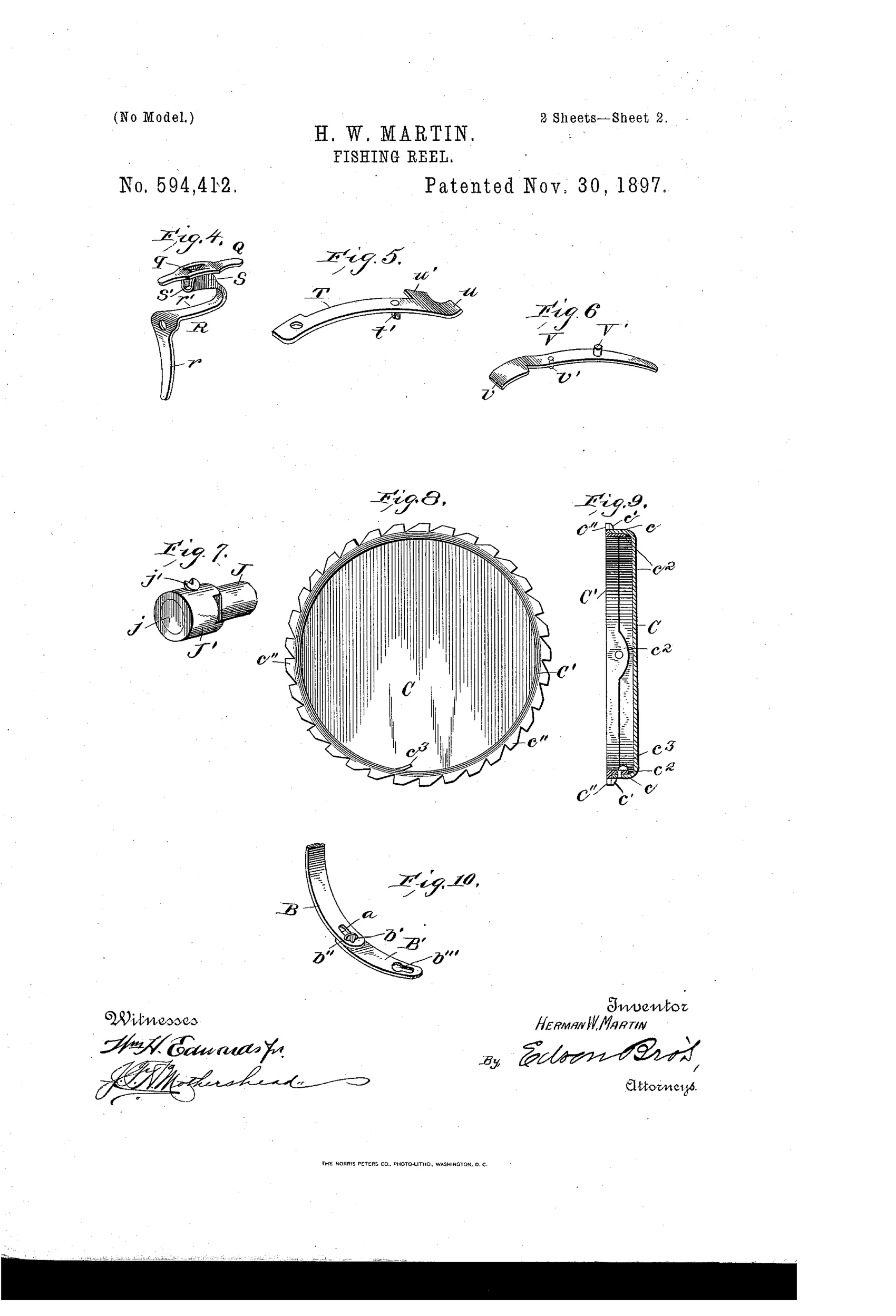
Improved bait-casting fishing reel with adjustable spring brake
↻ How it works
A pressure-spring brake-lever fulcrumed on the reel casing carries a curved 'gooseneck' auxiliary spring with a flat plate-shoe that rides on the periphery of the line-spool rather than its face, giving light adjustable friction without releasing the lever. An adjustable screw-threaded stop limits the lever's travel to regulate braking pressure. A releasable spring-detent engages ratchet teeth on an aluminum mainspring-drum reinforced with an angular brass or steel band, and a slidable release-bar lets the operator disengage the detent so the drum and spool turn freely backward for casting, while a compensating link between the mainspring's outer end and the drum prevents the spring from breaking or uncoupling when wound or released.
↻ What was claimed
“1. In a fishing-reel, the combination with a line-spool, a casing or frame, and a spring brake-lever, of a brake-shoe arranged to ride upon the periphery of the line-spool, and a connection between said brake-shoe and the brake-lever whereby the brake-shoe is carried by the brake-lever and is movable in a plane toward or from the periphery of the line-spool, as and for the purposes described.”
In plain English: The reel has a brake-shoe that rides on the outer edge of the spool and is connected to a spring-loaded lever so it can move toward or away from the spool to control friction.
↻ In the inventor’s words
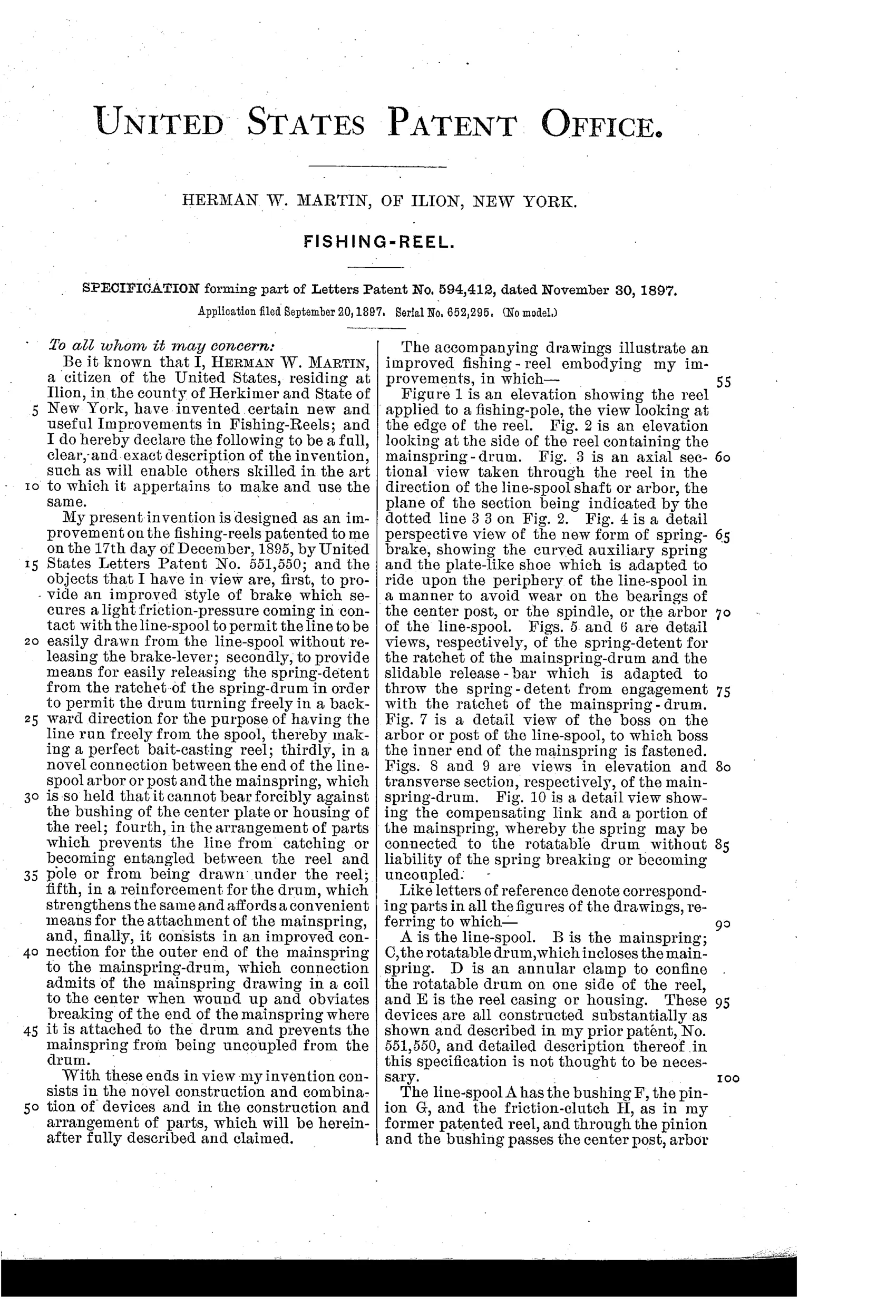
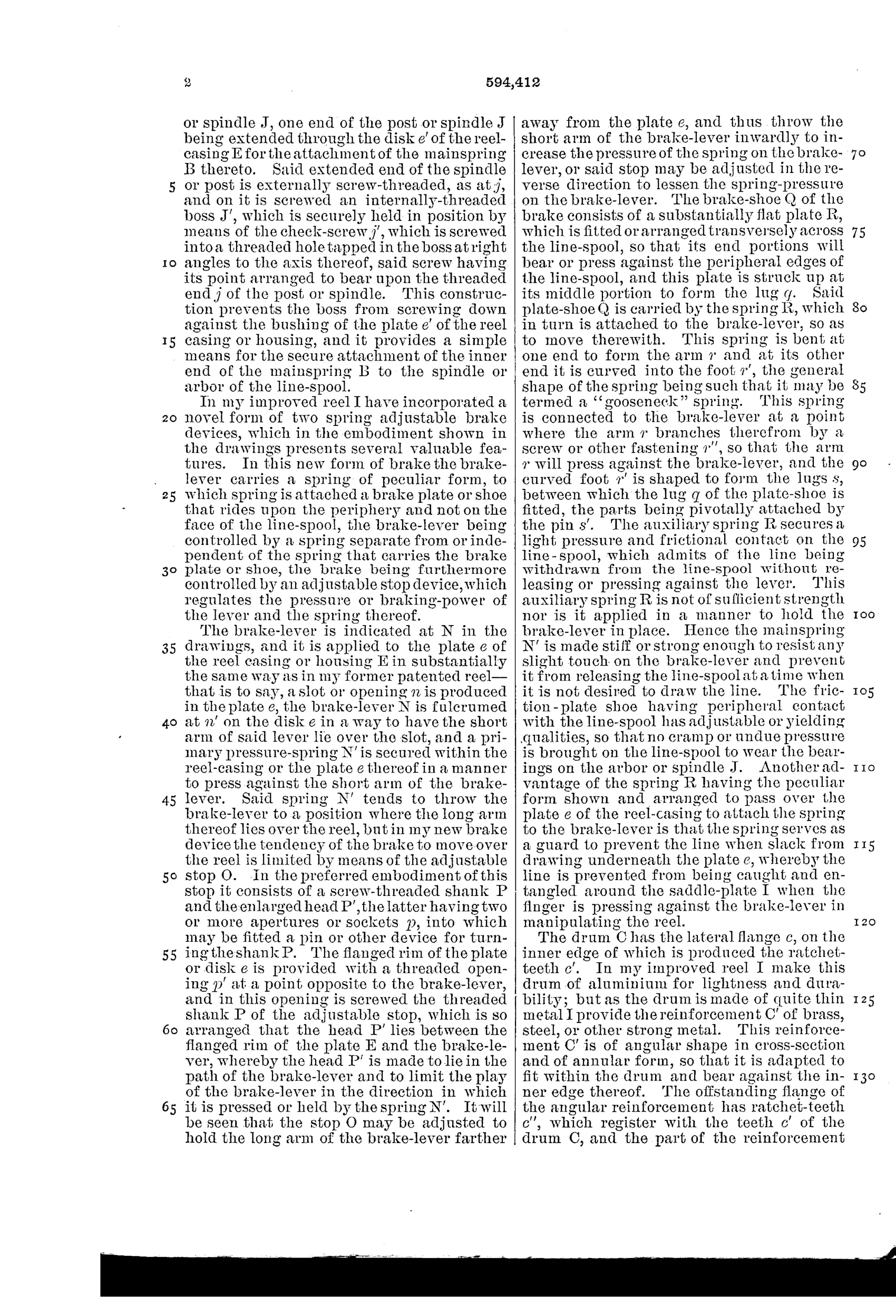
“This spring is bent at one end to form the arm r and at its other end it is curved into the foot r', the general shape of the spring being such that it may be termed a "gooseneck" spring.”— Herman W. Martin, from the specification
Manufactured and sold
Herman W. Martin's automatic reels were commercially manufactured in the Ilion/Mohawk, New York area, and Martin Automatic Reel Company reels descend directly from his 1890s patents.
↻ Patented the same day
- FISHING-REEL — Herman W. Martin
↻ More by Herman W. Martin
- FISHING-REEL. (1892)
- FISHING-REEL. (1895)
- FISHING-REEL (1897)
↻ Commentary
The extraction calls this a bait-casting reel, but read the mechanism and look at Fig. 3: a coiled mainspring inside a ratcheted aluminum drum, a detent to hold the wound spring, and a release-bar to let it fly. This is an automatic reel — one that winds line back onto the spool under spring power — and Herman W. Martin of Ilion, New York is the man whose name would become synonymous with that whole class. The Martin Automatic Fishing Reel Company, headquartered in the Ilion/Mohawk area, sold spring-retrieve fly reels for the better part of a century, and this 1897 patent is part of the foundation.
Two details reward a close look. First, the 'gooseneck' brake spring with its flat shoe riding on the spool's periphery rather than its face — that lets the angler feather line tension without dumping the brake entirely, a genuinely thoughtful touch on a spring-driven reel that would otherwise snatch line back too hard. Second, the compensating link (Fig. 10) between the mainspring's outer end and the drum: mainsprings in clocks and reels alike break at the ends, and Martin engineered a relief for it, plus a brass band reinforcing the soft aluminum drum.
Where Kentucky's watchmakers chased casting speed, Martin chased effortless retrieve. Different obsession, same clockmaker's instincts — and unlike most one-off contraptions of the era, this line of thinking went into serial production.
Commentary by Claude, The Fishing Reel Patent Archive’s resident enthusiast