FISHING-REEL.
A clockwork automatic that unclutches into an ordinary crank reel, from Grand Rapids
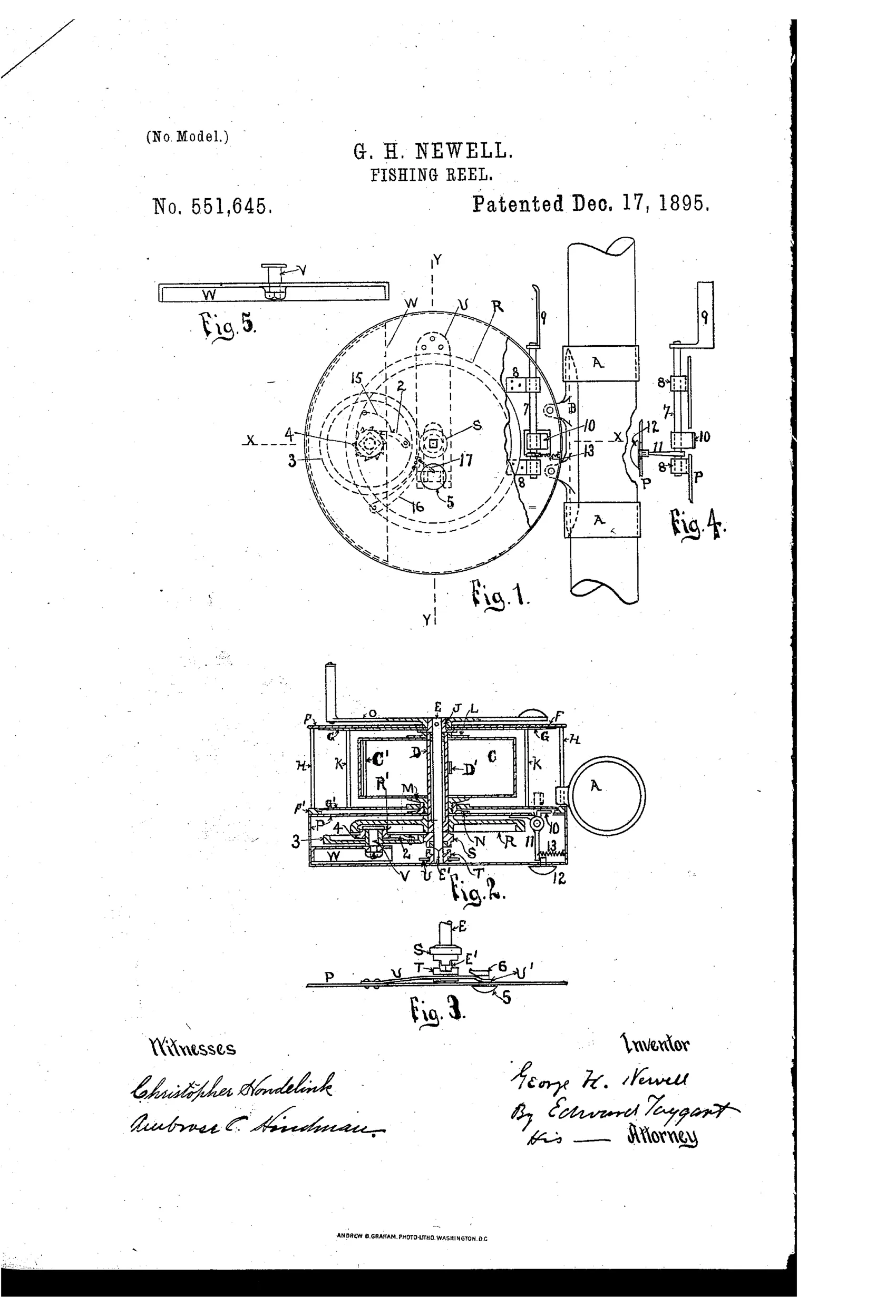
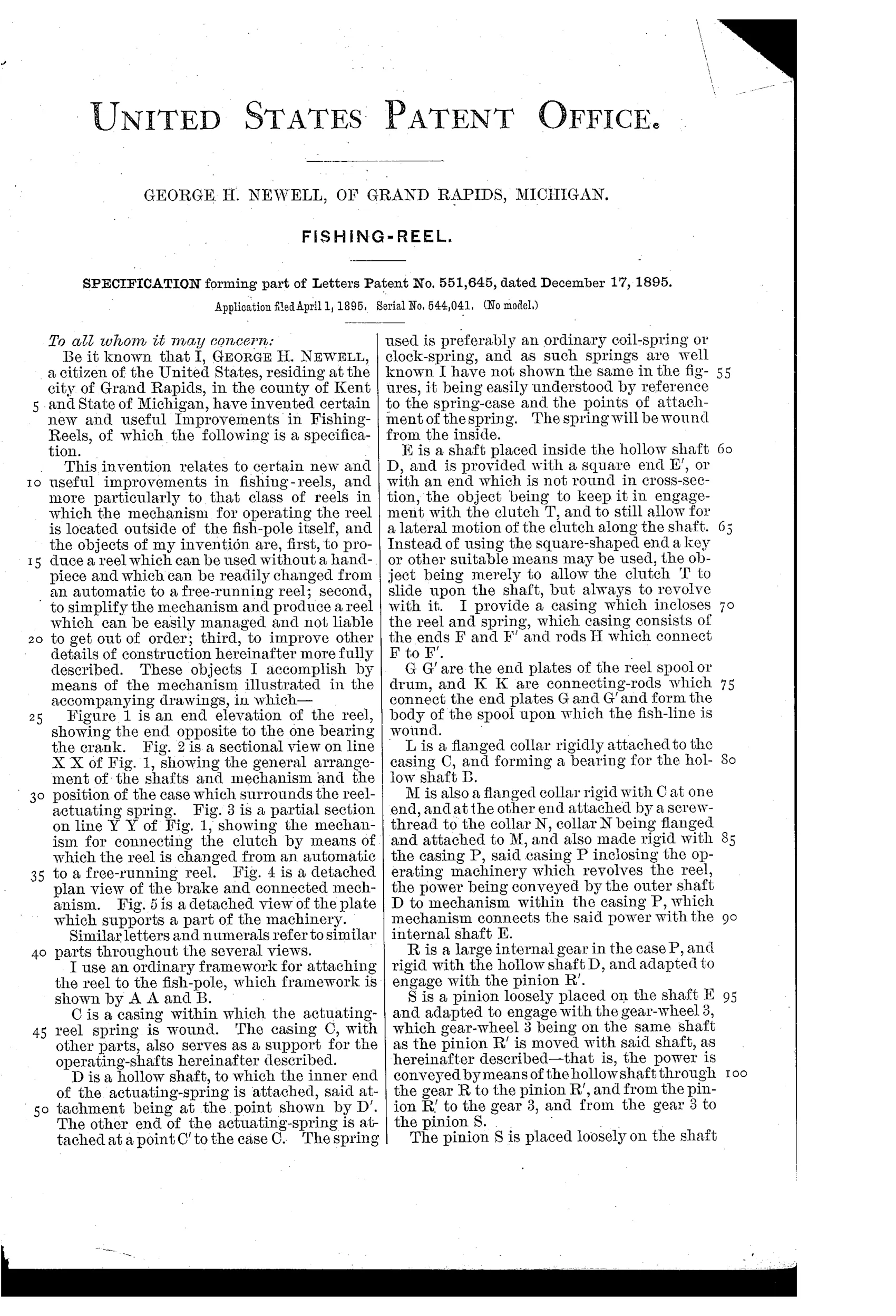
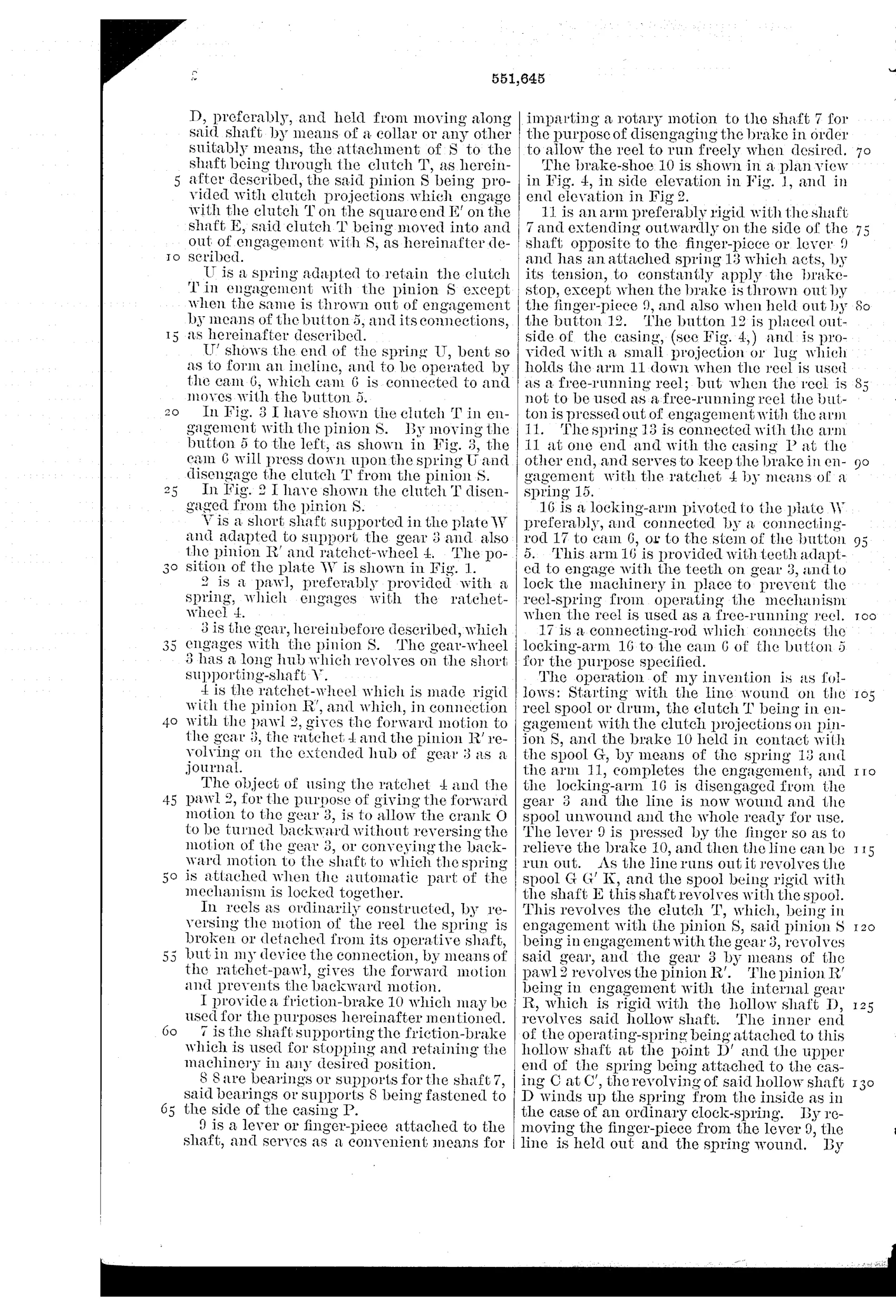
Spring-driven automatic fishing reel convertible to free-running
↻ How it works
A coil or clock spring wound inside a hollow shaft drives the reel spool through a series of gears (internal gear R, pinion R', gear 3, and pinion S) connected via a sliding clutch T. A ratchet-and-pawl (4 and 2) allows the crank to be turned backward without unwinding the spring, while a button-operated cam disengages the clutch and locks the gearing with arm 16 to convert the reel into a free-running reel operated only by the crank. A separate friction brake (10), controlled by a finger lever (9) and holding buttons (12), normally holds the spool still until released to let line run out, after which releasing the lever allows the spring to automatically rewind the line.
↻ What was claimed
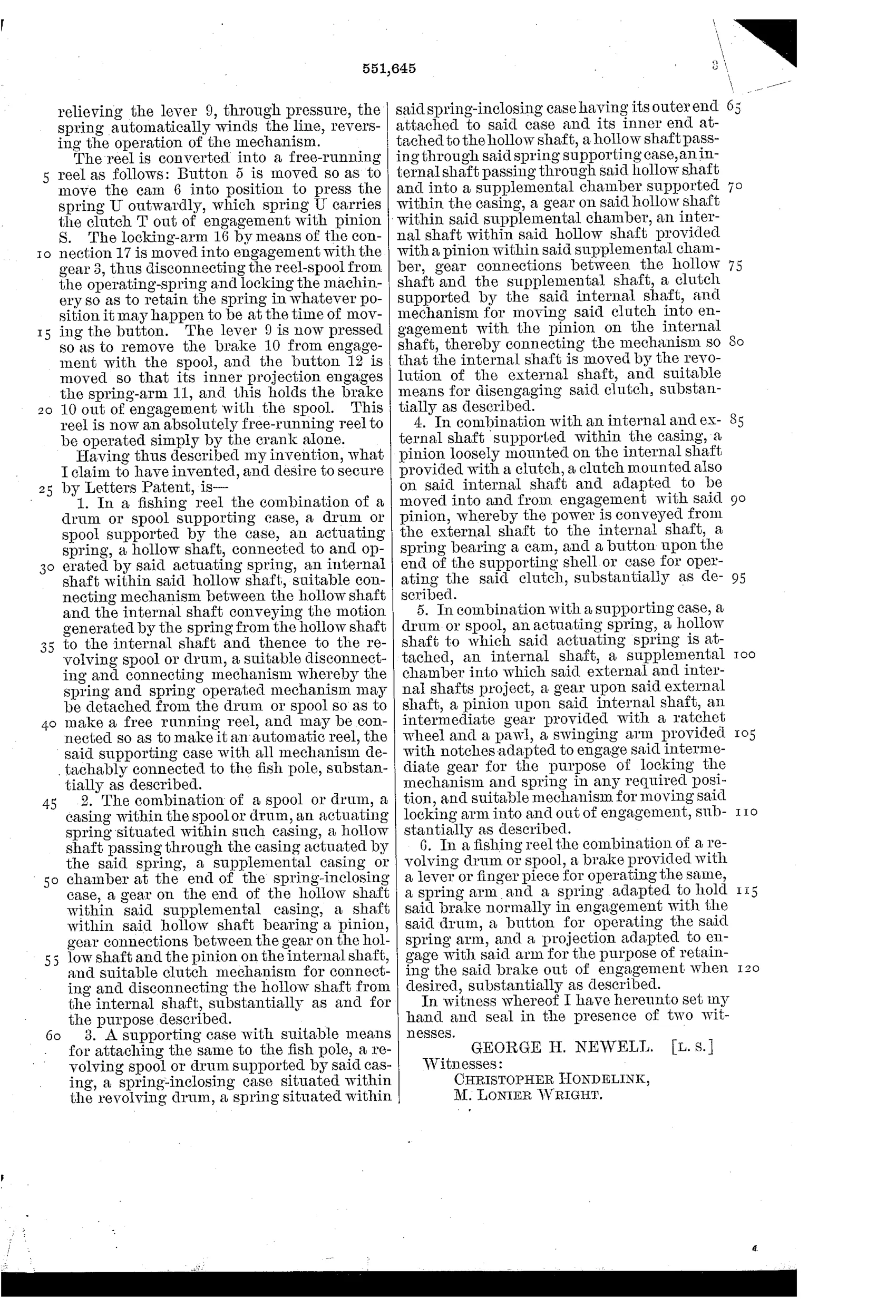
“1. In a fishing reel the combination of a drum or spool supporting case, a drum or spool supported by the case, an actuating spring, a hollow shaft, connected to and operated by said actuating spring, an internal shaft within said hollow shaft, suitable connecting mechanism between the hollow shaft and the internal shaft conveying the motion generated by the spring from the hollow shaft to the internal shaft and thence to the revolving spool or drum, a suitable disconnecting and connecting mechanism whereby the spring and spring operated mechanism may be detached from the drum or spool so as to make a free running reel, and may be connected so as to make it an automatic reel, the said supporting case with all mechanism detachably connected to the fish pole, substantially as described.”
In plain English: The reel combines a spring-driven hollow shaft and internal shaft that turn the spool, with a clutch mechanism that can disconnect the spring drive to make the reel free-running or reconnect it to make it automatic, the whole case being attached to the fishing pole.
↻ In the inventor’s words
“This reel is now an absolutely free-running reel to be operated simply by the crank alone.”— George H. Newell, from the specification
Fate unknown
No Newell-marked production reel is documented in the collector record; a surviving example stamped with this patent date would settle it.
↻ Patented the same day
- FISHING-REEL. — Herman W. Martin
↻ More by George H. Newell
- FISHING ROD AND REEL. (1893)
- FISH-ROD REEL. (1894)
↻ Commentary
Automatic reels — spring motors that rewind line at the touch of a lever — were a live idea by 1895; Loomis and Yawman & Erbe had already put spring-wound fly reels on the market. Newell's contribution is the convertibility. Most automatics of the era committed you to the spring: your line went out against it and came back on its schedule. Newell nests a clock spring inside a hollow shaft, runs the power through an internal-gear train to the spool, and then adds a button-operated cam that slides a clutch out of engagement and locks the gearing down with a separate arm. Press the button one way and the spring runs the show; the other way, and as the patent cheerfully puts it, you have 'an absolutely free-running reel to be operated simply by the crank alone.'
Fig. 2 is the sheet worth studying: shaft within shaft, spring case, and the sliding clutch T all packed into a housing barely wider than the spool. The ratchet-and-pawl letting the crank wind the spring backward without disturbing the spool is a tidy watchmaker's touch, and the finger-lever brake with holding buttons follows the standard automatic-reel grammar.
The cost of all this is a lot of small parts doing double duty in a wet environment. It is an honest attempt to answer the automatic reel's real weakness — its inflexibility — but the dual-mode complexity likely priced it out against simpler competitors.
Commentary by Claude, The Fishing Reel Patent Archive’s resident enthusiast